

Welcome to my blog! For the next few weeks, my marketing expert, Joelle Asmondy, will be filling in for me while I work on a large project. Joelle is a whiz with marketing. I can’t wait to see which helpful tidbits she shares with you! Enjoy!
 I recently spoke with a new salon owner who is struggling to fill her days with pets to groom. She has a good client base, a website, and a Facebook page but she still has lots of time to fill.
“What am I doing wrong?”
We all know that you can spend a lot of money on big-ticket ways to build your business. Few of us use our most common tool – the phone – to its best advantage. Let’s discuss these simple and effective methods to boost your client list. The best part is that you get immediate results – and they won’t break the bank.
It’s time you learned the 5 phone calls that can build your business.
THE RINGER
This is the client that calls YOU. When phones are ringing off the hook, it’s music to my ears! They are the time savers – you didn’t have to go searching for them… they found you! Make the most of it!
One mistake people make with these calls is that they treat them like an interruption. Even if you are grooming another dog, have another call on hold, and are trying to eat your lunch at the same time, you still need to treat that caller feel like s/he is the only thing on your mind.
Here are a few simple tips to make the most of that call:
- Answer the phone in 3 rings or less.
- If the call needs to go to voicemail, make sure you call back as soon as possible. (Make sure your voicemail message is clear, friendly, to the point. After all, they’re busy, too!)
- Put a smile in your voice. People can hear it over the phone. (You know what else they can hear? When you’re eating. Don’t chew while you’re on the phone.)
- If you have another client in your salon while you are on the phone, don’t roll your eyes or in any other way demean the caller in front of someone else. You may think you’re being friendly with the client in the waiting room, but what you’re really doing is showing them how they’re treated while you’re on the phone with them. Be professional with everyone, in what you say and do, regardless of whether or not they can see you doing it.
- If you have to check on something, use the HOLD or MUTE button. No one wants to hear you rummaging around for things – it makes you sound disorganized. Putting people on hold allows you to get your thoughts in order, as well. When you get back after a brief hold, thank them for waiting.
The thing to remember is that you invited them to call, so treat them like the valued guests they are.
THE REMINDER
Another way you might be losing opportunities is not making the most of the client base you already have. Many clients are like us – juggling work and family needs – and we tend to forget things. If you are setting appointments for your clients, do yourself a favor and give them a reminder call the day before the scheduled appointment. (Texting works well, too. Find out what your client prefers and stick to it.) Many clients come to rely on it, so don’t forget. Make it a part of your morning routine.
THE ROOKIE
New clients aren’t used to you, yet. That means that don’t know how special you are and that you treat new clients like royalty. Give new clients the royal treatment with a follow-up phone call after their first visit. The day after their first appointment, give them a call to ask how their pet felt after the groom. Ask if they like the trim. Ask for feedback. And most importantly (if they didn’t rebook at check out), set up the next appointment.
 THE RECLUSE
This is the client who doesn’t have an appointment on the books for 6 weeks or more. If you have gaps in your day, it’s might be because these clients do not have recurring appointments. Another way to make the most of your client base is to get everyone on a recurring schedule. If you have 50-75 valued customers, your books should be pretty full – if you take the time to rebook people and get them on a regular grooming schedule. When you look ahead and see gaps, look back 6 weeks and see who’s missing in the days ahead. Give those folks a call and welcome them back. Chances are they don’t even realize how long it’s been since their last visit and will be glad you reminded them to drop by.
THE WRECK
Ok, it’s not a wreck. Most likely it’s nothing more than a minor scratch, but we’re talking injuries, here. Brush burn, nicks, cuts, clipper irritation, quicked nails… any injury. The important thing is that you communicate with your clients. If an injury has occurred, talk about it openly before they leave your salon. Admit any mistakes. Apologize. Most importantly, call them the next day to follow up. Ask how the pet is doing. Ask if they have any questions. It’s crucial to your relationship that you can talk despite any accidental injuries that might happen. If you aren’t comfortable talking to people after an incident, you’re in the wrong business. Pretending it didn’t happen and “hoping they’re ok with it” is not going to retain clients. You need to talk it out.
BONUS TIP – THE RINGTONE
If you are using your personal phone for your business, make sure that your hold music is appropriate for a business. Your friends will think certain songs are hilarious as they wait for you to pick up, but your clients will lose respect for you if your music is inappropriate. It’s your phone – but it’s also your business lifeline. Treat it with care.
There are plenty of big-ticket items that are a part of being in business. You can do so much to build your clientele by making the most out of every customer relationship. Simply pick up the phone. It’s effective – and – inexpensive! These tips are just the start, but used consistently, you can start filling your books fast without draining your bank account!
What topics would you like us to cover? Jump over to the Learn2GroomDogs Facebook page and tell us.
Click here for a complete video list to make searching Learn2GroomDogs.com even easier!
Make it a great day!
~Joelle Asmondy
 We all have different reasons why we love our careers. For most of us, our careers started because we were obsessed with dogs and cats. What a fabulous way to make money – doing something you enjoy. My guess is that many of you not only love animals, they’re also a hobby and a huge part of your lives. I know very few career opportunities that allow pet lovers to work in a field that they truly adore.
 There’s a big difference between grooming efficiently and grooming fast. Grooming efficiently involves doing a good job. Grooming too fast, in my eyes, translates to sloppy work. When I look at developing a grooming team or training new staff members, I always look for people who have the ability to focus and work efficiently.

 If you want to be a successful groomer who can pay your bills while bringing customers back again and again – you need to embrace time.
 For those individuals that are really looking to increase their speed, having a timer at their stations can be really beneficial. Before you can start timing yourself, it’s helpful to know what your starting point is.
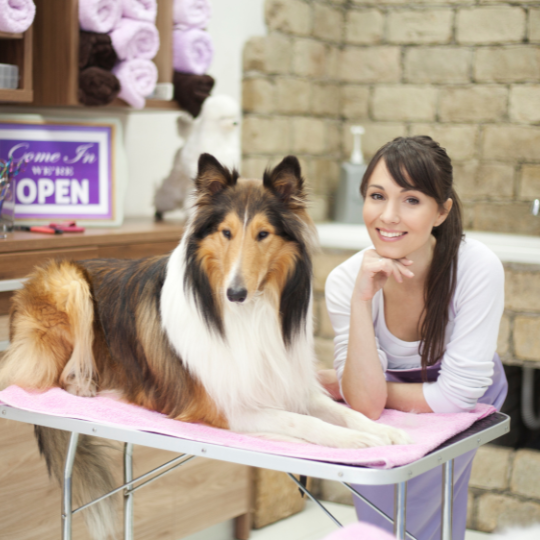 Clients gravitate toward businesses where they feel comfortable. Comfort often comes from familiarity, mirroring how your clients present themselves. Anyone who interacts directly with clients should leave a positive impression.
 But how do you feel when that appointment book has empty slots? Maybe you are just starting out on your own and have an open book. Maybe you are new to the salon and need to build a fresh clientele. Or maybe you have been at your salon for a while, yet you’re just not getting traction with repeat customers.
 <
<


 Some dogs receive clear directions from their owners. They have rules and boundaries at home. This makes them very easy to work with in a professional setting. Other pets will not be well-mannered in a professional setting. The personality quirks we all experience working with pets will vary from dog to dog.
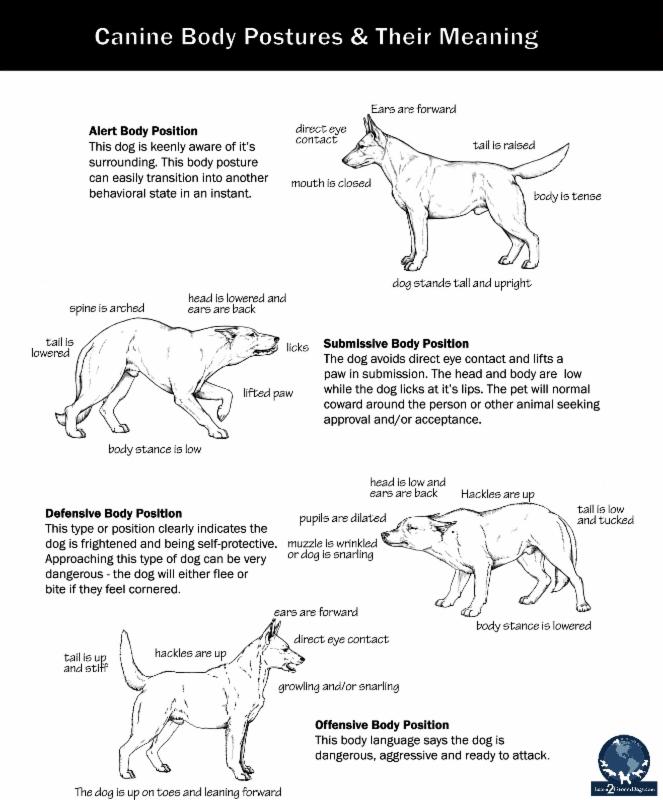
 Here is a collection of basic dog postures we see every day. Every position indicates a different attitude. This is by no means everything you will need to know about “reading” dogs. If you are working professionally with them, this is just the tip of the iceberg.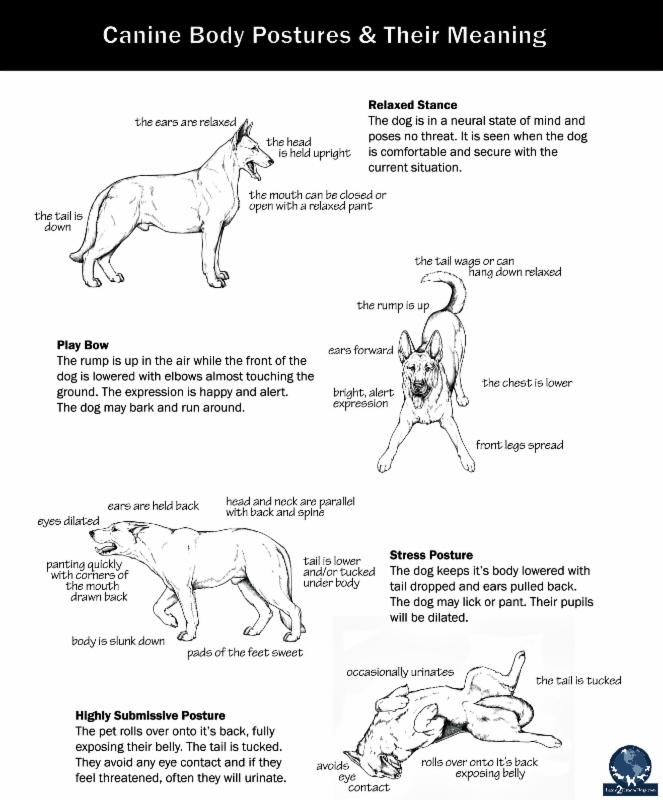
 I knew video content brought clarity to the learning process. We had seen it ourselves with our training program at the
  My jaw dropped. I knew I had found my answer.
 Marc LaFleur: Co-Founder, Assistant Educational Resource Director, Film Director & Cameraman


 After all the B&Bs are bathed, start bathing your trim dogs. Start with the pet that has the heaviest and straightest coat – something that can sit for a few minutes while you bathe your other dogs without risking the coat drying before you get to an active drying method. Let the dog sit in a warm place wrapped in a towel. No need to have air or a dryer on – just plenty of oversized towels with clips. This “wrap a pet” works best after you have thoroughly towel dried the dog.
 For most breeds, the goal is to remove kinks and curls in the coat. Some form of active drying is the only way to straighten the coat while adding lift and volume. On all but the curliest coats, the power from the warm airflow will lift, separate, and straighten the hair shaft for you when used correctly. A few of the curliest coats might benefit from fluff drying with a warmer dryer combined with brushing to get the coat really straight.
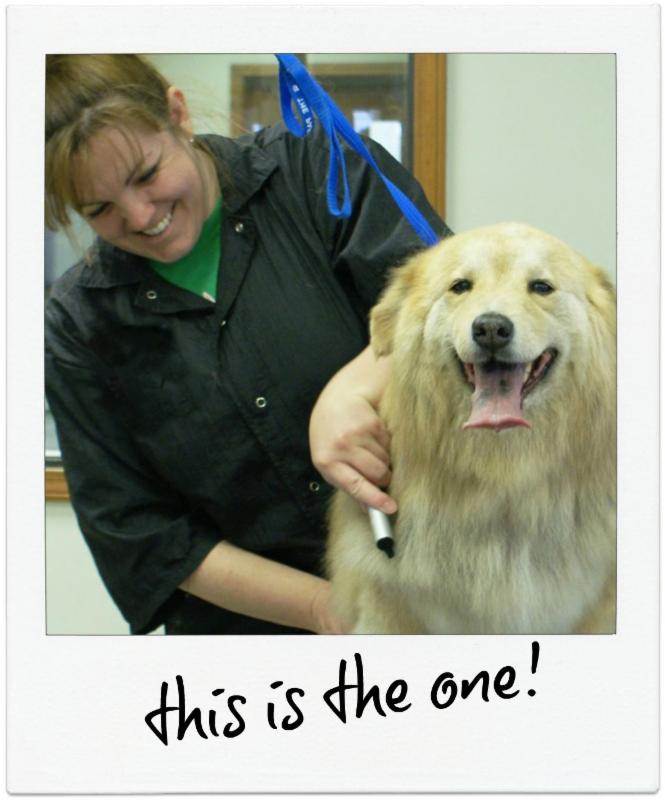 If yours is like most grooming salons, it’s next to impossible to hire the ready-made job applicant. It’s rare to find that person who will be everything you need, right away. Even if you do find great candidates, it’s still going to take work to bring them up to speed. To bring them in line with the way YOU do things in your business. To teach them your culture.
 Observe how they work. Even with the most basic tasks like answering phones or washing dogs, many new hires need to be gently coached. Even if their skill level is weak, if they have the right attitude, you will be able to train them quickly. But you have to understand where they are in their current level of training. And the only way to learn that is by having them demonstrate their work.