Log InCartCall Now: (616) 667-7297

Blog » Business

Am I a Good Boss?

Welcome to my blog!  For the next few weeks, my marketing expert, Joelle Asmondy, will be filling in for me while I work on a large project.  Joelle is a whiz with marketing.  I can’t wait to see which helpful tidbits she shares with you!  Enjoy!

Let’s take a little poll:

  • How many of you own or run a salon?
  • Which of you have a degree in business or have taken any business classes?
  • Has anyone taken any management classes?

That sounds about right.

One of the best things about going to trade shows is meeting people. I get to talk to people from all over the country and I love it when they tell me their stories. We talk about dogs (of course), dog books (um, yeah!), and working with dogs (why not?). It’s a great way for me to stay in touch with our clients’ needs and find out what people are really thinking about.

Let me share a conversation that I have all the time…

“I became a groomer because I love dogs. At first, I just had a few clients. It started with friends and family, then their friends heard about me, and I got even busier. I got to the point where I had to hire someone just to keep up! Now I groom, book appointments, answer phones, run my own business, AND I have (one, two, three…) groomer(s) working for me!”

Sound familiar?

I love that so many dog grooming businesses have grown in such an organic way. It starts with a passion, grows because we’re needed, and thrives because we’re good at what we do. Our clients keep coming back because they know we love their pets and care about their health and safety.

The flip side to this is that very few people who own or manage these businesses have any formal training in supervising employees. We suddenly find ourselves in the role of “boss” simply because we needed help. For many, it’s a natural fit and the transition is painless. For others, the change is more challenging.

The question of the day is, “Are You a Good Boss?” The answer may surprise you.

I reached out to folks from the industry and asked them about the best qualities of their managers. Many of the answers were similar. Let’s look at the answers together and see if we can understand what it really means to be a good boss.

“I’ve grown a lot by working here.”

Do you take the time to offer praise as well as constructive criticism? In busy salons, it can become easy to fall into the habit of communicating like our furry customers – we bark at each other instead of talking. Don’t let a hectic schedule become an excuse for bad manners or meanness. Remember, you’re not just running a business, you’re building a culture. Do you want yours to be team-oriented or hostile and withdrawn? Things don’t get done any faster or better with rudeness than with courtesy.

“She’s willing to try new ideas.”

If you want employees who step up and really help out, you have to be open to trying new things. “That’s the way we’ve always done it,” will quickly kill initiative. Employees who feel like they have input into bettering the process tend to stick around longer and contribute more to the overall business. After all, isn’t that what you need?

“He’s organized.”

If you are constantly running late, running out of stock, and running out of patience, you could be running yourself right out of business. Let your team help you get things in order. Delegate duties that are well-suited to them. It empowers them and also takes a few things off your plate.

“She encourages me.”

I once worked for an amazing supervisor who motivated me just by being encouraging. I tried a new sales approach once, and it went so well that she had me present it to others in our district. Knowing that she believed in me did more than compliment me, it made me want to work even harder!

“He tells me how I can improve in a positive way.”

Two words: constructive criticism. It’s easy to tell someone when they do something wrong. If you want change that sticks, it takes a little more work.

  • Use the sandwich technique: tell them what you liked, tell them what needs to change, then offer positive feedback.
  • Be specific: saying something is done wrong is not helpful. WHAT was wrong about it? HOW should it be done next time? WHY is it important that it be done right?
  • Don’t attack the person, attack the problem: telling someone they’re terrible at trimming nails hasn’t solved anything. Look at the problem – in this case, quicking too many nails – and look at technique. If a person isn’t trained properly, they can’t be blamed for doing something wrong.
  • Don’t assume they know what you mean: it may sound simple to you, but it may not seem that obvious to them. It’s impossible to over-communicate.

“We never stop trying to get better.”

Complacency is the enemy of good business. Successful businesses are always trying to become better, more efficient, and less wasteful.

“She says, “thank you.”

Those are magic words, aren’t they? Thank you for staying late. Thank you for helping me carry in the supplies. Thank you for helping that elderly client to her car. Recognizing effort boosts morale and encourages them to keep giving their best.

“He tells me what is needed and doesn’t expect me to read his mind.”

“I shouldn’t have to tell them…”

“It’s just plain old common sense!”

Work on removing these phrases from your vocabulary. Just because you’ve done something a thousand times doesn’t mean other people understand it as thoroughly as you do. Take a minute, take a breath, and give them the benefit of the doubt.

“She recognizes effort even if we fall short of a goal.”

All success is success. It’s ok to be excited about progress even if you didn’t get quite all the way there. Learn from the experience and try again. Sometimes shared enthusiasm or experience is what’s needed to really make things happen.

Whether you became a manager by choice or by coincidence, it’s important to know how to be a good boss. Building a team and a business takes work – and you don’t have to do it alone. By developing a positive culture, you’re helping to make a better work environment that will attract better employees, will help keep your best staff, and will make your days a lot better.

What topics would you like us to cover?  Jump over to the Learn2GroomDogs Facebook page and tell us.

Click here for a complete video list to make searching Learn2GroomDogs.com even easier! 

Make it a great day!

~Joelle Asmondy


5 Phone Calls That Can Build Your Business

Welcome to my blog!  For the next few weeks, my marketing expert, Joelle Asmondy, will be filling in for me while I work on a large project.  Joelle is a whiz with marketing.  I can’t wait to see which helpful tidbits she shares with you!  Enjoy!

phoneI recently spoke with a new salon owner who is struggling to fill her days with pets to groom. She has a good client base, a website, and a Facebook page but she still has lots of time to fill.

“What am I doing wrong?”

We all know that you can spend a lot of money on big-ticket ways to build your business. Few of us use our most common tool – the phone – to its best advantage. Let’s discuss these simple and effective methods to boost your client list. The best part is that you get immediate results – and they won’t break the bank.

It’s time you learned the 5 phone calls that can build your business.

THE RINGER

This is the client that calls YOU. When phones are ringing off the hook, it’s music to my ears! They are the time savers – you didn’t have to go searching for them… they found you! Make the most of it!

One mistake people make with these calls is that they treat them like an interruption. Even if you are grooming another dog, have another call on hold, and are trying to eat your lunch at the same time, you still need to treat that caller feel like s/he is the only thing on your mind.

Here are a few simple tips to make the most of that call:

  • Answer the phone in 3 rings or less.
  • If the call needs to go to voicemail, make sure you call back as soon as possible. (Make sure your voicemail message is clear, friendly, to the point. After all, they’re busy, too!)
  • Put a smile in your voice. People can hear it over the phone. (You know what else they can hear? When you’re eating. Don’t chew while you’re on the phone.)
  • If you have another client in your salon while you are on the phone, don’t roll your eyes or in any other way demean the caller in front of someone else. You may think you’re being friendly with the client in the waiting room, but what you’re really doing is showing them how they’re treated while you’re on the phone with them. Be professional with everyone, in what you say and do, regardless of whether or not they can see you doing it.
  • If you have to check on something, use the HOLD or MUTE button. No one wants to hear you rummaging around for things – it makes you sound disorganized. Putting people on hold allows you to get your thoughts in order, as well. When you get back after a brief hold, thank them for waiting.

The thing to remember is that you invited them to call, so treat them like the valued guests they are.

THE REMINDER

Another way you might be losing opportunities is not making the most of the client base you already have. Many clients are like us – juggling work and family needs – and we tend to forget things. If you are setting appointments for your clients, do yourself a favor and give them a reminder call the day before the scheduled appointment. (Texting works well, too. Find out what your client prefers and stick to it.) Many clients come to rely on it, so don’t forget. Make it a part of your morning routine.

THE ROOKIE

New clients aren’t used to you, yet. That means that don’t know how special you are and that you treat new clients like royalty. Give new clients the royal treatment with a follow-up phone call after their first visit. The day after their first appointment, give them a call to ask how their pet felt after the groom. Ask if they like the trim. Ask for feedback. And most importantly (if they didn’t rebook at check out), set up the next appointment.

THE RECLUSE

This is the client who doesn’t have an appointment on the books for 6 weeks or more. If you have gaps in your day, it’s might be because these clients do not have recurring appointments. Another way to make the most of your client base is to get everyone on a recurring schedule. If you have 50-75 valued customers, your books should be pretty full – if you take the time to rebook people and get them on a regular grooming schedule. When you look ahead and see gaps, look back 6 weeks and see who’s missing in the days ahead. Give those folks a call and welcome them back. Chances are they don’t even realize how long it’s been since their last visit and will be glad you reminded them to drop by.

THE WRECK

Ok, it’s not a wreck. Most likely it’s nothing more than a minor scratch, but we’re talking injuries, here. Brush burn, nicks, cuts, clipper irritation, quicked nails… any injury. The important thing is that you communicate with your clients. If an injury has occurred, talk about it openly before they leave your salon. Admit any mistakes. Apologize. Most importantly, call them the next day to follow up. Ask how the pet is doing. Ask if they have any questions. It’s crucial to your relationship that you can talk despite any accidental injuries that might happen. If you aren’t comfortable talking to people after an incident, you’re in the wrong business. Pretending it didn’t happen and “hoping they’re ok with it” is not going to retain clients. You need to talk it out.

BONUS TIP – THE RINGTONE

If you are using your personal phone for your business, make sure that your hold music is appropriate for a business. Your friends will think certain songs are hilarious as they wait for you to pick up, but your clients will lose respect for you if your music is inappropriate. It’s your phone – but it’s also your business lifeline. Treat it with care.

There are plenty of big-ticket items that are a part of being in business. You can do so much to build your clientele by making the most out of every customer relationship. Simply pick up the phone. It’s effective – and – inexpensive! These tips are just the start, but used consistently, you can start filling your books fast without draining your bank account!

What topics would you like us to cover?  Jump over to the Learn2GroomDogs Facebook page and tell us.

Click here for a complete video list to make searching Learn2GroomDogs.com even easier! 

Make it a great day!

~Joelle Asmondy


Clocks Are Your Score Keepers – It’s time to revisit an important topic!

We once asked a salon owner about her biggest challenge. The answer was simple – speed.

Most of her staff struggled to get even the simplest trims done in under an hour. That included bath, blow dry, and haircut. Even a basic #7F all trim on a smaller drop coated breed was daunting to some of them.

clockWe walked in and saw a well-organized salon. It was bright. It was clean. The layout allowed for efficiency. The equipment was all top-notch.  Hmmm, we wondered. Why was turning a small to mid-sized dog such a challenge for them?

Then it hit us. There were hardly any clocks around. We only spotted one clock in the main room. It was a smaller digital wall clock set on military time. The owner of the salon was a career military gal who is now retired. I understand why she opted for that style of time keeper, I’m just not so sure that style of time keeping is the right one for a staff of non-military groomers.  Plus, when I was across the room, I could barely read it clearly. The clock was just too small!

If you want to be a successful groomer who can pay your bills while bringing customers back again and again – you need to embrace time.

Watch the time.

Track the time.

Race against the time.

Everything we do with professional pet grooming involves time. You need to be highly aware of every hour, minute, and second. Ideally, a professional groomer should be able to turn a small- to medium-sized simple trim in an hour or less. That includes the bath, the dry, and the trim.

The first thing we suggested to this team was: GET CLOCKS! Nothing fancy, they just needed to be large enough to be easily seen from across the room. The simpler, the better. Every room in the salon needed one hung on the wall. By having a clock in every room, it makes it easy for the groomers to track their own time with just a quick glance. But clocks aren’t enough. Every person working on the pets needs to have a watch on, too.

For those individuals that are really looking to increase their speed, having a timer at their stations can be really beneficial. Before you can start timing yourself, it’s helpful to know what your starting point is.

Break the groom down into sections. Bathing. Drying. Clipping the body. Trimming the feet. Rounding the feet. Scissoring the legs. Styling the head. If you don’t know how long it takes you to do each one of these items, you’ll never be able to improve upon your “best time.”

And it’s far easier to break it down into segments than to look at the dog as a whole. After all, who doesn’t want the opportunity to win at even one or two smaller segments than to get frustrated when they don’t hit the time goal with the overall trim?

Once you know how long it takes you to do each segment, you can set goals and objectives to beat your “best time.” Push yourself. Make a game out of it. The clock will be your score-keeper. Each time you gain even a few seconds, you’ve won a mini victory!  But you’ll never be able to do that unless you can easily watch the clock. Even with all the clock watching, always remember, speed and efficiency can never come at the sacrifice of quality or safety.

2015-10-28_1529rrWhat are your time saving tricks? Jump over to the Learn2GroomDogs Facebook page and tell us.  You can even click here for a quick overview how to use the site if you’re a new member.

FREE TIME SAVING LECTURE HANDOUT

Click here for a complete video list to make searching even easier!
 

Happy trimming,
~Melissa


Building Buzz – Getting the kind of attention that builds your business

One of the fastest ways to build a clientele is to get people talking. You want positive attention, the kind that fuels business growth. Keep this in mind: people never talk about mediocre people, products, services, or companies.

You want to be unique.
You want to stand out.
You want to be interesting.

I’ve used this approach across many of my businesses. When we focused on this method, our growth rates were remarkable. There are many ways to build positive buzz. Many strategies are surprisingly easy to implement, and as a bonus, many are cost-effective. Others require more planning and some financial investment to get the ball rolling.

Choose what works best for your situation and your budget. Whether you’re quiet and shy or bold and outgoing, there are tactics that work for every personality type. The key to making this work is simple:

Know.
Your.
Customers.

  • Know what they like.
  • Know what makes them smile.
  • Know what excites them.
  • Know what triggers them, in a positive way.

When you truly understand your clientele, you can create meaningful, memorable experiences. Done well, clients will seek you out. Done poorly, they’ll run in the opposite direction. Most grooming business owners focus on the rational aspects of their business: pricing, scheduling, pet handling, and the finished groom. What often gets overlooked is the emotional experience of the human client. This matters because, while we love the dogs, they aren’t the ones paying the bill.

People don’t get excited about ordinary services, acceptable haircuts, or fair prices. They talk about experiences that surprise them and make them feel great about their pets. When you make things special, you make them memorable, and you reduce any perceived risk clients may feel about doing business with you.

It’s not enough to run a good grooming business. You need to stand out. Unique businesses deliver great solutions wrapped in a “shiny package” that delights, excites, or surprises the customer. So what makes up that shiny, unique package? Here are four areas to spark your creativity.

Your Salon

How does your salon look? Whether it’s a home-based business, a small storefront, a large facility, or part of a corporation, your presentation makes an impression. What do clients see when they first arrive? What makes your business stand out in a positive way? Is it your signage, exterior décor, window display, or a clever way of guiding clients to your door? Something should catch their eye.

Once inside, what’s their first impression? Is the space clean, organized, bright, and welcoming? Is your reception area inviting? Are brochures and business cards easy to find? Is your indoor signage clear and helpful?

Now think beyond what they see, what do they hear and smell? Is the music appropriate? Are dogs reasonably quiet? Is loud equipment muffled behind closed doors? Do a “sniff test,” or ask someone who isn’t nose-blind to assess the space. Your salon should smell clean and fresh. If it doesn’t pass the sound or smell test, fix it.

Clients have endless ways to compare service businesses. Even if you’re the only grooming salon in town, you’re still being compared to veterinary clinics, hair salons, spas, and dry cleaners. How do you stack up against other professionals in your community?

Personal Presentation

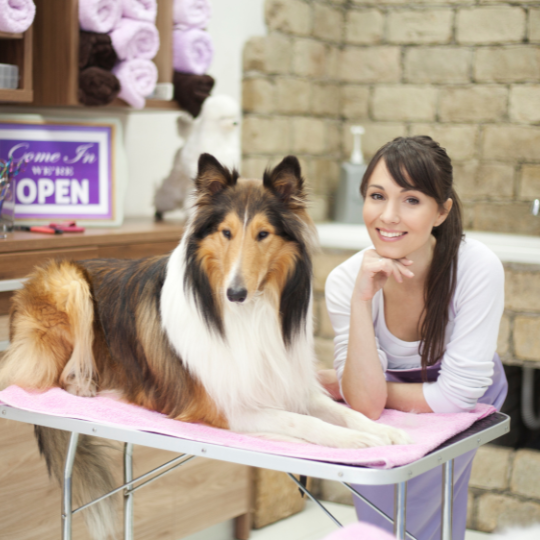
groomer in clean salon with dog on table and open signClients gravitate toward businesses where they feel comfortable. Comfort often comes from familiarity, mirroring how your clients present themselves. Anyone who interacts directly with clients should leave a positive impression.
Your clients are your guests. Treat them that way. If you invited them into your home, wouldn’t you want them to feel welcomed and at ease?


Whether your area is conservative or trendy, a polished, put-together appearance goes a long way. Pay attention to the details. Make sure you’re as well groomed as the dogs leaving your salon. If daily outfit planning feels overwhelming, consider uniforms. Nothing creates cohesion like clothing designed for the job. If you have staff, coordinate your attire so everyone matches. When uniforms start looking worn or tired, replace them.

You spend all day washing and styling dogs, your own hair deserves the same

care. No matter the length, texture, or color, it should be clean and styled appropriately for your workplace. Accessories can make clients smile and help you stand out. Makeup can be an accessory. Jewelry, like earrings or a sturdy bracelet, can add personality. Even fun, comfortable shoes that hold up during long days on your feet can leave a lasting impression.

Your personal presentation can be as unique as you are. Just remember to present yourself in a way that aligns with the clientele you want to attract and makes them feel welcome.

Work Quality

  • Pick something and own it.
  • Pick a breed.
  • Pick a technique.
  • Pick a trim.
  • Pick a personality type.
  • Specialize and do it better than anyone else.

Building a reputation around a specialty makes you memorable. People will talk. New clients will seek you out because they’ve heard how exceptional you are at what you do.
Maybe you love terriers and hand-stripping. Maybe you’re a poodle fanatic who thrives on hand scissoring. Love cats? Enjoy challenging pets? Whatever it is, lean into it. When you deliver exceptional results in your area of expertise, both you and your clients will walk away smiling.

Customer Service

What do you do that makes clients grin and say, “Wow, I can’t believe they just did that!” Customer service starts on the phone and continues through every in-person interaction. All service businesses solve problems. If you can identify and address your client’s pain points, you’re already ahead. Once you understand the issue, offer a thoughtful solution with kindness and confidence.

Sometimes clients don’t even realize they have a problem. That’s where your role as a tactful educator comes in.
Many clients benefit from the trifecta principle of communication:

Tell. Show. Read.

We groom dogs every day, it’s second nature to us. For clients, it’s unfamiliar territory. They won’t remember everything you tell them during their first visit. Reinforce your message by telling them, showing them, and giving them something to read that reinforces what they’ve learned. To succeed, you need clients who keep coming back. Salons that generate positive buzz attract new clients and retain existing ones.

When done well, this approach creates pride but more importantly, it creates security. Security comes from knowing clients value your work and continue choosing your services.

So stand out. Be the positive buzz in your town. If you want a busy business, you need people talking. Finding creative ways to make clients feel special is one of the most powerful marketing strategies you can develop.

Did we miss anything? Head over to the Learn2GroomDogs Facebook page and tell us.

Happy trimming,
~ Melissa


How to Find Job Candidates with Potential – Hiring is Necessary If You Want to Grow Your Business

How often have you advertised for a new bather or groomer and have been able to fill the job immediately? Hardly ever, right? Even after you’ve filled the position, how often has that person been able to perform that job without any guidance or direction from you?

If yours is like most grooming salons, it’s next to impossible to hire the ready-made job applicant. It’s rare to find that person who will be everything you need, right away. Even if you do find great candidates, it’s still going to take work to bring them up to speed. To bring them in line with the way YOU do things in your business. To teach them your culture.
Finding the right people to build your team is always the most challenging part of running any business.

Back when I had my first mobile grooming business, I would park a van for months. I refused to put a poor job candidate out on the road to represent my business. Even if I did find a good candidate, it would still take me over two weeks to personally fine-tune a talented pet stylist.

Those first two weeks were spent directly with me, in my van, working under my direct supervision. Once I felt their skills were strong enough, they were still on a very short tether. I was more interested in quality than quantity. I would check up on them multiple times throughout the day once they were grooming dogs, solo. It was a daunting task.

Through the years, finding great job candidates has remained one of our biggest challenges for all my companies. One of the reasons I opened The Paragon School of Pet Grooming in the early 90’s was to have a steady stream of job candidates. With Whiskers Resort & Pet Spa, we have almost 50 people on the payroll. We are constantly on the lookout for exceptional hires.

Training is at the heart of all great employees. Unfortunately, training takes time and effort. Both of those equate to money out the door. One of the most frustrating things for any business is to go through the training process only to have the new hire leave shortly after training has been completed. However, if you’re going to run a business that has any growth, you’re going to need to hire help.

How do you find great job candidates that will stay with you? I’m not just talking bathers, groomers, and stylists. I’m talking about anybody that would add value to your business and your team.

I wish there was a simple and clear-cut answer to this very old problem. There’s not.

The best way to get started down the hiring path is find job candidates with potential. Here are a few things that I always think about when looking at prospective job candidates.

Where to Find Them

You are going to need somebody who understands that working with dogs takes WORK. A lot of work. I look for proof that they are willing to work. Willing to commit. I scan their resume for clues.

Rural Background

I have found that some of our best employees and students come from a more rural background. Being brought up on a farm always teaches valuable work ethics.  Many times they will have 4H in their background. Being active with horses or dogs is also a positive attribute. So is someone coming from a veterinarian clinic, animal rescue, or any professional pet-related background.

Students and Recent Graduates

Look at attendance records and GPA, not just a certificate or diploma. Check their extracurricular activities. Was s/he in band, sports, or Student Council? These things will indicate how disciplined and focused a job candidate will be. It will also tell you if that person has worked as part of a team.

Previous Job Experience

Check prior work history. Does the candidate have the experience or skills to do the job? Do they have any previous professional experience working with animals?

Here’s a list of traits that make a great new hire. Look for these behaviors during the interview and during their initial trial period.

  • They listen with intent.
  • They are confident but not arrogant.
  • The have the ability to express themselves.
  • They ask questions.
  • They are motivated to improve their current skill levels
  • The understand directions.
  • They have the ability to focus.
  • They have organizational skills.
  • They have the ability to prioritize tasks.
  • They are willing to try something new.
  • They are open and receptive to constructive criticism.

Here are a few tips when it comes to evaluating a new candidate.

  • Ask for references and call them.
  • Treat everyone with respect.
  • Look for attitude – hire based on potential.
  • Learn to trust your gut.

Once you have a new team member, it’s up to you to provide the training that will guide them. Every salon is slightly different. You want your new hire to succeed. That means you are going to have to put in some effort. They need to be clear on your rules and expectations. Ideally, these rules and expectations will be printed in an employee manual  – even if it’s only a few pages!

Observe how they work. Even with the most basic tasks like answering phones or washing dogs, many new hires need to be gently coached. Even if their skill level is weak, if they have the right attitude, you will be able to train them quickly. But you have to understand where they are in their current level of training. And the only way to learn that is by having them demonstrate their work.

Books and videos can be extremely helpful to the training process, as well. But don’t just assume they are reading and watching the material – and understanding it. You will still need to observe them carefully for the first few weeks, making sure the information in the books and videos is being correctly implemented.

I learned a long time ago that I prefer to cultivate my own team from scratch. That way they learned our culture. Our expectations. They came without a lot of baggage that we needed to change. If I was fair with them, in return, they were fair with me, staying with my team for years.

Not everybody will stick with you, long term. That’s all right. It’s part of the hiring process. Part of running a business. You learn to work with it. Always keep your eyes open for great candidates to join your team. Once you know what to look for, the hiring process becomes a bit easier.

To learn more about what to look for in a new hire and how to keep them, check out my video on Learn2GroomDogs.com, CLICK HERE!

What do you think? Jump over to the Learn2GroomDogs Facebook page and tell us about it.

Happy trimming,
~Melissa

How to Find the Perfect Grooming Job

We all are looking for the 3P’s. No matter what field you’re in – this is the goal. Life is so much better when you can attain the 3P’s.

1.    Perfect job
2.    Perfect employer
3.    Perfect employee

If you’re going to work 2000+ hours per year, don’t you want to be doing something you are passionate about? In a place you enjoy? To be respected? Treated fairly? Providing a valuable service to clients? Of course you do. That’s what we all want.

But guess what?  Finding that harmony in a workplace can be a challenge.

Finding a mutually beneficial balance between the employer and employee is a two-way street. Both of you are going to invest a lot of time and energy towards each other. You want to make sure the fit works positively for both of you.

When you go in for a job interview, the prospective employer is not only interviewing YOU – you are also interviewing them!

So what do you look for to find that perfect fit when you are job hunting? Here are a few key points that should be on your radar as you go through the interview process.

Salon Appearance

When you first drive up to the salon, is it appealing to you? It doesn’t matter if it’s a large corporate situation or a small salon in an intimate setting. Is it visually attractive? When you step through the door, what do you see? What do you smell? What do you hear?

Salon Personnel

How did they greet you? Was it warm and friendly? Were they smiling? How did they present themselves? As you toured the salon, what was the interaction with pets that were being groomed? Did they look relaxed? Did the stylists look busy but in control or completely frazzled? (Remember that there’s a difference between being busy and freaking out!) What was the inner salon team vibe? Trust your gut on this one.

Goals & Standards

What type of expectations does the salon have of you? How many dogs a day are you expected to groom? What caliber of grooming are they looking for: basic maintenance trims or high quality pet grooming? What about scissoring? Show trimming? Hand stripping? Cat grooming? Will you be doing all the work on the pets (prep, bath, dry, brush out, finished trim) or will you have an assistant at your disposal?

Career Growth

Does the salon offer incentives for career growth? Do they encourage skill advancement? If you invest the time and effort to improve your skills, how will the salon reward you? Do you have the opportunity for employee reviews on a regular basis to discuss your work and your efforts within the team?

Employment Type

Would you be hired in as an employee, a subcontractor, or leasing table space? There are rules and regulations with each one of these hiring scenarios. The IRS is starting to crack down on subcontractors and leasing table space. With any of the these options, make sure you are clear on what is expected of you from both the employer as well as state and federal obligations within each category. (Read my blog: Independent Contractor or Employee – Who Do You Hire?)

Employee Manual

Does the salon have any type of employee manual? Manuals set the expectations of both the employer and the employee. They hold everybody accountable as long as they are enforced.

Pay Package

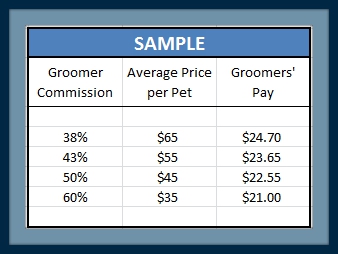
There are many variables to a comprehensive pay package depending upon your hire status. Hourly, commission, or combinations of the two are common depending upon your role in the company.  If a commission is being paid per pet, the percentages can vary dramatically. Don’t let that alarm you. Your earning potential will directly correlate to your abilities and the average ticket price per pet.

Average Ticket Price

The average ticket price per pet will vary from salon to salon. These variances will stem from their location and their operating costs.  If a job is commission based – don’t think that high commission is the only way to go. There is a big difference when you combine the average ticket price in the commission price per pet.

Who would you rather work for?

Job hunting can be daunting. But it doesn’t have to be.

When you appear for a job interview, make sure you are prepared. Present yourself in a polished and professional way – and not just to the boss.  Bring a typed, comprehensive resume. A bunch of information scribbled on scrap paper does not cut it (don’t laugh – I’ve seen it). Supply references. Learn how to “stack” your groomed pets (to see a video on this topic, click here) and take excellent photos of your work for your portfolio to bring along. If you’re a recent graduate from a training program, bring a copy of your final report card with attendance and GPA. If you do any activities to enhance your career, make sure they are listed on your resume. List your animal-related hobbies (dogs, cats, horses, etc.). All of these items will reflect positively on you.

Many salons will also request a “working interview.” Typically, this will be done only after the initial interview, so if you’ve made it that far – congratulations! The next step in the interview process will be to see how well you actually interact with pets. What’s the level of your grooming skills? What type of equipment do you have? How well do you maintain your equipment? How well do you follow directions? How you interact with the rest of the team? Remember, everyone is nervous with this type of interview. That’s OK. Just do what you do best: groom dogs.

When you land on your prospective employer’s doorstep, remember to breathe. If you don’t have a good, firm handshake – start practicing. And smile. Your prospective employer is always going to be looking for a bright, hard-working, and ambitious new hire.

That’s you, right?

Well-trained and comprehensive professional pet groomers and stylists are in demand. With some hard work and a little luck, you’ll find a job that revolves around the 3 P’s…

The perfect job.
The perfect employer.
And you’ll be the perfect employee.

To learn more about employee/subcontractor hiring, check out my video on Learn2GroomDogs.com, click here!

What do you think? Jump over totheLearn2GroomDogs Facebook page and tell us about it.Happy trimming,~Melissa

Paying Pet Groomers & Stylists – How to Create a Payroll System That Is Fair to Everyone in Your Grooming Business

Are you giving away your business by paying high commission fees to your groomers and pet stylists?

Been there. Done that. It’s not fun. In fact, it’s downright frustrating!

Years ago I was at the customary 50/50 split with my mobile fleet groomers and stylists. I groomed right beside my entire team in a van. I worked for the same wages, 50% commission of the grooming, just like everyone else. We did charge a separate “house call” charge per stop but that went to the company, not to the groomer.

I had six vans on the road. We were busy. Really busy!

Then my hands started to give me issues. I was forced to stop grooming for a while as they healed. As the business owner. I thought it would be easy to continue to pull a paycheck even though I wasn’t grooming. That’s when I learned how WRONG I was…

After payroll was met, bills paid, and taxes covered, we were only clearing about 1-2%. I didn’t even have an emergency fund if anything went wrong… anything from new tires to new transmissions, or a brake job on any of the vans. If we ran into any bumps in the road, I was close to being sunk. Was there any hope of me pulling a “salary” as the owner? Not a chance. Once we juggled all the bills, there just wasn’t any money left over.

During that time period, I learned quickly how to read a financial statement. Before then, I was racing so hard grooming, maintaining vans, and guiding my staff on proper pet grooming, I didn’t find the time to read my monthly Profit & Loss Statement (or even understand it!). I quickly learned how important that knowledge was! Bottom line: my fleet of vans and groomers provided amazing grooming services. My entire team was earning nice wages. But all I was doing was creating a job for myself… plus I was producing a lot of stress and aggravation for myself.

Sound familiar?

Ultimately, it was easier for me to shut down my mobile business so I could focus on other industry opportunities. As a business owner, you have a right to earn more than your staff. You’re carrying the weight of the business on your shoulders. All the responsibility. You assume all of the risk. You bear the headaches and the frustrations. Being able to make a fair profit is a part of any business owners’ dream.

My guess is many of you are struggling with a similar situation. Guess what? There is a solution to this problem – and we’ll get to that in a minute.

Fast forward to 2007. I opened Whiskers Resort & Pet Spa. I was determined to do a better job with the grooming department there than I had done years earlier with my mobile fleet. This time I opted to go the hourly route for my grooming team. On paper, the numbers worked. In reality, it was a mental and moral nightmare. Holding artistic pet stylists accountable was like wrestling a greased pig. It just wasn’t working! EVERYONE complained about EVERYTHING.

If this grooming department was to survive and thrive, I had to figure out a different way to pay my grooming team.

I looked to other industries to get my inspiration. The beauty industry held the key.

The system I chose automatically sets up ways to promote, reward, and motivate our team. It uses a combination of commission based earning along with hourly wages for bathers. Groomers and stylists are paid commissions on full groom pets ranging from 38% to 48% based on their ability to meet quotas. We have six Tiers altogether with 2% increment jumps between Tiers. Bathers are paid hourly between $8.50 and $12.00 per hour.

Groomers and stylists have daily, monthly, and quarterly goal requirements. We track and measure the number of:

  • New clients
  • Repeat clients
  • Upsells
  • Pre-booked appointments
  • Pets groomed per day
  • Sales revenue

Groomers and stylists can Tier jump if they maintain the goals and targets consistently for three months. They can also be demoted a Tier if they do not maintain their quotas. Plus, for any stylist to go beyond a Tier 3 on our team, they need to be a Certified Master Groomer by one of the three voluntary testing organizations in the United States:

Becoming a Certified Feline Groomer with the National Cat Groomers Institute of America (NCGIA) or any of the first aid organizations is a bonus.

Our team is also paid a 10% commission for add-on services like teeth brushing and spa upgrades.

All of our groomers and stylists can request a bather to assist them. However, if they choose to have an assistant bathe and prep their dogs, they pay half of their hourly wages. This keeps EVERYONE on their toes and accountable.

In order for the system to work well, the secret is not in the commission levels. It’s in the average price per pet. At Whiskers Pet Spa, the average ticket price per groomed pet runs between $65 and $70.

We have been working with the system for over five years. Along the way we have made modifications and adjustments to meet our needs. It’s been working brilliantly.

I’m a strong advocate of hiring employees NOT subcontractors or renting table space. I like the control it gives and benefits I can offer to my staff. I never have to worry if the government is going to come beat down my door for improper hiring practices. I sleep easier at night. I have no problem paying my company’s taxes. It’s a privilege to live in this country – to pay my fair share of the taxes.

However, if you are going to play Uncle Sam’s game, you need to play by the rules. You are going to have to come up with between 13% and 15% extra to cover payroll taxes. Those obligations are:

  • Social Security
  • Medicare
  • Unemployment Taxes
  • Workers Compensation

If you are paying 50% or 60% commission rates to your groomers – you need to tack on the payroll taxes, too. So your commissions are more like 63% – 75%. Ouch!! That just doesn’t leave you much room to run your business OR turn a profit.

If you are struggling with your payroll or running a profitable grooming business, I urge you to review your financial statements. If you struggle with understanding them, get help. The financial numbers do not lie. They are the barometer of your business.

Remember, you didn’t go into business to lose money. You have every right to earn a fair living – just as your staff has the right to fair wages.

Most successful pet grooming businesses charge a higher price for their services. In turn, they can reduce the commission levels while still allowing their groomers and stylist the opportunity to earn a healthy wage.

Last year our full-time stylists annually earned between $28,000 and $54,000 including vacation time. And that doesn’t even include tips! Rarely do we have anyone complaining about too much work or refusing to do more dogs when we are busy.

This system has really helped us promote, reward, and motivate our grooming department almost automatically. Our groomers earn a healthy wage. We can easily pay all our bills. The department is profitable. We all sleep well at night.

To learn more about how to run the financial side of your business, check out two of our videos on Learn2GroomDogs.com. You’ll see me having discussions with my accountant and financial guru in ways that are helpful and easy to understand. Click here!

What do you think? How is your structure different? Jump over to the Learn2GroomDogs Facebook page and tell us about it.

Happy trimming,

~Melissa


Presenting a Professional Image – It’s time to revisit an important topic.

As pet care ambassadors, it’s our job to keep things looking professional. In my opinion, there are plenty of salons and pet businesses that fall far below the realm of professionalism.  I know the saying can be cheesy – but seriously – dress for success. Would you want to get have your personal pet groomed by someone who doesn’t take pride in his or her own personal presentation? Would you feel confident that his grooming shop was clean, sanitary, and safe?

professionalI know it can get tiring to dress up a little every day. However, our clients are entrusting us with the care of their pets. Like it or hate it, you can easily influence their trust factor simply by the way you look when you greet your clients. Think of yourself as your own brand. Don’t you want your product to be consistent and look great? Of course! And your clients are looking for that, too.

A fashionable, well-groomed appearance is essential when it comes to professionalism in this industry. When you are in a salon, kennel, pet resort, veterinarian clinic, or mobile grooming unit, you have to look the part. Come to work each day looking crisp, clean, and pulled together. Blue jeans, sweat pants, and athletic shorts ARE NOT professional attire! Black, white, or khaki slacks work well. Longer skirts are great for women and so are skorts in warmer climates. Conservative shorts or Capri’s may work for your environment, as well. I’ve even seen leggings work when paired with an over-sized, long top or smock. Look for clothing that is not prone to wrinkling or be prepared to learn how to iron!

Today, there are many options for hair-repelling garments. There are all types of tops and bottoms in a wide variety of styles.  If you work in a salon with a dress code, this may be easier. If not, have some fun with the pet styling fashions that are available. It may even be a good idea to keep an extra outfit or smock around the shop as a back-up. If you get drenched or messy, a quick change will instantly boost your comfort level and mood.

Remember, low-cut tops and short-shorts are never professional!  If you have shorts that are too short or a top that is too revealing (especially when you are squatting down to pick up a dog), then you’re not displaying professionalism. Muscle shirts and shirts with the sleeves cut off don’t make the grade, either.

Don’t forget your footwear.  Most pet groomers are on their feet for hours. You are standing, lifting, bending, squatting, and twisting – all day long. Although clients may not be looking at your feet, having solid, supportive footwear will promote comfort for to you. Being comfortable makes it easy for you to be warm and friendly to all your clients. Supportive footwear will also enhance the longevity of your career.  Over the long haul, your feet will take a beating.  Don’t skimp on your footwear. Invest in the best.

Scent is a very powerful sense. When it comes to your perfume, cologne, or fragrance you put on pets, be light-handed with the spray. Many people have allergies and are sensitive to fragrance. Plus, if you have multiple staff members wearing all different scents, it can be unpleasant for all. The same can be said for your makeup and hair color.  You want to appeal to a wide range of clients, so conservative is best in most cases. When in doubt, be a minimalist. Remember, you can always “be yourself” once you leave the shop.

While we are on scent – what about your breath? If you are communicating to others – clients or coworkers – bad breath is down-right offensive. Brush, floss, and use a mouthwash regularly. Not only will it save your teeth, your clients won’t be offended as you discuss what trim will work best on Fluffy today.  Breath mints and gum can be helpful between brushings. Lose the gum quickly once it has done its job. Chewing gum in front of clients is distracting and it is unprofessional in front of clients. It’s no fun to listen to someone chomping away while on the phone, either. The same can be said for eating and drinking on the floor. Keep snack and coffee breaks limited to behind closed doors.

Proper hygiene is crucial. It should go unsaid, but being clean and odor-free is a must. There is nothing more offensive – and embarrassing – than personal body odor. The famous motivational speaker Zig Ziglar, said, “People often say that motivation doesn’t last. Well, neither does bathing – that’s why we recommend it daily.” Nothing could be more true!

Your own hair needs to be clean and simply styled. If your hair is long, get it tied back and away from your face. As your work with clippers or shears, you don’t want to be trimming a lock of your own hair as you scissor that leg. I hate to think of how many people with long hair have caught their tresses in the spinning grinder as they worked. Ouch! Or worse yet, drag it through anal gland expressions, defecation, or urine.

proHaving a touch of jewelry is a nice finishing touch.  Done well, it always reflects positively. However, just like with fragrance – go light. A few simple rings. A durable watch (and you always need to know the time!!). If your ears are pierced – stick with super simple earrings – something a dog can’t accidentally catch in a paw, ripping your ear lobe. If you opt for a necklace, keep it tasteful. Don’t be in love with it. Dogs will catch it in their paws and break it, eventually. The same thing with is true with bracelets.

Having well-groomed fingernails is what I consider a bonus. Working with dirty dogs and trimming toenails lends itself to dirty fingernails – even if you do a lot of bathing. Trimming Poodle feet has a tendency chip fingernails. Personally, I liked to keep my nails painted. Painted fingernails will hide all sorts of flaws. Unfortunately, when you do a lot of bathing, standard nail polish has a tendency to peel off quickly – sometimes in as little as one day.  My solution was to have my fingernails professionally done every two weeks. Both acrylic and shellac nail applications seem hold up well to the abuse groomers put their hands through. Ragged nails on women and men can be easily tidied up. When you give the pet to the owner, their eyes are naturally drawn to your fingers as you hand over the leash. Wouldn’t filed nails make a great impression? Plus, it gives you a little time to pamper your most valuable asset – YOUR HANDS!

Pay attention to the details. Judy Hudson is one our popular Learn2GroomDogs.com Training Partners. In her video, What I Know For Sure she shares this tip: “It doesn’t cost a lot to be clean. It doesn’t cost a lot of money to be neat and tidy. All it takes is a little elbow grease.”

When we become frustrated that no one seems to take us seriously, we need to look objectively at ourselves to see if we are projecting professionalism.  If you have clients who…

  • fail to show up for scheduled appointments,
  • don’t bother to call when they have to cancel an appointment, or
  • constantly haggle with you over grooming prices,

…it’s a sign of a lack of respect for you and your profession. It may be time to be honest about your personal presentation. Your appearance should convey the message, “I’m a professional and I deserve respect.” When you respect yourself, others will, too.

As pet care ambassadors, not only is it our job to groom pets – but it’s also our job to present a professional image for our industry. Can you afford to look like you just rolled out of bed and ran into work? What about trade shows? How does it look when you accept your award at a grooming competition when the pet looks better than you do? How can you command respect from your peers and clients when you don’t look the part? I don’t know any successful person who doesn’t sweat the details. Being impeccable, both personally and in your workspace, shows the client that you care about yourself. The message you are sending out is that you are confident with your skills. You are successful. You respect yourself enough to do the same for them – and for their pet.

What do you think? Do you feel like a professional? Jump over to the Learn2GroomDogs Facebook page and tell us about it.

Happy trimming,

~Melissa


Is it Time for Licensing in the Pet Grooming Industry? – The Time Has Come to Consider Professional Regulation for Pet Grooming in the United States.

When I first opened The Paragon School of Pet Grooming in 1991, I had to be licensed by the Michigan Board of Education. Granted, it was not licensing for pet grooming – it was for ensuring students received consistent training in a safe facility. The licensing was primarily for their protection – not ours.

Was the set-up process challenging? Absolutely! We had to prepare, complete, and comply with all required:

  • forms
  • regulations
  • rules
  • fees
  • documentation
  • inspections

It was daunting, to say the least. To make it even more challenging, we have to renew our license annually. Each year we have to jump through all the hoops again.

I found the entire licensing process tedious. Frustrating. Annoying. Intimidating.

But you know what? In the long run it made us a much stronger business and a better school. It forced us to pay attention to details I might have missed. Those details could have put our pets, students, employees, and clients at risk.

Today, more than ever, I feel licensing is necessary. Regulations and licensing are put in place to protect the health, safety, and well-being of the consumer. They also set acceptable standards in each field.

Today, there are hundreds of occupations and businesses that are either licensed or regulated.

  • accountants and CPAs
  • real estate agents
  • appraisers
  • architects
  • builders
  • carnivals
  • childcare
  • collection agencies
  • cosmologists and barbers
  • engineers
  • funeral directors
  • landscape architects
  • medical doctors
  • chiropractors
  • post-secondary schools
  • ski areas

…and the list goes on and on…

So why should professional pet groomers be any different?

Professional pet grooming is similar to two other industries: cosmetology and childcare. Both are heavily licensed and regulated.

...And for good reason.

Licensing and regulation isn’t needed because things are going well. They happen because problems exist that need to be corrected.

The idea of licensing within the pet grooming industry is not a new one. I still remember the efforts of Gregory Krisp and Kathy Rose 20 years ago. They were backed by the late Sally Liddick and Barkleigh Productions. They formed the Groomer Licensing Founders Committee in 1996. They were on the forefront of the licensing issue in our industry. Unfortunately, they were way ahead of their time. Their efforts fell upon deaf ears.

But some people were listening. Voluntary certification organizations were stepping up to the plate. They created comprehensive education and testing programs for groomers and stylists. Many states had strong professional groups that were hosting educational workshops. Ways to strengthen our profession were being developed from within. Voluntary licensing, testing, and continuing education were building in intensity.

I fully endorse setting mandatory regulations, standards – and ultimately licensing – for the pet grooming industry. But it needs to be on OUR terms, not by well-meaning individuals with no knowledge or understanding of what they are attempting to regulate.

Ideally, pet industry leaders and professionals would work closely with individual states. As they work together, they would create regulation guidelines for professional grooming establishments that are realistic and attainable for any competent professional.

Carelessness has created situations in which dogs have been injured – or worse – in grooming salons around the country. Owners are up in arms… and they should be. If it was my pet – I would. If it was your pet – my guess is you would be, too. Wouldn’t you want to do something about the safety and well-being of pets left in a pet professionals’ care?

The State of California tried to pass licensing for professional groomers. That bill was not written by industry leaders. It would have been devastating if it had passed because it was drafted by people who did not understand our industry. Teri DiMarino and Judy Breton, acting with the newly formed California Professional Pet Groomers Association, Inc., won a Barkleigh Honors Award for their extraordinary work in getting that bill defeated. Texas, New Jersey, New York, and Massachusetts currently have bills in the works. Licensing for professional pet groomers is just around the corner for many states.

Luckily, we have a group on our side. Recently, the Professional Pet Groomers & Stylists Alliance was formed. According to a July 21, 2015 press release, “The PPGSA was created to harness the experience and expertise of the three major national pet styling associations, IPG, ISCC, and NDGAA to develop industry wide best practices.” They are working together with other industry leaders, associations, and major retailers to develop a set of suggested Basic Industry Standards. These standards could be presented to each state as licensing moves forward.

The primary focus of the PPGSA is on pet safety. Subject areas include:

  • animal housing
  • handling
  • equipment
  • products
  • facilities and safe operations
  • attentive animal care

The PPGSA will not offer any form of certification, testing, licensing, or regulations for our industry, but they are our voice. In other words, they have our backs when a bill hits YOUR state. They will be there to guide industry leaders – in each state – as bills are introduced. The Basic Standards will guide future legislation. It has been created to be used by any school, organization, or certification program. It can be enhanced to fit their unique needs and goals.

Regulations and licensing is definitely a challenge for any business. However, the time has come to seriously consider professional regulations for the pet grooming business in the United States.

If a bill is introduced to the State of Michigan to regulate professional pet grooming, I’ll be one of the first people to jump and help craft a workable bill. I hope you have the same attitude when the situation presents itself in your state.

What do you think? Are you prepared, worried? What do you think should be considered?  Jump over to the Learn2GroomDogs Facebook page and tell us how you feel.

Happy trimming,

~Melissa

8 Ways to Understand Your Boss

I love hearing success stories. I especially love it when they are grooming salon success stories!

Over the years I have met thousands of groomers. Some are solo stylists. Others have small teams that make their businesses flourish. Others have large teams or are part of a larger corporation. Not all are business owners or managers. Many groomers and stylists I meet are simply a part of a very successful team – and love their jobs.Almost every one of them, no matter where they started, started with a dream:

  • A dream of grooming pets professionally.
  • A dream of finding a rewarding career.
  • A dream of starting a business.
  • A dream of growing that business.

Nothing makes me happier than hearing about a grooming business that is knocking it out of the park. They have a handle on their work load… their finances… their management skills. Their grooming skills just keep getting better with time. They have strong customer service skills. If they face a challenge – they tackle it – and fix it or improve it.

I can guarantee every successful grooming business owner fully understands this quote:

This statement could not be more true. Your true boss is not yourself. It’s not your manager. It’s not the person who signs your paycheck. None of them created the funds fueling payroll.

Customers do.

A grooming business provides something of value to the customer in exchange for payment. If you don’t provide the type of grooming the customer expects, they will go somewhere else – plain and simple.

Principles to Learn

Your customers are the most important aspect of developing grooming business.

  • Customers = job security
  • Customers = income
  • Customers = advancement
  • Customers = continuing education
  • Customers = opportunities
    • The customer ultimately determines whether or not you have a job.
    • Many people think the company is the source of their job security. They are wrong. It’s based on whether customers keep coming back. Repeat customers create job security.
    • Customers provide the money that you receive on a regular basis.
    • Building strong relationships with customers is the fastest path for career advancement.
    • Customers provide an opportunity for you to grow your grooming skills every time you groom and style their pet.

Here are 8 things you can do right now to build a positive relationship.

Impress your “boss customers” when they walk through the door with their beloved pooches.

  1. Smile. Smile. Smile.
  2. Call your customers by name – and know their pet’s names, too. People love to feel known and welcome. Use their names – don’t be shy!
  3. Recognize repeat customers and their pets instantly. The best way to do this is to keep accurate DETAILED customer service records. Having the client’s essential information in one place makes client management easy. Creating a trim history record of each haircut is particularly helpful. This history allows you to easily refer back to it during future appointments.
  4. Go out of your way to address the needs of your customers and their pets. Customer education is at the heart of this. Talk to them. Teach them. Provide handouts or visuals to hone your message.
  5. Try to impress your customer, like you were angling for a raise from your boss. Never skimp on quality grooming. Always do something a little above and beyond what they expect – but make sure it’s something they will appreciate.
  6. Think about your paycheck every time you talk with a customer.
  7. Be reliable. Keeping your promises builds integrity, trust, and customer loyalty.
  8. Always look for ways to advance and boost your skills. The best groomers and stylists are always looking for ways to improve their performances. Always look for ways to enhance your service edge.

Think about it. If we dealt with all customers like they were “the boss,” I bet customers would be treated very differently.

This is a key concept highly successful grooming establishments understand. The customer controls our paychecks.

Not yourself.

Not your manager.

Not the salon owner.

Sam Walton was right. The customer IS the boss. They can fire anybody – at any time – simply by spending their money elsewhere.

Every successful grooming establishment I know applies this principle to every customer interaction they have. Do you?

Do you treat your customers like they are “your boss?” What do you do to cement that relationship?  Jump over to the Learn2GroomDogs Facebook page and tell us about it!

Happy trimming!

~Melissa