
Check out our latest blog posts!
Learn how to improve your skill set or discover the latest news in the grooming industry.


Check out our latest blog posts!
Learn how to improve your skill set or discover the latest news in the grooming industry.
When you attend trade shows and clinics, preparing in advance can help you make the most of this experience. Seminars are a great way to improve your skills and recharge your batteries. Meeting your mentors and soaking up their knowledge is a fantastic opportunity, and if you can see and hear them in action, it maximizes the experience. When you know what you need and what you hope to get out of the session, you can better prepare yourself to squeeze out as much as you can from your time together.
 1. Step into the session with a very open mind.
If you are young and fresh to the industry, the amount of information that you get can be intimidating. Listen, take notes, and soak up every bit of knowledge that you can. Sometimes that may mean suspending what you know in order to make room for something new. Trying new techniques or ideas can be uncomfortable just because you’ve never tried it before. Keeping an open mind enables you to break from your routine to get different results. With time and practice, the awkwardness goes away and you become more efficient. Remember: having more tools, techniques, and knowledge allows you to have multiple approaches to a problem.
2. Make efficient use of the time available.
Many trainers at these sessions have limited time. They are often rushing from one obligation to another – judging competitions, speaking in seminars, or providing hands-on clinics. If they can, many will take the time to answer your questions. If you know what you need to ask, it helps you make the best use of the brief time you may have together. Be prepared – write down your questions in advance so you don’t forget something important or stumble over your words. Being ready to participate in the learning experience helps you make the best use of the session – and the presenter will respect you for it.
3. Don’t be nervous – plan ahead.
With so much to see and do at trade shows, it’s easy to feel overwhelmed. Break out the catalog and study the floor plan before you arrive. Map out your plan of attack to make sure you get to everything you need to see. Some shows have free apps you can download to help make the most out of your experience. Know the schedule of events so you don’t miss that speaker you’ve been hoping to see. Sometimes it’s good to go to shows like this with a friend – divide and conquer, then compare notes later.
 As your knowledge and skills advance, the clinics won’t be as daunting. They will become a great way for you to fine-tune your skills. You can begin to network and exchange thoughts with others in the industry who can provide insight when you need it. Plus, these types of functions are a great way to invigorate your career.
These principles remain valid for many forms of advanced learning in the pet grooming industry. Maybe you don’t have the opportunity to do a hands-on training session. There is a wealth of information to learn from these all-star pet stylists. You might be in the audience at a trade show, pet grooming competition or watching a grooming video lesson featuring one of these top stylists. The better you can execute the core skills with your everyday grooming, the easier it will be to successfully transfer their lessons to your own grooming table.
If you are not as accomplished as these award-winning and highly successful pet groomers are – take note. You can learn a lot from their well-developed skills. Learning new skills, tips, and tricks make grooming pets all that more fun!
Click here to register to see Pina Pinkusevich in Grand Rapids, Michigan.
Happy Trimming!
~ Melissa
P.S.
Do you have any tips to share? Jump over to the Learn2GroomDogs Facebook page and tell us.

Illustration 1
These tools can be confusing. When you read their descriptions in catalogs, they’re so similar…
They do the same thing, don’t they?
No, they don’t. Let me explain.
Both remove undercoat on thick coated dogs. It’s the METHOD of removal that varies. One pulls out dead and shedding coat without cutting the fur. The other has sharp, curved teeth which remove the undercoat but will also cut the coat. One is used primarily on dry coats, both before and after the bath. The other is effective prior to shampooing, during the bathing process, and after the dog is clean and dried.

Illustration 2
The difference isn’t so much in the names. The names are interchanged all the time. To keep them straight in my own mind, I call them different things. It’s particularly beneficial when giving directions to others to utilize different names.
Rakes
Rakes are designed to pull out dead coat and shedding fur with ease. Typically they are a T-shape (see Illustration 1) with rounded pins on the head of the T. On some heads, the top bar is long, up to 6 inches across. On other designs, the head may be only a couple of inches wide. The length and shape of the teeth will vary, too. On some rakes (see Illustration 2), the teeth are short and shaped almost in a tiny cone-type fashion. With others, the teeth are long, sinking deeply into heavy, long coats. On almost all models, the handle comes directly out from the cross bar head with all the teeth.
This type of rake is designed to remove dead coat while not damaging the healthy coat. You work the tool in the natural direction of the coat growth. Care must be used not to sink the comb too far into a dense coat repeatedly with too much pressure. Tugging too firmly on a thick or tangled coat will be uncomfortable for the dog and difficult for the groomer. Repeatedly digging in too deeply could injure the skin, as well.

Illustration 3
Used correctly, rakes can be highly efficient for removing dead coat or “lint” from rustic-coated breeds. They are used primarily on double-coated, heavy-coated, or rustic-coated dogs.
Undercoat Rakes
Undercoat rakes have many small, sharp, curved blades set close together that remove undercoat. They are available in a variety of tooth widths, making this tool suitable for a wide range of breeds. On shedding breeds, they can remove dead, fuzzy undercoat in minutes, yet leave the top coat shiny and healthy. On harsh-coated dogs, they mimic the hand-stripped look quickly and easily.
Undercoat rakes can be used on a wet or a dry coat. Pull the rake in the direction of the coat growth.Always start with a wider toothed rake to start (see Illustration 3). Work down to narrower teeth as the tool pulls through easily, removing less and less coat.
Undercoat rakes normally work better when used prior to bathing or in the tub on a wet coat.
Use caution when working with this tool. On some coat types, especially heavy-coated dogs, they will cut the top coat while removing the undercoat. While the blades are curved (see Illustration 4), you still need to be careful how much pressure you put on the tool as you drag it through the coat so you do not injure the skin. Use caution when working around areas where the skin is thin like in the hock area, ear junctions, flank, and armpits.

Illustration 4
Undercoat rakes work well on many coat types including double coated breeds, heavy coats, and rustic coat types. The work exceptionally well on any breed that is hand-stripped like many of the Sporting or Terrier breeds. Just be sure to monitor your progress as you work this tool over the dog.
Here is a cool trick I have seen used with undercoat rakes. This trick minimizes cutting the coat while pulling out dead coat, particularly once the coat is clean and dry. Simply take a thick rubber band and wrap it around the hooks of the blade (see Illustration 5). The rubber protects the coat from excessive cutting while the rubber helps grip the dead coat, allowing to be pulled out almost effortlessly.
Happy trimming,
-Melissa

Illustration 5
P.S.
Do you have any tips to share? Jump over to the Learn2GroomDogs Facebook page and tell us.
As with all grooming techniques, there are many ways to get the job done.
 When I was a contest groomer, I always did my Poodle cuffs by hand. I would brush the coat down then give it a quick fluff with my comb. Once it was fluffed, I’d glide a long straight shear in and set the lower edge. Then I’d re-fluff and grab my long curved shears to round and bevel the edges. It was time-consuming.
Done well, the beveled cuffs came out gorgeous. Done poorly, they were a sloppy mess. I had four chances to be perfect with my cuffs – or four chances to really mess up.
For pet dogs, I quickly taught myself another method. It was quick. Fool-proof. And it worked well on most of my shorter stylized pet trims.
On most of my pet trims, I cheated off excess leg hair by skimming it with a guard comb. Not only was it fast – it helped me set the length, too. Once I had the legs roughed in, I would brush the leg coat over the clipped foot with a firm slicker brush. I would slide my hand down the leg with my thumb and first finger resting just below the clipper line on the Poodle foot. My fingers would be my guide as I slid in a small pair of detailing scissors (I choose small shears for the safety of my own fingers!). I would scissor all the way around the cuff line, removing the longer hair.
When I released the coat… voila! A perfect cuff for an active pet. I could adjust the fullness of the beveled cuff by adjusting my scissored line somewhere between the lines of the knuckles of the foot and just below the clipped line on the foot. The lower I was on the foot with my cuff line, the fuller the bevel.
 Once my cuff was set, I would neaten and finish the entire leg with shears, smoothing out my guard comb work.
I used this method for years. I even started to incorporate it into my more polished work in the contest ring. It worked well there, too – especially if I used it as a double-check after I did my cuffs with longer shears.
In the past few years, I’ve seen extremely talented stylists start using another method to get perfect cuffs every time. They use a #30 or #40 blade on their clippers! Who knew?
So how do you do it?
It’s very similar to my old method, but instead of shears, pet stylists reach for their cordless 5 in 1 style clipper. They set the blade at the shorter levels, basically the length of a #30 or #40 blade.
Hold the foot off the table at a comfortable level for the pet. With a firm slicker brush, brush all the hair down around the foot. Once the coat is brushed into place, slide your hand down the pet’s leg, thumb and forefinger closest to the foot.
 Stop and hold the foot with your fingers coming to rest right at the clipped cuff line. While maintaining your hold on the foot, gently trim at right angles around the cuff with the #30 or #40 blade. Simply touch the coat at the edge line you want to set.
The fullness of the leg coat will determine where you place the line. For fuller legs, use the top of the crease marks on the toes. If the leg coat is shorter, move the line closer to the clipped cuff line.
When you release the coat, the fur will be nicely beveled. The line should be crisp and free of all stray hairs. As with the hand-scissored cuff, check the work from all angles to make sure the cuffs are level from side to side and front to back. Don’t forget to look from table level when inspecting your cuffs for perfection.
It may take a few tries to perfect this technique, but once you do, creating flawless cuffs every time becomes simple. With a well-prepped dog, this technique is fun, fast, and super safe.
Happy trimming,
-Melissa
P.S.
Do you have any tips to share? Jump over to the Learn2GroomDogs Facebook page and tell us.
Welcome to my blog! For the next few weeks, my marketing expert, Joelle Asmondy, will be filling in for me while I work on a large project. Joelle is a whiz with marketing. I can’t wait to see which helpful tidbits she shares with you! Enjoy!

It’s the week before Christmas and everyone rushes
from Bichons to Shih Tzu’s with clippers and brushes.
Tis our busiest season and everyone knows it.
We’re stressed and we’re tired – though nobody shows it!
The shop is set up to be warm and inviting
and we’re all so grateful that no dogs are biting!
With bathers in aprons and stylists in smocks,
our team is assembled and watching the clocks
when out in the lobby arose such a clatter
we ran to the front to see what was the matter.
With leashes in hand, we kenneled pups safely,
(We never take chances with anyone’s safety!)
Our beautiful lobby, once tidy and neat
was now complete chaos with guests on their feet.
The source of the barking and noise was no grander
than just a big dog with delusions of grandeur.
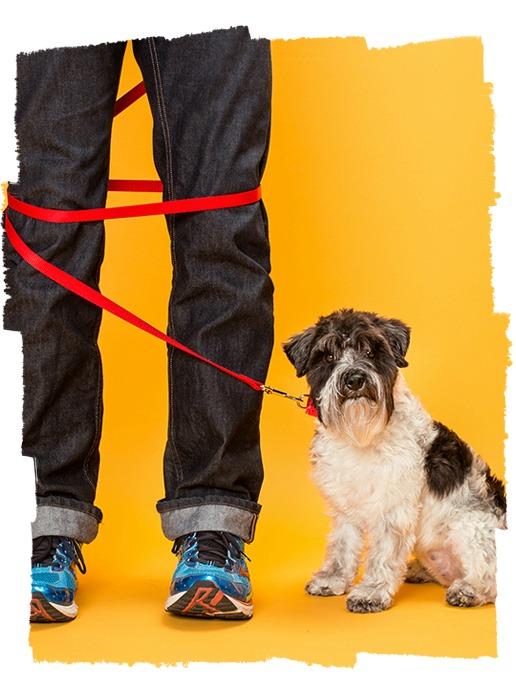
A big ol’ sweet mixed breed so lively and quick,
we knew in a moment he must be “Saint Nick.”
“Saint Nick” is just “Nicky” but everyone knows
the kind of behavior he typically shows:
“Down Nicky! Don’t eat that! Get back here! Stop hissin’!
Don’t do that! Stop barking! Why won’t you please listen?!”
From the top of her lungs her owner did shout,
“Now stop it at once or I’ll take you back out!!”
With legs like a hurricane Nicky did fly
to each couch, chair, and person who stood closely by.
He tangled up leashes, to laptops he flew.
He knocked them aside – stepped on their dogs, too!
And then when we thought he was settling down,
he jumped, and he barked, and spread drool all around.
We all scrambled to help and use calming voices
before customers wished they had made different choices.
Saint Nicky was filthy, from his head to his toes
and his hair was all matted (you know how it goes).
A shoe lace of slobber completed the mess
and where it would land was anyone’s guess.
His eyes – how they twinkled! His dog tags, how clinky!
His coat – how atrociously pelted and stinky!
His sweet little mouth was drawn up in a grin.
We wondered just what in the heck he’d rolled in!
His stump of a tail knocked bystanders down
as he turned, and he dashed, and he slobbered around.
He shredded a jacket with teeth like a knife –
it’s clear he was having the time of his life.
Nick’s owner was clearly in over her head –
her own hair in tangles, her face turning red.
(She’d given no training and took no advice
And now this poor woman was paying the price.)
We got Nicky settled and gave him a bath
and cleaned up the messes he left in his path.
At the end of it all, he shone like a champ.
(We did the best possible – he was still slightly damp.)
He ran to his master, who gave us a smile.
We knew she would need to rest up for a while.
But we heard her say exclaim she drove out of sight –
I’m so sorry ’bout that! Please have a good night!”
Make it a great day!
~Joelle Asmondy
P.S.
How are you getting through the holidays? Jump over to the Learn2GroomDogs Facebook page and tell us.
After working professional in the pet grooming industry over 35 years, the only time I worry about dealing with clients is the Christmas holiday season.
 The two weeks preceding the actual day can be a chaotic mess. With Christmas shopping, decorating, baking, family gatherings, holiday socials to attend, and every regular client you have wanting to be booked as close to Christmas as possible . . . phew! December can be an exhausting month!
But, wait – t doesn’t have to be! Christmas organizing all year round will let you create that picture perfect holiday without nearly the stress.
Getting Organized & Ready
The Salon
The Holiday Image
 Getting Through the Dogs
Organization on a Personal Level
 After the Holiday?
With a little bit of pre-planning, you’ll be breezing through the holiday. It’s so much more enjoyable for everyone to be in a festive spirit instead of being the Grinch. Put some effort into setting yourself up to enjoy the best of the season – it makes the time fly by. And you might even get a few moments to relish this time of year!
Always remember, to be successful – to thrive – you need to put forth effort today so that your future will be bright.
Happy trimming !
~Melissa
“The success you have tomorrow is predicated on the work you do today.”
~ Darren Hardy
 I saw this quote recently and it really got me thinking.
Are you struggling or thriving? Whatever it is, it stems from things you did yesterday. Last week. Last month. Last year.
Everything you do is a set-up for the future. Your health. Your relationships. Your job. Your business. This single thought is essential to everything we do.
Do you:
What you do today totally impacts your future.
So how does this play out in the grooming world? What can you do today to ensure you will thrive tomorrow?
Here are 5 areas that can really influence your overall success.
The Amount of Knowledge You Apply
The more you know about your field, the more confident you will be. That confidence transfers in many ways to grooming table. Plus, it will play through in a positive way to your clients. You will be able to communicate effectively with them. You’ll instantly know how to groom any breed of dog, in any condition, with any temperament. The more knowledge you have, the easier – and more enjoyable – your job will become every day.
What are 3 things you can you do today to help your future?
The Quality of Your Work
High-quality work always brings customers back. It creates client loyalty and positive relationships. For most clients, their pets are much like their children. They love them and want to be proud of them. If you want to win the hearts – and the pocketbooks – of your clients, make sure the work at the other end of the leash is top-notch.
What are 3 things you can you do today to help your future?
Winning at Customer Service
As a professional pet groomer or stylist, you are a problem solver. Clients bring you their pets with a host of problems. Most are overgrown, dirty, or shedding. You need to uncover what their underlying needs are and present solutions to solve the problem. As you’re solving the issue, do it in a way that creates a memorable experience for the customer. It’s important to do more than just meet their expectations and satisfy their needs. Do it in a way that excites and delights them every step of the way. A smile will go a long way but there is much more to the customer service game. You need to look at every interaction with the client and figure out how to make it extremely positive.
What are just 3 things you can you do today to help your future?
 Presenting Consistent Marketing
Effective marketing creates a desirable experience that connects with prospective customers and clients. To take it even further, it’s about creating clients who want to share their experience with others. Marketing is more than just your business card or a paid ad. It’s about how your phones are answered. It’s interaction with clients and their pets. It’s the impression you, your staff, and your salon make when your client walks through your door. It’s the images and messages you post on social media. It’s your printed material. Your advertisements. Everything you do to entice pet owners to use your service.
What are just 3 things you can you do today to help your future?
Being Financially Savvy
No one starts a grooming business to give away their services or lose money. That’s not what going into business is all about. Whether you are a solo stylist, an employee, or a business owner, you need to pay attention to your money. Ideally, you need to charge enough for your services so that you can pay yourself a fair wage, pay all of your bills, pay your staff (if you have them), pay your taxes, and still have a little left over for emergencies. If you don’t pay attention to the details of how money flows into your business and how it goes out, you could get into trouble quickly. You have a responsibility to yourself and to your team to be financially knowledgeable.
What are just 3 things you can you do today to help your future?
This is just the tip of the iceberg. There are countless actions you can focus on today to positively impact your future. Hopefully the ideas in these sections will get your juices flowing. There is always SOMETHING you can do today to improve your tomorrow!
Everybody wants to be successful. The bottom line is that success is hard work. You have to put in the effort. You have to put in the time. You have to pay attention to the details. Sure, today might be difficult, but think about the long-term benefits? Will your efforts today help you tomorrow? What about next week? Next month? Or even next year? There are many areas you can focus on to improve tomorrow.
Always remember, to be successful – to thrive – you need to put forth effort today so that your future will be bright.
Happy trimming !
~Melissa
Welcome to my blog! For the next few weeks, my marketing expert, Joelle Asmondy, will be filling in for me while I work on a large project. Joelle is a whiz with marketing. I can’t wait to see which helpful tidbits she shares with you! Enjoy!
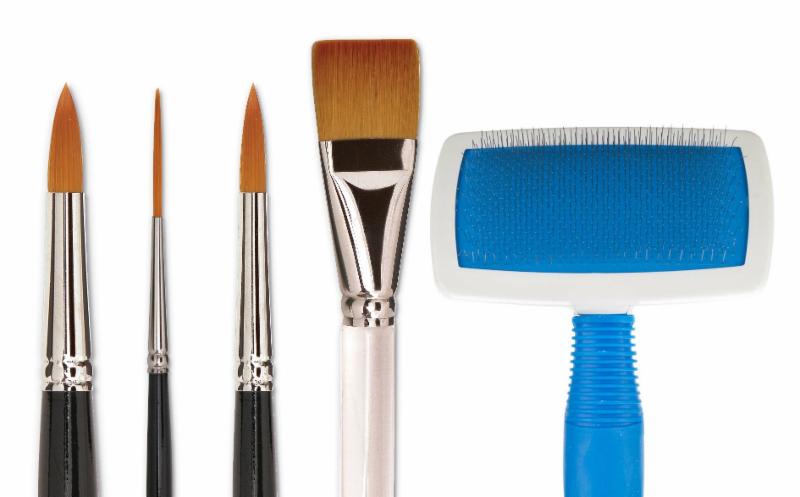 If you ask people in our industry if they think grooming and styling pets is an art form or a skilled trade, most would say that it’s a little of both. I agree. When you watch members of GroomTeam USA at work, their efforts are definitely works of art. Skills like theirs take years to develop. Today, I want to talk about one aspect of that development: learning to see like an artist.
I’ve had the benefit of seeing hundreds of people learn to become pet groomers during my years at The Paragon School of Pet Grooming. I also have a Bachelor’s Degree in Art, which means I’ve taken a lot of classes to develop a range of skills that are similar to what we teach our students. Just like being a good groomer means more than loving to work with pets, learning to become an artist takes more than loving to paint or draw. It requires control and the ability to see things that others do not.
“Seeing” like an artist, or “developing your eye,” takes time and patience. Essentially what you are doing is training yourself to see:
Learning how to see these things takes practice. Here are a few tips to help get you there.
Have a Plan
Melissa Verplank has mentioned this concept when she says that you should “begin with the end in mind.” It involves imagination on your part and the ability to see into the future – in this case, a beautifully groomed pet.
When I’m about to start a drawing or painting, it begins with a blank canvas or sheet of paper. With a sculpture, it begins with a lump of clay or stone. Before I even get started, I’ve already spent time thinking about what I want to do. In my head, I’ve already figured out what I want the finished product to look like. I know what tools or colors I will use, and what it will look like each step of the way. I know the process I will follow and how involved it will be. I might have a series of detailed sketches to help keep me on course. Above all, I spend time before I ever touch pencil to paper just looking at the blank page and seeing what I will create on it. The pet is your canvas. Before picking up your clippers, take a minute to really look at what you’re working with so you know where you’re going.
LOOK – See the Shapes in the Clouds
 So I’m staring at the page… what am I looking at? What am I looking for? When I’m staring at that blank sheet of paper, I’m seeing what I will put there. As I stare into that whiteness, I’m watching the colors and lines take shape in my mind and align themselves on the page. It’s like my mind has produced a transparency of the finished product and has mentally created an overlay onto the page. All I have to do is put the marks on the paper. If I’m sculpting, I’m staring at the lump of rock and seeing the shape of what I want to create in the stone. All I have to do is remove all the stuff around it and let it out.
When grooming, first look at the pet before you. From your training, attending conformational dog shows, your AKC Complete Dog Book, and maybe your copy of Notes From the Grooming Table, you know what the dog should look like when it’s done. Learn to see the shape of the perfectly groomed pet through the overgrown coat, like transparent layers stacked one on top of the other. When you can see that perfectly groomed “after” image clearly in your mind, you can begin the process of “erasing” anything extra that blocks that view.
Be able to picture your finished product – after all, if you don’t know where the finish line is, how will you know you’ve completed the race?
Know Your Landmarks and Learn the Art of Navigation
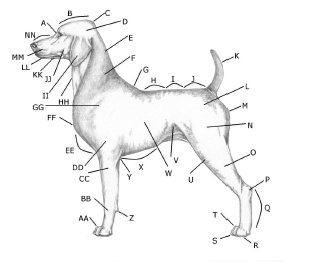 Trim styles are all about anatomy. Groomers need to know their breed standards and to know them they need to understand anatomy. If you’re a visual learner, get out your reference material and study the images until you can see them on any dog that walks into your salon. If you’re a tactile student and learn by doing, get those books out and learn to find reference points on dogs through your sense of touch. Feel where the point of rump is, the point of shoulder, and the barrel of the chest. If you can’t see them, learn your anatomy reference points by touch. Then learn to do both. Developing your knowledge base creates reliable instincts and reflexes.
Learn how to Measure Balance and Proportions Visually
Have you even been on a diet? Have you ever measured out quantities of food? Were you surprised by how much or how little a cup of anything was? With practice, you could eyeball a quarter cup of yogurt or 4 ounces of chicken pretty accurately, right? Didn’t it speed up the process?
The same thing is true when it comes to visual measurements. With practice, you get better and more efficient. I learned it in art school by using a pencil or my thumb, but groomers can use a trusty comb to do this trick.
The Eye Exam
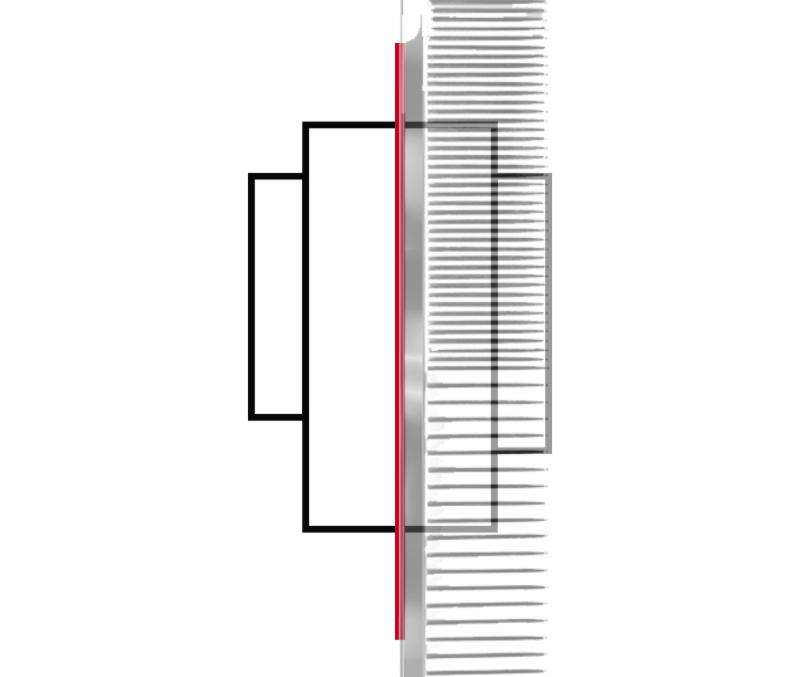
Imagine yourself grooming a dog. You know that the right side has to match the left. Standing directly in front of the dog, imagine a straight line dividing the pet in half. Compare each side to the other, using specific points of reference as a guide. Look for landmarks on the pet’s head, body, and legs that require symmetry. Stepping back and looking from side to side will help. If you know things are off, but can’t figure out why, hold up your comb and cover up one side, then the other. It’s kind of like an eye exam where you read the chart first with your right eye, then your left. Think of it like a game of, “Spot the Differences.” Make it fun so it becomes less frustrating.
Thumbs Up
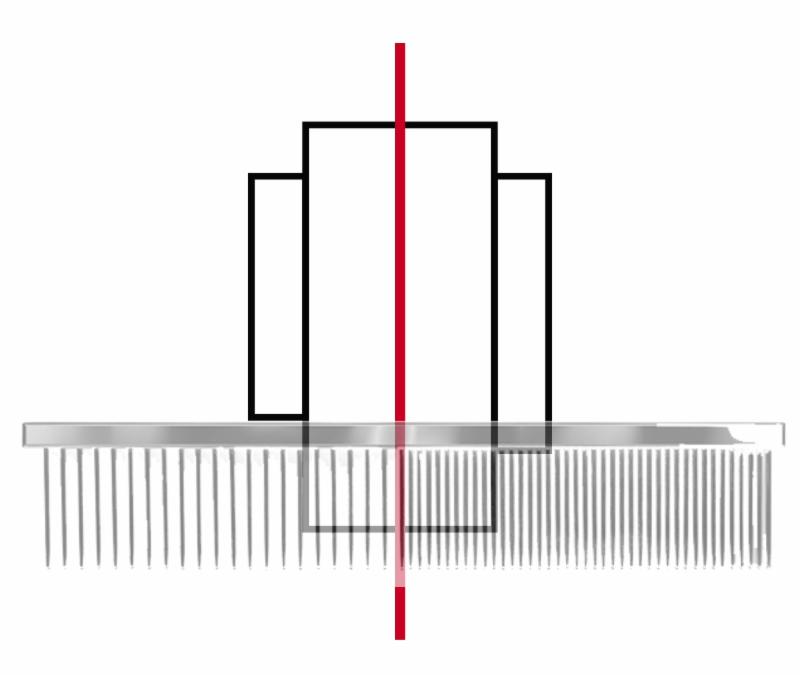 Have you ever wondered why artists extend their thumbs, or hold up a pencil or brush and stare at it at arm’s length? What they’re doing is making visual measurements and that thumb or brush is the ruler.
For this one, you’re still standing back and facing the pet head-on and imagining that line dividing the pet in equal halves. Are your ears the same length? Hold your comb even with the bottoms of the ears and perpendicular to the floor. You’ll be able to see which one is longer and be able to even them out.
Take a Step Back
Step back from the dog so you can see the entire animal. As artists, one of the worst habits we fall into is spending too much time working in one specific area. We have good reasons for it – we want it to be perfect. The problem is that while you’ve been tinkering away and nitpicking at that one foot, you’ve lost all sense of perspective and balance with the rest of the body. Now, you’ve got one foot smaller than the rest, so you have to tighten up the other three. You do that, then realize that the legs are now off, so you tighten them up, too. Suddenly, you see that by shortening the legs, the body is out of whack, and you’ve lost control. Losing control = losing time. By zooming in, you’ve created more work for yourself and lost time. That’s not a winning combination.
So what happened? Well, you basically made a rookie carpenter’s mistake. When you shorten up one table leg without doing proper measurements, the table wobbles. Standing too close or failing to look at the whole dog regularly results in perspective-based mistakes. Standing back allows you to see things more clearly.
Developing your artistic eye is not only helpful – it’s practical. By training your eyes to see what you need them to see, you’ll save time, become more efficient, and achieve a more balanced trim. You’ll gain confidence in your abilities and your customers will see the difference. Understanding these visual measurement tricks and putting them into practice is one small step toward becoming the groomer you know you can be. It’s worth the time to learn to see like an artist and unleash your own potential.
Did this help? Tell us how you unleash YOUR inner artist on the Learn2GroomDogs Facebook page.
Click here for a complete video list to make searching Learn2GroomDogs.com even easier!
Make it a great day!
~Joelle Asmondy
Welcome to my blog! For the next few weeks, my marketing expert, Joelle Asmondy, will be filling in for me while I work on a large project. Joelle is a whiz with marketing. I can’t wait to see which helpful tidbits she shares with you! Enjoy!
 Let’s take a little poll:
That sounds about right.
One of the best things about going to trade shows is meeting people. I get to talk to people from all over the country and I love it when they tell me their stories. We talk about dogs (of course), dog books (um, yeah!), and working with dogs (why not?). It’s a great way for me to stay in touch with our clients’ needs and find out what people are really thinking about.
Let me share a conversation that I have all the time…
“I became a groomer because I love dogs. At first, I just had a few clients. It started with friends and family, then their friends heard about me, and I got even busier. I got to the point where I had to hire someone just to keep up! Now I groom, book appointments, answer phones, run my own business, AND I have (one, two, three…) groomer(s) working for me!”
Sound familiar?
I love that so many dog grooming businesses have grown in such an organic way. It starts with a passion, grows because we’re needed, and thrives because we’re good at what we do. Our clients keep coming back because they know we love their pets and care about their health and safety.
The flip side to this is that very few people who own or manage these businesses have any formal training in supervising employees. We suddenly find ourselves in the role of “boss” simply because we needed help. For many, it’s a natural fit and the transition is painless. For others, the change is more challenging.
The question of the day is, “Are You a Good Boss?” The answer may surprise you.
I reached out to folks from the industry and asked them about the best qualities of their managers. Many of the answers were similar. Let’s look at the answers together and see if we can understand what it really means to be a good boss.
 “I’ve grown a lot by working here.”
Do you take the time to offer praise as well as constructive criticism? In busy salons, it can become easy to fall into the habit of communicating like our furry customers – we bark at each other instead of talking. Don’t let a hectic schedule become an excuse for bad manners or meanness. Remember, you’re not just running a business, you’re building a culture. Do you want yours to be team-oriented or hostile and withdrawn? Things don’t get done any faster or better with rudeness than with courtesy.
“She’s willing to try new ideas.”
If you want employees who step up and really help out, you have to be open to trying new things. “That’s the way we’ve always done it,” will quickly kill initiative. Employees who feel like they have input into bettering the process tend to stick around longer and contribute more to the overall business. After all, isn’t that what you need?
“He’s organized.”
If you are constantly running late, running out of stock, and running out of patience, you could be running yourself right out of business. Let your team help you get things in order. Delegate duties that are well-suited to them. It empowers them and also takes a few things off your plate.
“She encourages me.”
I once worked for an amazing supervisor who motivated me just by being encouraging. I tried a new sales approach once, and it went so well that she had me present it to others in our district. Knowing that she believed in me did more than compliment me, it made me want to work even harder!
“He tells me how I can improve in a positive way.”
Two words: constructive criticism. It’s easy to tell someone when they do something wrong. If you want change that sticks, it takes a little more work.
“We never stop trying to get better.”
Complacency is the enemy of good business. Successful businesses are always trying to become better, more efficient, and less wasteful.
“She says, “thank you.”
Those are magic words, aren’t they? Thank you for staying late. Thank you for helping me carry in the supplies. Thank you for helping that elderly client to her car. Recognizing effort boosts morale and encourages them to keep giving their best.
“He tells me what is needed and doesn’t expect me to read his mind.”
“I shouldn’t have to tell them…”
“It’s just plain old common sense!”
Work on removing these phrases from your vocabulary. Just because you’ve done something a thousand times doesn’t mean other people understand it as thoroughly as you do. Take a minute, take a breath, and give them the benefit of the doubt.
“She recognizes effort even if we fall short of a goal.”
All success is success. It’s ok to be excited about progress even if you didn’t get quite all the way there. Learn from the experience and try again. Sometimes shared enthusiasm or experience is what’s needed to really make things happen.
Whether you became a manager by choice or by coincidence, it’s important to know how to be a good boss. Building a team and a business takes work – and you don’t have to do it alone. By developing a positive culture, you’re helping to make a better work environment that will attract better employees, will help keep your best staff, and will make your days a lot better.
What topics would you like us to cover? Jump over to the Learn2GroomDogs Facebook page and tell us.
Click here for a complete video list to make searching Learn2GroomDogs.com even easier!
Make it a great day!
~Joelle Asmondy
Welcome to my blog! For the next few weeks, my marketing expert, Joelle Asmondy, will be filling in for me while I work on a large project. Joelle is a whiz with marketing. I can’t wait to see which helpful tidbits she shares with you! Enjoy!
 I recently spoke with a new salon owner who is struggling to fill her days with pets to groom. She has a good client base, a website, and a Facebook page but she still has lots of time to fill.
“What am I doing wrong?”
We all know that you can spend a lot of money on big-ticket ways to build your business. Few of us use our most common tool – the phone – to its best advantage. Let’s discuss these simple and effective methods to boost your client list. The best part is that you get immediate results – and they won’t break the bank.
It’s time you learned the 5 phone calls that can build your business.
THE RINGER
This is the client that calls YOU. When phones are ringing off the hook, it’s music to my ears! They are the time savers – you didn’t have to go searching for them… they found you! Make the most of it!
One mistake people make with these calls is that they treat them like an interruption. Even if you are grooming another dog, have another call on hold, and are trying to eat your lunch at the same time, you still need to treat that caller feel like s/he is the only thing on your mind.
Here are a few simple tips to make the most of that call:
The thing to remember is that you invited them to call, so treat them like the valued guests they are.
THE REMINDER
Another way you might be losing opportunities is not making the most of the client base you already have. Many clients are like us – juggling work and family needs – and we tend to forget things. If you are setting appointments for your clients, do yourself a favor and give them a reminder call the day before the scheduled appointment. (Texting works well, too. Find out what your client prefers and stick to it.) Many clients come to rely on it, so don’t forget. Make it a part of your morning routine.
THE ROOKIE
New clients aren’t used to you, yet. That means that don’t know how special you are and that you treat new clients like royalty. Give new clients the royal treatment with a follow-up phone call after their first visit. The day after their first appointment, give them a call to ask how their pet felt after the groom. Ask if they like the trim. Ask for feedback. And most importantly (if they didn’t rebook at check out), set up the next appointment.
 THE RECLUSE
This is the client who doesn’t have an appointment on the books for 6 weeks or more. If you have gaps in your day, it’s might be because these clients do not have recurring appointments. Another way to make the most of your client base is to get everyone on a recurring schedule. If you have 50-75 valued customers, your books should be pretty full – if you take the time to rebook people and get them on a regular grooming schedule. When you look ahead and see gaps, look back 6 weeks and see who’s missing in the days ahead. Give those folks a call and welcome them back. Chances are they don’t even realize how long it’s been since their last visit and will be glad you reminded them to drop by.
THE WRECK
Ok, it’s not a wreck. Most likely it’s nothing more than a minor scratch, but we’re talking injuries, here. Brush burn, nicks, cuts, clipper irritation, quicked nails… any injury. The important thing is that you communicate with your clients. If an injury has occurred, talk about it openly before they leave your salon. Admit any mistakes. Apologize. Most importantly, call them the next day to follow up. Ask how the pet is doing. Ask if they have any questions. It’s crucial to your relationship that you can talk despite any accidental injuries that might happen. If you aren’t comfortable talking to people after an incident, you’re in the wrong business. Pretending it didn’t happen and “hoping they’re ok with it” is not going to retain clients. You need to talk it out.
BONUS TIP – THE RINGTONE
If you are using your personal phone for your business, make sure that your hold music is appropriate for a business. Your friends will think certain songs are hilarious as they wait for you to pick up, but your clients will lose respect for you if your music is inappropriate. It’s your phone – but it’s also your business lifeline. Treat it with care.
There are plenty of big-ticket items that are a part of being in business. You can do so much to build your clientele by making the most out of every customer relationship. Simply pick up the phone. It’s effective – and – inexpensive! These tips are just the start, but used consistently, you can start filling your books fast without draining your bank account!
What topics would you like us to cover? Jump over to the Learn2GroomDogs Facebook page and tell us.
Click here for a complete video list to make searching Learn2GroomDogs.com even easier!
Make it a great day!
~Joelle Asmondy
 We all have different reasons why we love our careers. For most of us, our careers started because we were obsessed with dogs and cats. What a fabulous way to make money – doing something you enjoy. My guess is that many of you not only love animals, they’re also a hobby and a huge part of your lives. I know very few career opportunities that allow pet lovers to work in a field that they truly adore.
I love dealing with people who are passionate about their career choices. I always encourage people to seek out personal growth. To look at ways to do things better, more efficiently, and with greater focus. Raise the bar. Set personal goals. Set limits. Develop strategies. Ultimately, the pet, the individual, and the business wins.
If you are a solo stylist, you get to make up your own rules. Work at your own pace. There is very little pressure to move beyond your comfort zone.
However, if you work with a team, you will usually have quotas to meet and rules that you need to follow. The business sets up these boundaries in the best interest of the client, staff, and the long-term health of the company. If someone does not meet quotas, it creates a frustrating situation for the rest of the team in terms of time, quality, and financial stability.
Years ago when I ran a mobile operation, our minimum quota of grooms per day was six – or the equivalent of six. Thus, two slots were given for larger jobs such as Standard Poodles and heavy-coated Cockers. If someone had something very small on their roster, they were always given an option to groom another small dog. As long as the vans were routed well, this quota worked out well across the board for years.
There was one exception: Sue (not her real name).
Whenever I hired a new mobile stylist, I always started them with just four dogs and combined that with a very wide arrival schedule. All of our stylists knew this right from the get-go. The quota they needed to meet was six grooms per day. The funny thing about Sue was that she didn’t care about the number of pets she groomed or the amount of money she made. Although she was passionate about animals and people, she did not groom because she needed the cash.
For a long time I was extremely frustrated with Sue’s performance. She would arrive at base at eight o’clock in the morning to pick up her van. Many times she did not come back to base until well after eight o’clock at night. The most dogs I could ever get her to do was five.
It took me a while to realize the frustration was all mine. As a business owner, it’s critical that I pay attention to the financial numbers – but there’s a bigger picture: customer service.
When I looked at Sue’s scheduled re-bookings, she could rarely take on a new client. Her clients absolutely loved her. She wasn’t the fastest groomer. She wasn’t a competition level stylist – never would be. Her grooms were basic, neat, and thorough. However, she was the most compassionate person I have ever hired. Not only did she enjoy the pets, she was passionate about her clients.
To Sue, her career was more than a means to a financial end, it was her social and entertainment outlet. I swear she had breakfast, lunch, and dinner with her clients. She ran errands for them. She shoveled their walks. She loved the senior citizens and the geriatric pets. She would talk with them for hours!
Hmmm. These were the clients my highly efficient stylists wanted to avoid like the plague. Once I came to terms with this concept, I ended up making it work in our favor.
I let Sue slide on the quota. She was dealing with all those clients the rest of my team would rather not do. By letting Sue focus on our more time-consuming clients (and enjoying it!), it allowed the rest of my team to focus on making quotas and/or exceeding them. It worked.
So even though I let Sue slide – only doing five grooms a day when the actual quota with six – it allowed the rest of my team to focus on grooming more pets. Not necessarily faster – just more efficiently.
 There’s a big difference between grooming efficiently and grooming fast. Grooming efficiently involves doing a good job. Grooming too fast, in my eyes, translates to sloppy work. When I look at developing a grooming team or training new staff members, I always look for people who have the ability to focus and work efficiently.
To me, being efficient means doing a great job in the least amount of time.
I recently heard one of our industry leaders say, “I don’t know many wealthy groomers.” I don’t, either. I do know a lot of groomers and stylists that make a comfortable living and love their careers. Being able to work efficiently translates into creating larger client lists, larger paychecks, and the ability to breathe easily at the end of the day.
Unlike Sue, the majority of us have other responsibilities, outside interests, families to care for, and households to run. We may even have businesses to manage. Not to mention maintaining the health and well-being of both ourselves and the four-legged clients on the table. As much as we love our jobs, we can’t afford to be tethered to a grooming table any longer than necessary.
Being efficient as you groom is not about being fast or sloppy. It’s about being the best that you can be. It’s about creating systems throughout the entire grooming process so we do not miss any steps. As those systems are developed, they become automatic. Once they become part of a routine, you can focus on other areas that bring value to the pets we groom, the clients, and to our own lives.
Think about how you can create systems – or routines – at every step of the grooming process (see the graphic below). Break it into bite-sized chunks.

Time everything. Knowing how long each step takes is the starting point of creating any routine. Each step could be broken down further into smaller nuggets, too. Once you start tracking, you can start improving your routine without sacrificing quality.
I love this quote. I try to live my life by it – in all areas. I hope you do too.
There are plenty of groomers and stylists who are highly efficient. They can do a small, simple trim in under an hour – and knock it out of the park in terms of quality and customer service. Others struggle to complete the same trim in two hours. Others choose to do that simple trim at their own pace. As long as the work is top quality, the pets are treated with care and compassion, and the environment is safe for everyone – it’s OK.
We all have different reasons why we groom. For some, it’s more than just a job – it’s a lifestyle. Remember, there is a big difference between being an efficient bather, groomer, or stylist and being a fast one. Never stop learning. How you apply new knowledge is totally up to you.
What are your time-saving tricks? Jump over to the Learn2GroomDogs Facebook page and tell us. You can even click here for a quick lesson in how to use the site.
Make the most of your time every day. Click here to download our FREE handout to help you structure your day. You can even watch Melissa’s video to see how it’s done, here.
Click here for a complete video list to make searching Learn2GroomDogs.com even easier!
Happy trimming,
~Melissa
We once asked a salon owner about her biggest challenge. The answer was simple – speed.
Most of her staff struggled to get even the simplest trims done in under an hour. That included bath, blow dry, and haircut. Even a basic #7F all trim on a smaller drop coated breed was daunting to some of them.
 We walked in and saw a well-organized salon. It was bright. It was clean. The layout allowed for efficiency. The equipment was all top-notch. Hmmm, we wondered. Why was turning a small to mid-sized dog such a challenge for them?
Then it hit us. There were hardly any clocks around. We only spotted one clock in the main room. It was a smaller digital wall clock set on military time. The owner of the salon was a career military gal who is now retired. I understand why she opted for that style of time keeper, I’m just not so sure that style of time keeping is the right one for a staff of non-military groomers. Plus, when I was across the room, I could barely read it clearly. The clock was just too small!
 If you want to be a successful groomer who can pay your bills while bringing customers back again and again – you need to embrace time.
Watch the time.
Track the time.
Race against the time.
Everything we do with professional pet grooming involves time. You need to be highly aware of every hour, minute, and second. Ideally, a professional groomer should be able to turn a small- to medium-sized simple trim in an hour or less. That includes the bath, the dry, and the trim.
The first thing we suggested to this team was: GET CLOCKS! Nothing fancy, they just needed to be large enough to be easily seen from across the room. The simpler, the better. Every room in the salon needed one hung on the wall. By having a clock in every room, it makes it easy for the groomers to track their own time with just a quick glance. But clocks aren’t enough. Every person working on the pets needs to have a watch on, too.
 For those individuals that are really looking to increase their speed, having a timer at their stations can be really beneficial. Before you can start timing yourself, it’s helpful to know what your starting point is.
Break the groom down into sections. Bathing. Drying. Clipping the body. Trimming the feet. Rounding the feet. Scissoring the legs. Styling the head. If you don’t know how long it takes you to do each one of these items, you’ll never be able to improve upon your “best time.”
And it’s far easier to break it down into segments than to look at the dog as a whole. After all, who doesn’t want the opportunity to win at even one or two smaller segments than to get frustrated when they don’t hit the time goal with the overall trim?
Once you know how long it takes you to do each segment, you can set goals and objectives to beat your “best time.” Push yourself. Make a game out of it. The clock will be your score-keeper. Each time you gain even a few seconds, you’ve won a mini victory! But you’ll never be able to do that unless you can easily watch the clock. Even with all the clock watching, always remember, speed and efficiency can never come at the sacrifice of quality or safety.
 What are your time saving tricks? Jump over to the Learn2GroomDogs Facebook page and tell us. You can even click here for a quick overview how to use the site if you’re a new member.
FREE TIME SAVING LECTURE HANDOUT
Click here for a complete video list to make searching even easier!
Happy trimming,
~Melissa
One of the fastest ways to build a clientele is to get people talking. You want positive attention, the kind that fuels business growth. Keep this in mind: people never talk about mediocre people, products, services, or companies.
You want to be unique.
You want to stand out.
You want to be interesting.
I’ve used this approach across many of my businesses. When we focused on this method, our growth rates were remarkable. There are many ways to build positive buzz. Many strategies are surprisingly easy to implement, and as a bonus, many are cost-effective. Others require more planning and some financial investment to get the ball rolling.
Choose what works best for your situation and your budget. Whether you’re quiet and shy or bold and outgoing, there are tactics that work for every personality type. The key to making this work is simple:
Know.
Your.
Customers.
When you truly understand your clientele, you can create meaningful, memorable experiences. Done well, clients will seek you out. Done poorly, they’ll run in the opposite direction. Most grooming business owners focus on the rational aspects of their business: pricing, scheduling, pet handling, and the finished groom. What often gets overlooked is the emotional experience of the human client. This matters because, while we love the dogs, they aren’t the ones paying the bill.
People don’t get excited about ordinary services, acceptable haircuts, or fair prices. They talk about experiences that surprise them and make them feel great about their pets. When you make things special, you make them memorable, and you reduce any perceived risk clients may feel about doing business with you.
It’s not enough to run a good grooming business. You need to stand out. Unique businesses deliver great solutions wrapped in a “shiny package” that delights, excites, or surprises the customer. So what makes up that shiny, unique package? Here are four areas to spark your creativity.
How does your salon look? Whether it’s a home-based business, a small storefront, a large facility, or part of a corporation, your presentation makes an impression. What do clients see when they first arrive? What makes your business stand out in a positive way? Is it your signage, exterior décor, window display, or a clever way of guiding clients to your door? Something should catch their eye.
Once inside, what’s their first impression? Is the space clean, organized, bright, and welcoming? Is your reception area inviting? Are brochures and business cards easy to find? Is your indoor signage clear and helpful?
Now think beyond what they see, what do they hear and smell? Is the music appropriate? Are dogs reasonably quiet? Is loud equipment muffled behind closed doors? Do a “sniff test,” or ask someone who isn’t nose-blind to assess the space. Your salon should smell clean and fresh. If it doesn’t pass the sound or smell test, fix it.
Clients have endless ways to compare service businesses. Even if you’re the only grooming salon in town, you’re still being compared to veterinary clinics, hair salons, spas, and dry cleaners. How do you stack up against other professionals in your community?
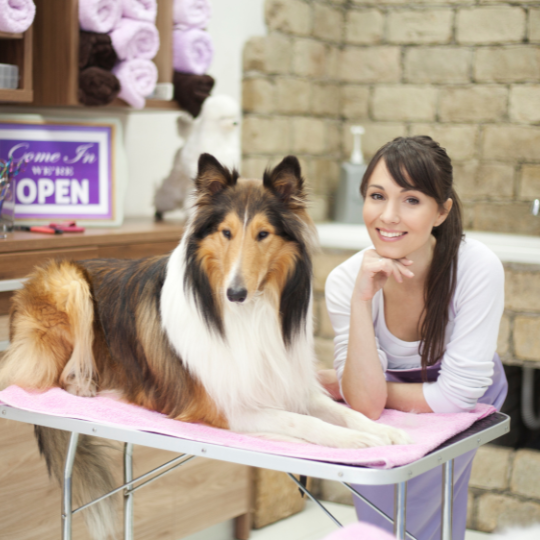 Clients gravitate toward businesses where they feel comfortable. Comfort often comes from familiarity, mirroring how your clients present themselves. Anyone who interacts directly with clients should leave a positive impression.
Your clients are your guests. Treat them that way. If you invited them into your home, wouldn’t you want them to feel welcomed and at ease?
Whether your area is conservative or trendy, a polished, put-together appearance goes a long way. Pay attention to the details. Make sure you’re as well groomed as the dogs leaving your salon. If daily outfit planning feels overwhelming, consider uniforms. Nothing creates cohesion like clothing designed for the job. If you have staff, coordinate your attire so everyone matches. When uniforms start looking worn or tired, replace them.
You spend all day washing and styling dogs, your own hair deserves the same
care. No matter the length, texture, or color, it should be clean and styled appropriately for your workplace. Accessories can make clients smile and help you stand out. Makeup can be an accessory. Jewelry, like earrings or a sturdy bracelet, can add personality. Even fun, comfortable shoes that hold up during long days on your feet can leave a lasting impression.
Your personal presentation can be as unique as you are. Just remember to present yourself in a way that aligns with the clientele you want to attract and makes them feel welcome.
Building a reputation around a specialty makes you memorable. People will talk. New clients will seek you out because they’ve heard how exceptional you are at what you do.
Maybe you love terriers and hand-stripping. Maybe you’re a poodle fanatic who thrives on hand scissoring. Love cats? Enjoy challenging pets? Whatever it is, lean into it. When you deliver exceptional results in your area of expertise, both you and your clients will walk away smiling.
What do you do that makes clients grin and say, “Wow, I can’t believe they just did that!” Customer service starts on the phone and continues through every in-person interaction. All service businesses solve problems. If you can identify and address your client’s pain points, you’re already ahead. Once you understand the issue, offer a thoughtful solution with kindness and confidence.
Sometimes clients don’t even realize they have a problem. That’s where your role as a tactful educator comes in.
Many clients benefit from the trifecta principle of communication:
Tell. Show. Read.
We groom dogs every day, it’s second nature to us. For clients, it’s unfamiliar territory. They won’t remember everything you tell them during their first visit. Reinforce your message by telling them, showing them, and giving them something to read that reinforces what they’ve learned. To succeed, you need clients who keep coming back. Salons that generate positive buzz attract new clients and retain existing ones.
When done well, this approach creates pride but more importantly, it creates security. Security comes from knowing clients value your work and continue choosing your services.
So stand out. Be the positive buzz in your town. If you want a busy business, you need people talking. Finding creative ways to make clients feel special is one of the most powerful marketing strategies you can develop.
Did we miss anything? Head over to the Learn2GroomDogs Facebook page and tell us.
Happy trimming,
~ Melissa