
Check out our latest blog posts!
Learn how to improve your skill set or discover the latest news in the grooming industry.


Check out our latest blog posts!
Learn how to improve your skill set or discover the latest news in the grooming industry.
Celebrating the growth, dedication, and real-world success of Paragon graduates as they build meaningful careers in pet grooming.
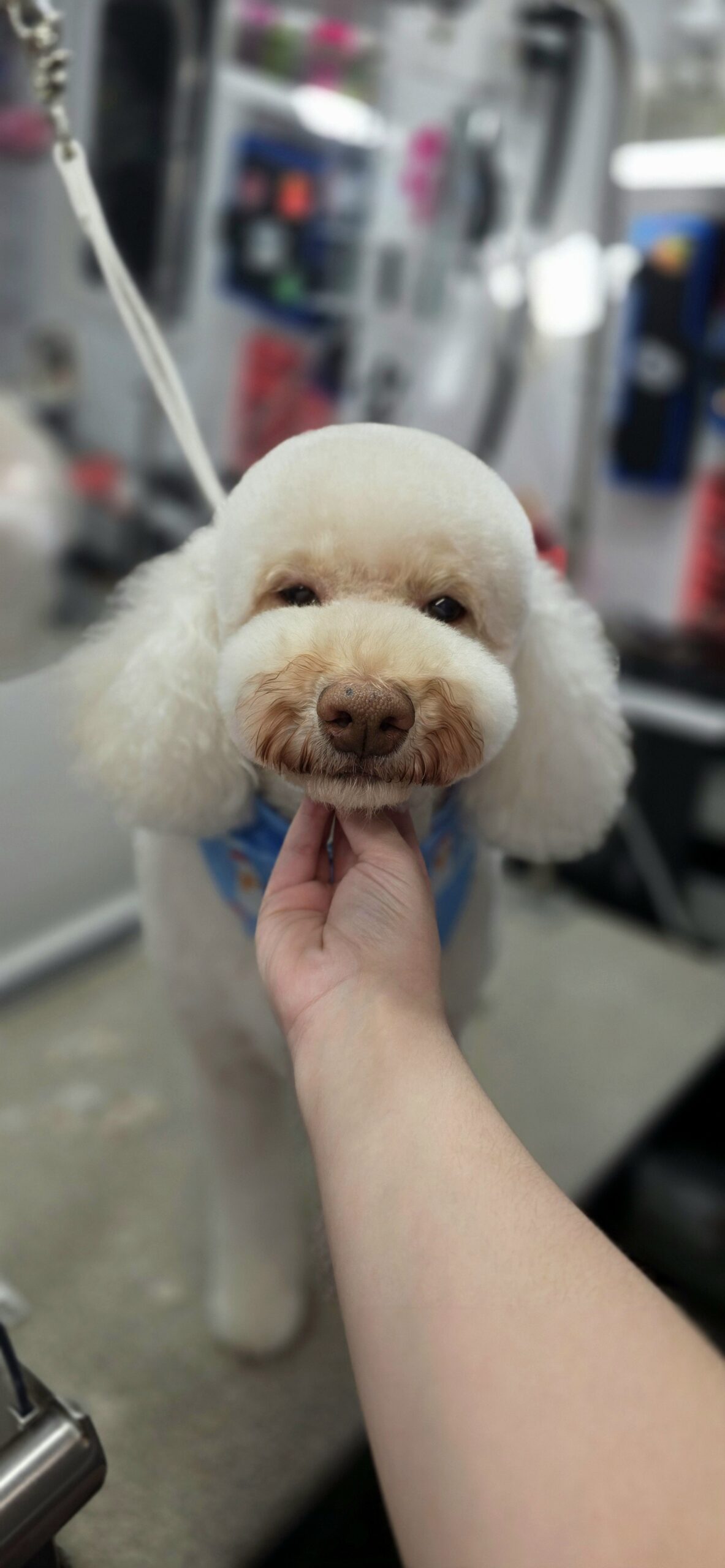 Autumn Simpson’s journey is a strong example of what consistent practice and professional training can build over time. Her “then” image reflects one of her early grooming submissions during her Paragon education, where foundational techniques were just beginning to take shape.
Nearly six years later, her work showcases a trusted, repeat client and a groomer who has developed both technical skill and professional confidence. The transformation highlights not only improvement in execution, but growth in consistency, client relationships, and overall expertise.
Stories like Autumn’s demonstrate what is possible when education is applied in real-world settings. Every groom builds experience, and every experience builds a stronger, more capable professional.
 Pet grooming is a growing field. It’s a career path that typically starts modestly with bathing dogs in a tub and quickly progresses to financial and personal rewards. About 346,000 people work in pet grooming and boarding in the U.S. today, a number projected to rise to roughly 357,000 by the end of 2026. The Bureau of Labor Statistics (BLS) projects 11% growth in animal care roles through 2034.
Published medians for “all” animal care workers ($33,860/year according to BLS) pull in lower-wage pet care handlers and don’t accurately reflect certified groomer salaries. In practice, grads average closer to $30/hour, and that’s before specialization.
Highly experienced groomers often specialize in advanced styling techniques, breed-standard trims, hand scissoring, corrective grooming, or competition grooming. These specialty services allow professionals to charge premium pricing while building a loyal client base willing to pay for higher levels of expertise. That’s because the top 30% of dog owners earn $120,000 or more a year.
Experienced groomers with advanced technical knowledge and credentials are able to charge considerably more per appointment than average salons.
Where typical groomers may earn around $60,000/yr, many who choose to elevate their skill level can earn between $80,000/yr and $150,000/yr dollars annually, depending on their location, clientele, pricing structure, and additional business ventures. Some of that will depend on whether you intend to go into business for yourself as a solo groomer, work in a private salon, or join a corporate multistore company, where there are additional paths to become a salon lead or trainer.
There is overlap in paths to a great grooming career, but here are the most common types of working environments you will find in the industry.
• Independent groomer —Roughly half of working groomers are self-employed. Many well-established solo groomers earn $100,000+ at the height of their careers, as do those who go on to grow their salons to include a team of groomers. One of the greatest long-term advantages of grooming is the opportunity to become your own boss. Many experienced groomers eventually transition into salon ownership, mobile grooming businesses, or home-based studios where local regulations allow.
Business ownership introduces additional responsibilities such as marketing, scheduling, payroll, and managing expenses. However, it also creates the potential for significantly increased income because, as you hire and grow a team, revenue is no longer limited to the number of dogs one individual can groom personally.
• Mobile Groomer — Mobile grooming businesses also continue growing in popularity due to convenience and market demand. Mobile groomers can be independent businesses or work for chain corporations/franchises. In either case, grooming fees often range:
Although mobile grooming includes higher operating expenses such as vehicle payment, fuel, maintenance, and insurance, many mobile groomers still report six-figure earning potential due to elevated service pricing and loyal clientele.
• Corporate Chain Groomer — Multistore retail pet corporations continue to expand their service departments and are always looking for both new and experienced groomers. Many will pay for your education while you work. From entry level ranges in the mid-$30ks to team leader or senior Stylist salaries over $100,000, pet care corporations represent an excellent career path with numerous opportunities for growth. They also typically offer benefits such as health care, PTO, and other desirable perks.
• Private Salon or Boarding & Daycare Groomer — Opportunities abound for well-trained groomers to work in private salons or in the grooming department of boarding and daycare facilities. Many progressive business owners will often pay for training if you’re a fit for their team. Pay ranges are very wide in this category and depend on ticket price and commission structure. Well-known, high-end salons are often home to the industry’s highest paid groomers.
In addition to grooming appointments, advanced groomers often expand their income through:
• Teaching seminars and workshops
• Mentoring newer groomers
• Creating educational content
• Working with grooming product companies
• Speaking at industry trade shows
Some pursue opportunities within grooming competitions and professional education. Grooming judges and industry educators are often among the most respected professionals in the field, with years of technical training and breed-standard expertise behind them. These professionals may supplement their income by:
• Judging grooming competitions
• Teaching certification programs
• Leading live demonstrations at trade shows
• Hosting online educational courses
• Partnering with grooming brands and manufacturers
Well-known educators and competition groomers may earn several hundred to several thousand dollars for a single seminar or speaking engagement depending on their experience and reputation within the industry.
For some professionals, these opportunities evolve into full-scale businesses centered around education, mentorship, and professional development.
One of the most encouraging aspects of pet grooming is that income is not fixed. Unlike many traditional careers with rigid pay structures, grooming rewards skill development, consistency, creativity, and initiative.
Some groomers choose flexible schedules that support work-life balance and family priorities. Others pursue advanced certifications, competition grooming, business ownership, or educational opportunities to maximize their earning potential.
Whether your goal is to build a stable income, create your own business, or become an industry leader, grooming offers a career path with room to grow for many years to come.
This Memorial Day weekend, Paragon Cares is proud to spotlight the incredible mission of Project K-9 Hero, an organization dedicated to protecting and caring for retired Police K-9s and Military Working Dogs.
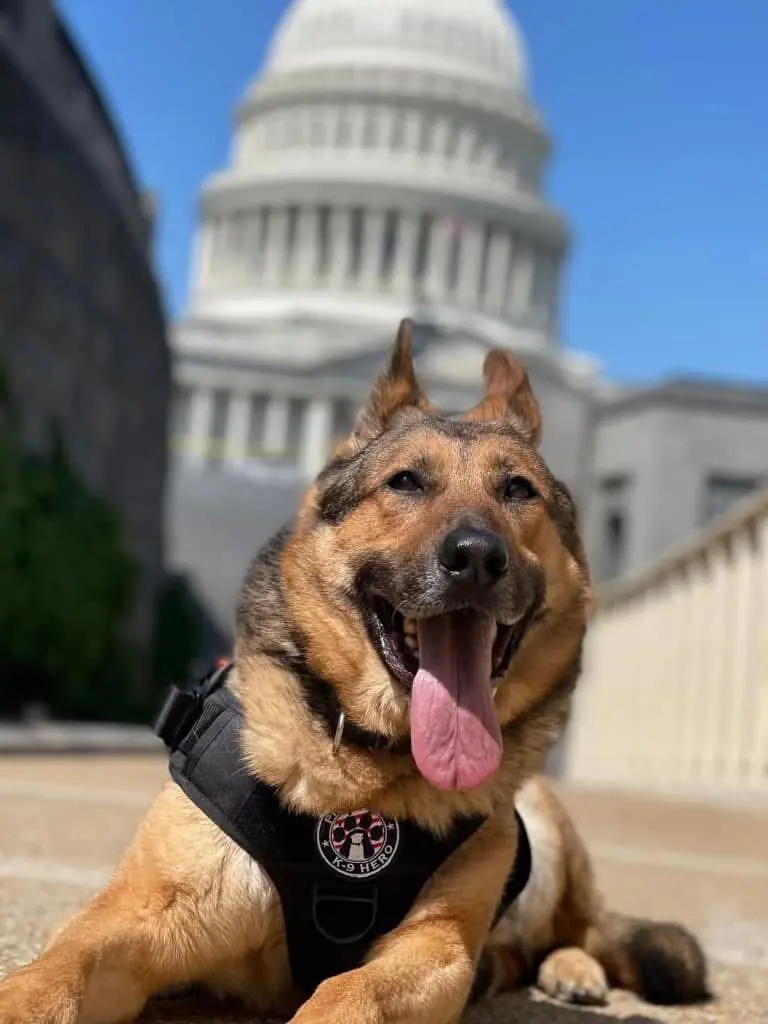 These dogs spend their lives serving alongside law enforcement officers and members of the military, often in dangerous, high-stress environments. From explosives detection and narcotics work to patrol and protection, they carry out critical responsibilities with courage, loyalty, and unwavering dedication.
What many people do not see is that the effects of service often continue long after retirement. Many working dogs face lasting injuries, chronic health conditions, anxiety, and trauma that require extensive medical care and rehabilitation.
Project K-9 Hero exists to ensure these retired Heroes are never forgotten. Through financial support, medical coverage, rehabilitation programs, and advocacy, the organization provides retired working dogs with the care and dignity they deserve after years of sacrifice.
Stories like K-9 Tambo and K-9 Majlo serve as powerful reminders that service comes at a cost, even for the dogs who stand beside those protecting our communities and country. Their loyalty never wavered, and organizations like Project K-9 Hero make sure that same loyalty is returned to them in retirement.
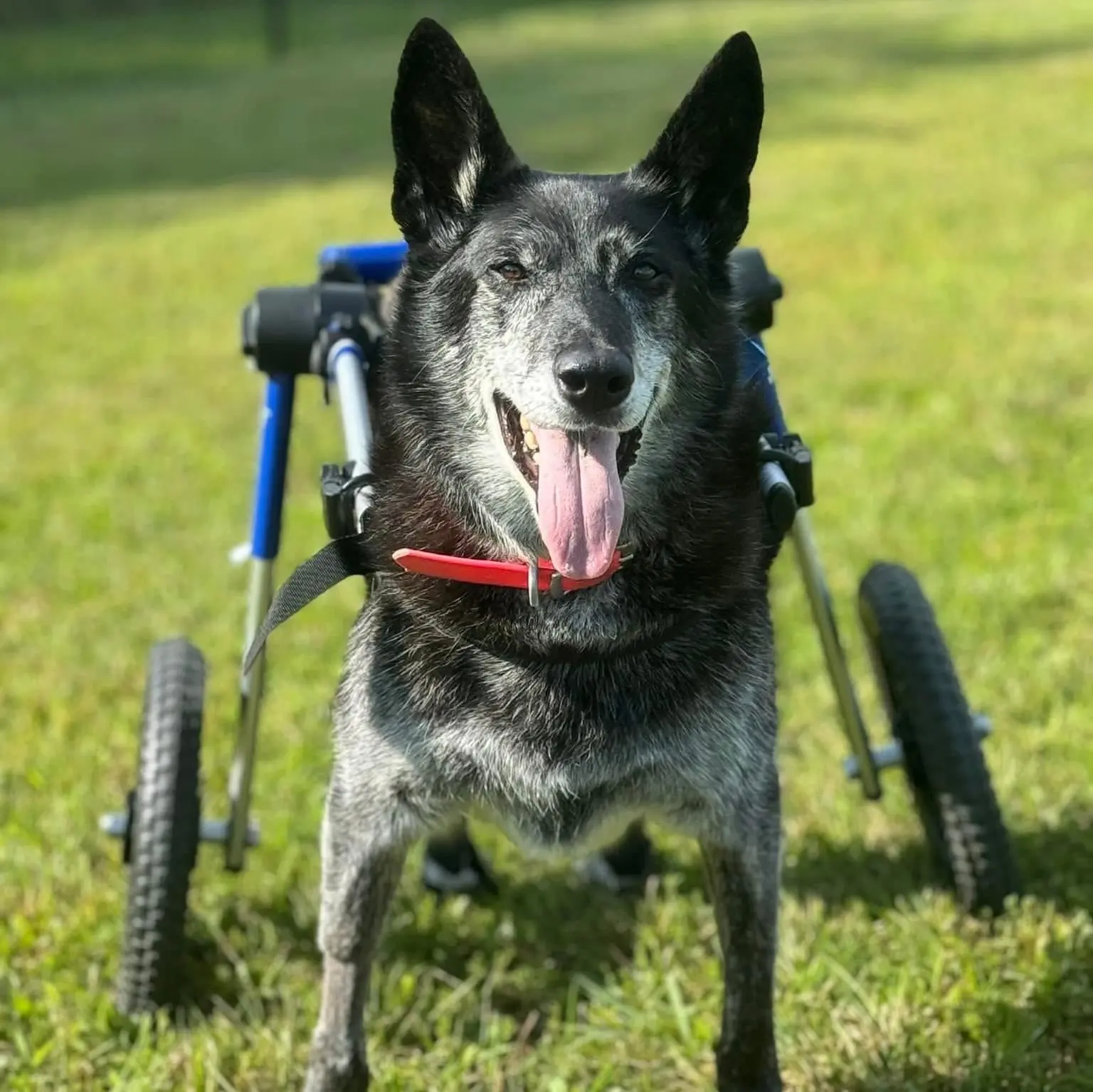
At Paragon, we believe compassion for animals extends far beyond thegrooming salon. It means recognizing the lives of animals who serve others and supporting the people and organizations fighting to give them the care they deserve.
This Memorial Day, we encourage our community to take a moment to honor these retired K-9 Heroes and learn more about how you can support their mission.
Learn more or donate at: ProjectK9Hero.org 🇺🇸🐾
There is something special about people who are drawn to working with animals. They tend to notice the little things. They care deeply. They are willing to work hard to help pets feel safe, healthy, and loved. If you have ever wondered whether dog grooming could be the right career path for you, there is a good chance the answer may already be showing up in your everyday life.
Professional dog groomers come from all kinds of backgrounds. Some discover grooming after years in another career. Others begin because they have always loved animals and wanted to turn that passion into meaningful work. While every groomer’s story is different, many successful professionals share similar qualities that help them thrive in the industry.
If you recognize yourself in these signs, you may already have the foundation to become an excellent dog groomer.
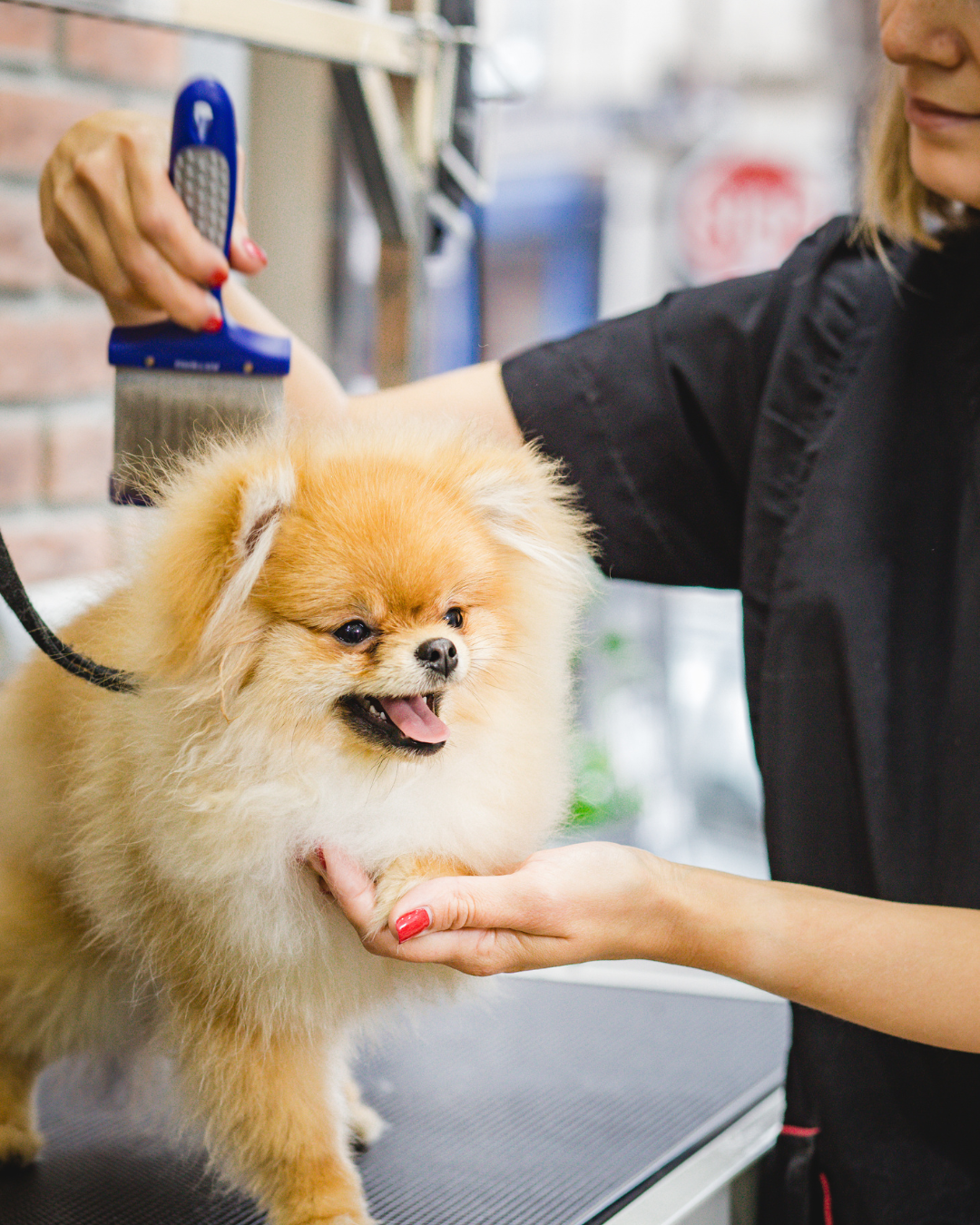 Great dog groomers understand that grooming goes far beyond haircuts. Every appointment is an opportunity to help a pet feel cleaner, healthier, and more comfortable. Some dogs arrive nervous or unsure. Others may be elderly, energetic, shy, or experiencing grooming for the very first time. Groomers play an important role in helping pets feel secure throughout the process.
People who naturally show patience and compassion often do very well in grooming. You may already notice yourself slowing down to comfort an anxious dog or paying attention to how animals react to different situations. Those instincts matter. Dogs respond to calm energy, consistency, and kindness.
Many future groomers think they need years of experience before entering the industry. In reality, some of the most important skills begin with empathy and a willingness to learn. Technical grooming skills can be taught. A caring heart and genuine compassion are qualities that make a lasting impact on both pets and pet parents.
Dog grooming is an artistic and hands-on profession. Groomers work with coat texture, body structure, balance, movement, and styling techniques every day. Small details can completely change the finished result of a groom.
If you often notice uneven lines, enjoy organizing things neatly, or appreciate visual details, grooming may feel surprisingly natural to you. Successful groomers tend to have an eye for symmetry and presentation. They enjoy improving their skills over time and take pride in seeing a dog look polished, healthy, and happy when the groom is complete.
Attention to detail also helps groomers spot potential concerns early. During appointments, groomers may notice skin irritation, ear issues, matting, nail problems, or changes in a pet’s condition that owners may not have seen yet. Being observant allows groomers to better care for pets while building trust with clients.
This career rewards people who enjoy learning and improving. Many professional groomers continue developing new techniques throughout their entire careers because there is always something new to discover in the grooming industry.
Dog grooming is an active career that keeps you engaged throughout the day. Groomers are constantly moving between bathing, drying, brushing, clipping, scissoring, cleaning, and interacting with pets and clients. For people who struggle sitting at a desk all day, grooming can feel refreshing and rewarding.
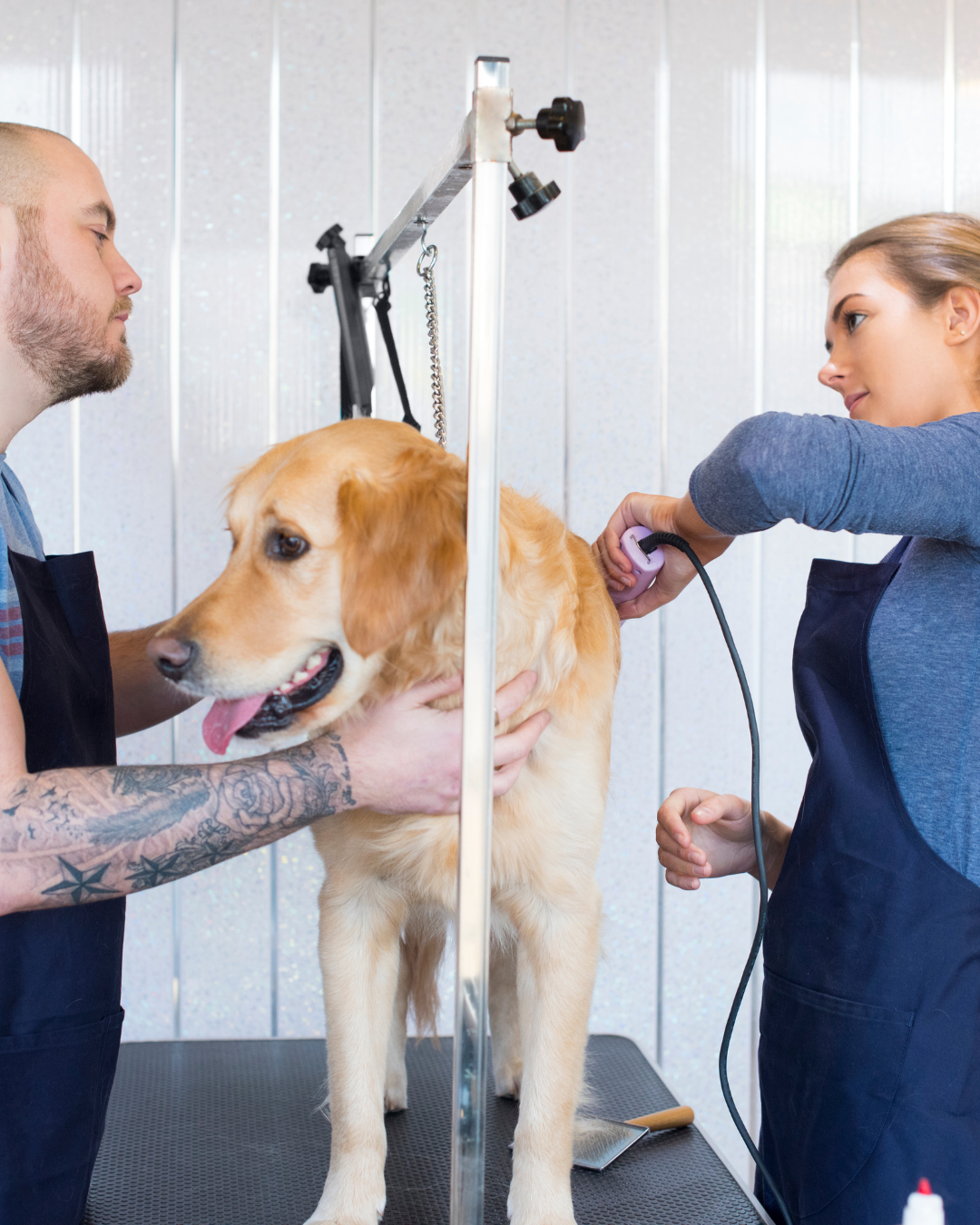 Many successful groomers enjoy hands-on work because they can physically see the results of their effort. At the beginning of the appointment, a dog may arrive tangled, overgrown, or overdue for care. By the end, that same pet often leaves looking brighter, cleaner, and more comfortable. There is tremendous satisfaction in seeing that transformation happen through your own skill and dedication.
People who thrive in grooming often enjoy productive environments where every day feels different. No two dogs are exactly alike. Every breed, coat type, and personality presents new opportunities to learn and improve.
Dog grooming may focus on animals, but strong communication skills are equally important. Groomers build relationships with pet owners by listening carefully, setting expectations, educating clients, and helping them make the best decisions for their pets.
Pet parents trust groomers with beloved members of their families. That trust grows through honesty, reliability, and genuine care. Groomers who communicate clearly and compassionately often develop loyal client relationships that last for years.
If you enjoy helping people feel understood and supported, grooming can be deeply fulfilling. Many groomers become an important part of their clients’ routines and develop meaningful connections with both pets and owners over time.
The emotional side of grooming is often what keeps people passionate about the profession long term. Knowing you helped a nervous puppy gain confidence or made an older dog more comfortable can make the work feel incredibly meaningful.
The pet industry continues to grow as more families prioritize professional care for their pets. Grooming offers opportunities for stability, creativity, flexibility, and long-term growth. Some groomers work in salons, while others eventually open their own businesses, compete professionally, teach students, or specialize in specific breeds and techniques.
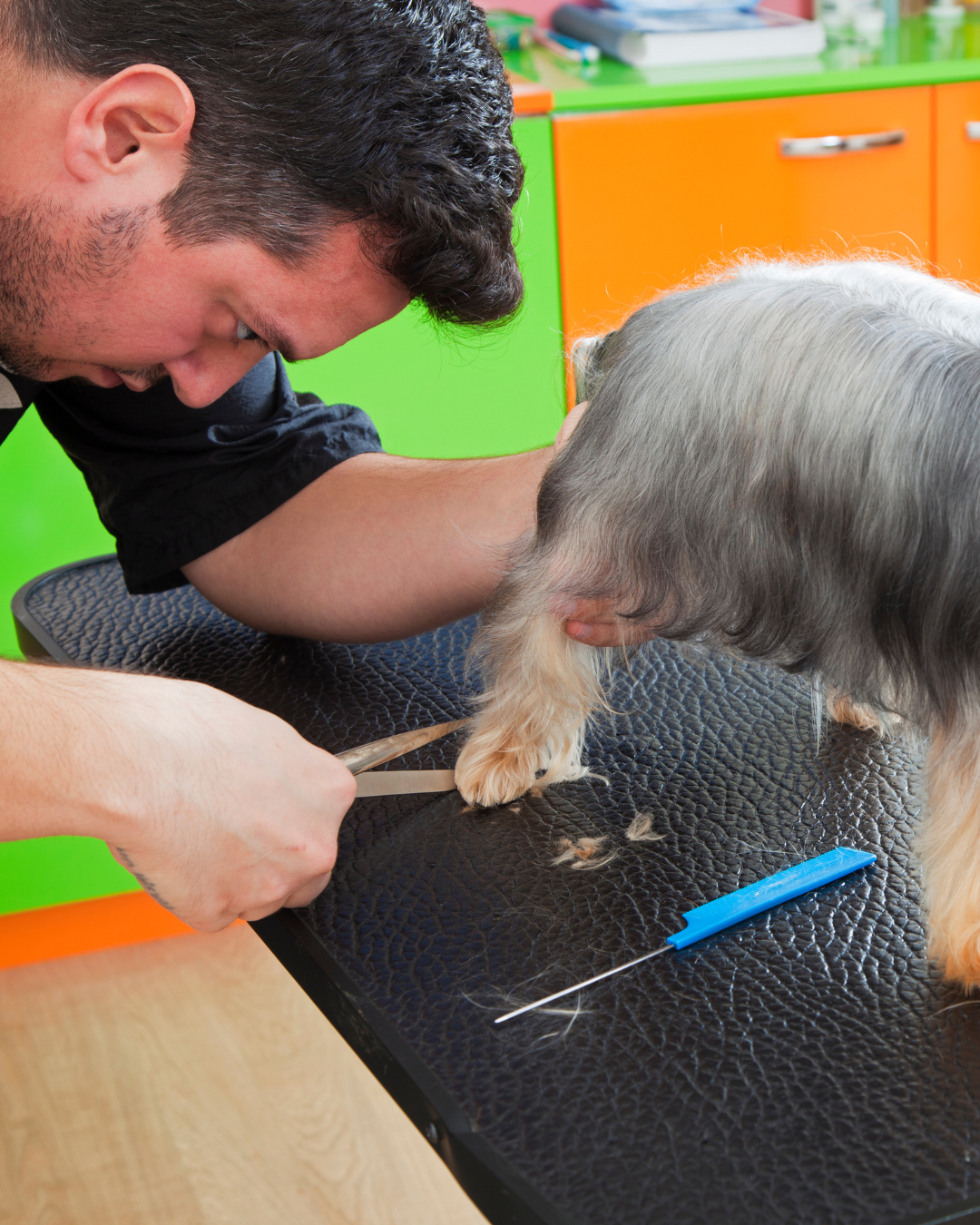 People who succeed in grooming often enjoy setting goals and continuing to challenge themselves. There is always another skill to learn, certification to pursue, or grooming style to master. The industry rewards dedication and passion.
Many students are surprised by how much confidence they gain while learning to groom. Developing a hands-on skill can open doors to financial independence and meaningful work while allowing you to spend your days helping animals.
If you have been searching for a career that combines creativity, compassion, problem-solving, and purpose, dog grooming may be worth exploring. Sometimes the qualities that make someone a great groomer are already part of who they are. They simply need the opportunity to grow those strengths into a career.
 What does it take to go from “just a dog groomer” to a true professional? In this episode of Groomer’s Choice Hey Joe Podcast, past Paragon president and current Groomer’s Choice VP Joe Zuccarello sits down with Brandy Reese, CMG, to explore how mindset, skill development and professionalism can elevate your career and income. With 30+ years in the industry, Brandy has worked as a salon manager, mobile business owner and now runs Canine Design Nashville, specializing in precision scissor work and hand stripping for terriers and sporting breeds. Today, as a Mentor and Account Rep, she helps aspiring groomers find their fit at Paragon. Tune in to learn how higher-level skills, consistent clients and a professional approach can help you grow your business.

One of the most powerful ways to grow your salon is by making it easier for people to find you and easier for happy clients to talk about you.
When pet parents are searching for a new groomer, they are looking for two things almost immediately: visibility and trust. They want to find a salon quickly, and they want to feel confident they are making the right choice.
That trust is often built before they ever walk through your door. It happens through Google reviews, strong social proof, and the way your salon shows up online.
The good news is that this does not need to happen by chance. Just like every successful service in your salon, reviews and organic traffic should be built through systems.
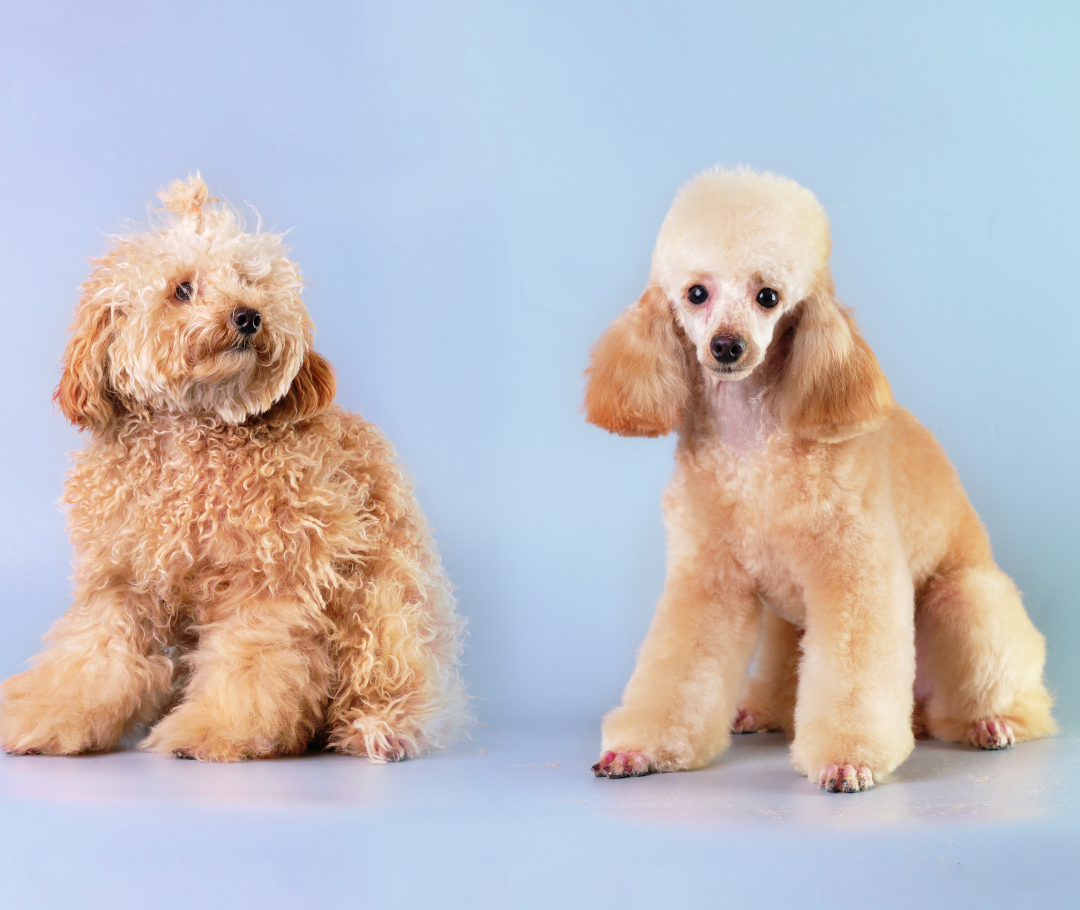 Before asking for reviews, make sure you are consistently creating moments clients naturally want to share.
A fresh-smelling dog, a beautifully finished groom, clean ears, smooth nails, a bandana or bow, and a happy pickup experience all create the kind of emotional response that leads to word-of-mouth marketing.
People do not leave 5-star reviews simply because the groom was completed. They leave reviews because the experience made them feel confident, relieved, and impressed.
The goal is to create a pickup moment where the client says, “Wow”, which is the exact moment your team should be trained to ask for a review.
The best moment to ask for a review is at pickup, when the client is seeing their pet freshly groomed and already expressing excitement. If they say something like, “She looks amazing,” or “This is the best he’s ever looked,” that is your opening.
Your team can naturally respond with:
“That means so much to us. If you have a moment, we would love if you shared that in a Google review. It really helps other pet parents find us.”
The wording should feel warm, easy, and never pushy. The key is to ask while the positive emotion is still present.
The truth is salon teams avoid asking because they do not know what to say. Combat this by giving them a simple script they can use confidently.
Here are a few examples:
“We’re so happy you love today’s groom. If you’d be willing to leave us a quick 5-star review, it really helps our small business.”
“The best way you can support our salon is by sharing your experience in a review.”
“If _____ groom made your day, we’d love if you shared that online so other pet parents can find us.”
Keep it conversational and kind, be open to a “no” and never lose your smile.
One of the easiest ways to increase review volume is to place physical reminders at checkout. This can look like a small acrylic sign or framed countertop card works beautifully.
Consider simple messaging such as: Love your groom today? Help other pet parents find us by leaving a 5-star review on Google.
Adding a QR code that links directly to your review page removes friction and makes it incredibly easy for clients to respond while standing at the counter.
The simpler the process, the more likely people are to follow through.
Not every client will leave a review in the moment, and that is perfectly okay. A short text message or email later that evening or the next day can work extremely well.
Example text:
“We loved seeing ______ today. Thank you for trusting us with his groom. If you loved your experience, we’d be so grateful if you left us a quick review here.”
You can even pair your text with a cute photo that the groomer took of their pet after the pet’s groom was complete!
Organic traffic does not only come from Google. Social media tags and shares are incredibly valuable. Encourage clients to post pickup photos and tag your salon.
A simple sign at checkout that says:
Tag us in your fresh groom photos!
can help generate ongoing organic exposure.
Those client-generated posts build trust faster than traditional advertising because they come from real people.
 Reviews should never be a one-way conversation. Responding to every review, especially positive ones, reinforces trust and shows potential clients that you are engaged and attentive.
Mention the pet’s name when possible and thank the client warmly. This makes your salon feel personal and relationship-driven.
Organic traffic and reviews grow when clients consistently have experiences worth sharing and when your team makes it easy for them to do so.
Small touchpoints like signage, QR codes, warm scripts, and thoughtful follow-up can make a significant impact over time.
The salons that grow the fastest are often not the ones spending the most on ads. They are the ones creating systems and experiences that turn happy clients into vocal advocates.
Each year, the AKC releases its list of the most popular breeds, and many of those dogs are not haircut breeds. That raises an important question for salon owners: how do you proactively maintain volume when fewer dogs in your market need full haircuts? The answer is simple. You build your bath and brush business, and one of the smartest ways to do that is through a strong shed management service.
Bath and brush dogs can have a huge impact on your bottom line, with incredible potential for repeat revenue and client retention. These are the dogs that can help stabilize your schedule, fill slower gaps in the week, and create a predictable stream of appointments that keeps your salon thriving.
To encourage pet parents to come in regularly, you need to provide a better experience than what they can achieve at home or at a self-wash. That means delivering noticeable results, solving real problems, and creating a service that feels worth coming back for.
When you are working on short-coated and smooth-coated breeds, you may not see the dramatic visual transformation you get with a haircut dog. But the transformation is still there. The coat should look cleaner, feel softer, smell fresher, and shed less. The client should immediately notice that this is the best their dog has looked, smelled, and felt.
Now let’s talk about one of the biggest opportunities in your salon: heavy shedding breeds.
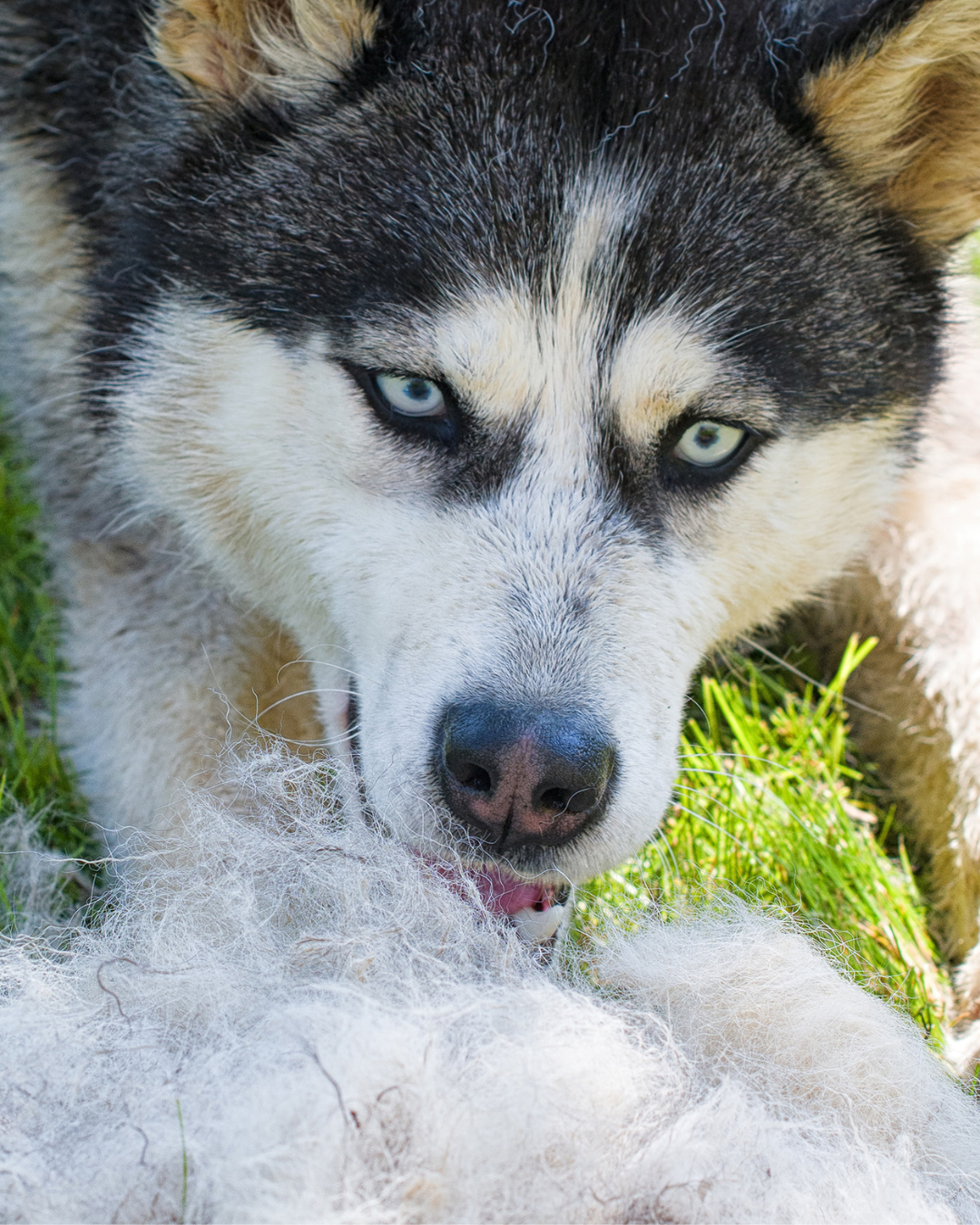 Shepherds, Golden Retrievers, Labrador Retrievers, Huskies, Border Collies, and many mixed breeds with double coats all present a tremendous opportunity for repeat service.
These clients are not simply looking for a bath. They are looking for relief from the hair all over their home. This is where a structured shed control service becomes one of the most valuable solutions you can offer.
What you want to do is bring these bath and brush dogs in on a very regular basis. Ideally, every six to eight weeks. This schedule helps keep shedding under control, reduces the buildup of oils and dirt on the coat, and keeps the dog smelling and feeling fresh.
More importantly, this schedule creates repeat business. Instead of waiting until the client becomes frustrated with the shedding at home, you create a predictable maintenance system that keeps them coming back.
That repeat frequency is what turns a simple service into a thriving revenue stream and a strong client relationship.
Whether you are working on a short-coated dog, a smooth-coated breed, or a dense double-coated dog like a Shepherd or Husky, your high velocity dryer is one of the most important tools in this service.
Done correctly, the dryer removes the bulk of loose undercoat before brushing even begins. This improves efficiency, protects the coat, and creates noticeably better results.
The finished coat should be glossy, clean, and move freely as the dog walks. It should feel irresistible to the touch. That mixed with minimal shedding result will keep the client coming back.
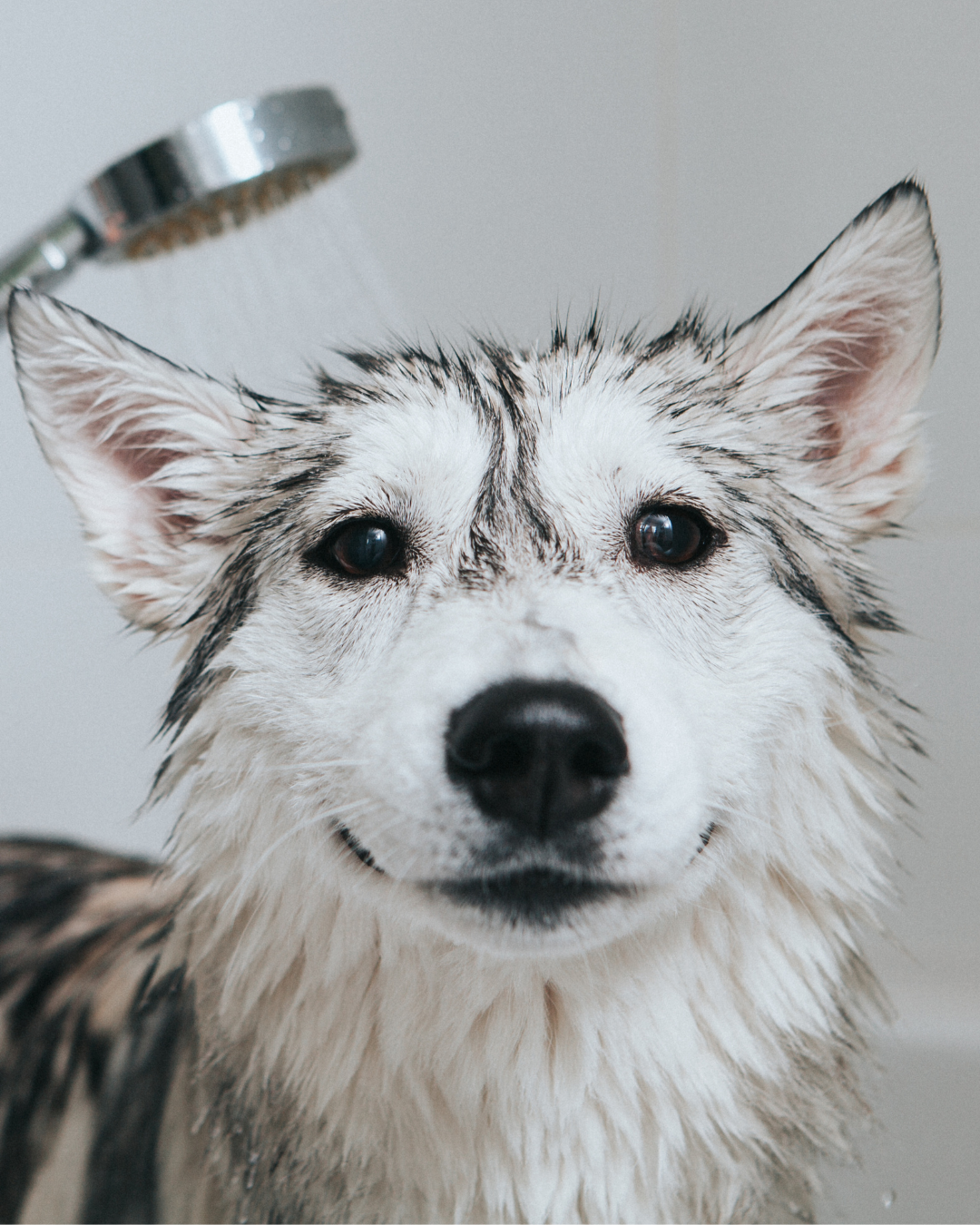 A strong shed control service should do more than solve a client problem. It should strengthen the financial health of your salon.
Once the service is established operationally, the next step is to evaluate it as a business system. This means looking at profitability, labor efficiency, repeat booking potential, and long-term client value.
The goal is not simply to add another line item to your service menu. The goal is to build a repeatable revenue engine that helps your business thrive.
Every service in your salon should be measured by one of the most important business formulas:
Revenue Per Hour = Total Ticket ÷ Appointment Time
For example, if your bath and brush base price is $60 and your shed management add-on is $25, your total appointment ticket becomes $85.
If that appointment takes 60 minutes, the formula looks like this:
$85 ÷ 1 = $85 per hour
If it runs 90 minutes:
$85 ÷ 1.5 = $56.67 per hour
This is why service timing matters just as much as pricing. If the service takes too long without the correct price structure, it can quietly hurt profitability.
Every salon should know its minimum target hourly production number. For many salons, that target falls between $65–$90 per labor hour, depending on team structure and overhead.
Pricing should never be based on what “feels right.” Instead, work backward from your desired margin.
Use this formula:
(Labor Cost + Product Cost + Overhead) ÷ (1 – Target Margin) = Service Price
Example:
Formula:
($18 + $5 + $4) ÷ (1 – .65) = $77.14
In this case, the service should be priced at approximately $75–$80.
This ensures the service remains profitable while supporting labor costs and business growth.
One of the most important business metrics for this service is going to be the rebooking rate.
Use this formula:
Rebooking Rate = Rebooked Clients ÷ Total Shed Clients × 100
Example:
38 rebooked clients ÷ 50 total = 76% rebooking rate
A healthy target is:
Clients are not buying a “deshed blowout.” They are buying less hair on the couch, fewer tumbleweeds on the floor, and a dog that smells and feels amazing.
Market the results:
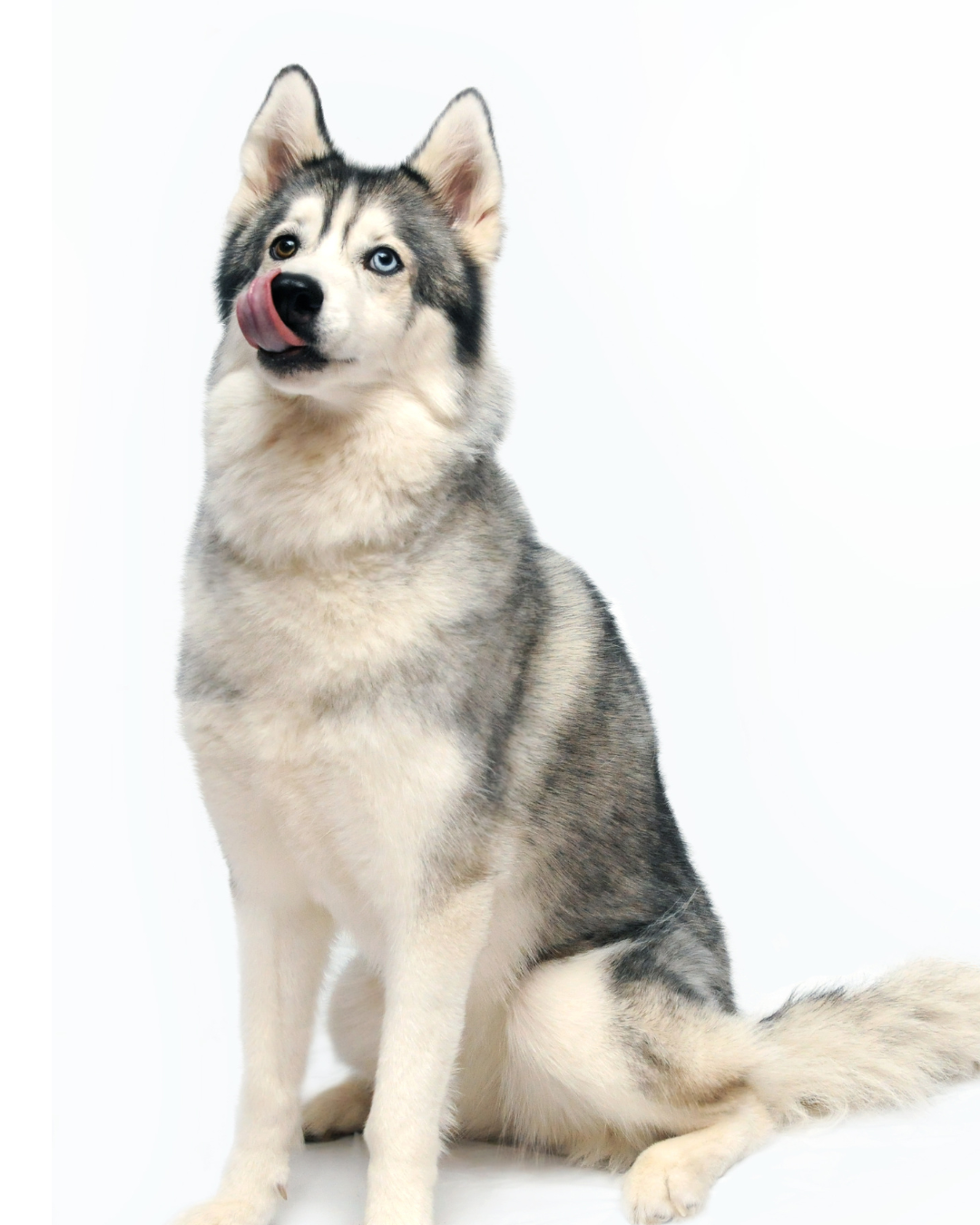 When built with the right pricing, rebooking structure, team support, and client messaging, a shed control program becomes one of the most dependable growth engines in your salon.
This service creates repeat revenue, improves retention, stabilizes the schedule, and turns bath and brush dogs into a thriving part of your business model.
For those who feel called to work with animals, choosing the right career path is both an exciting and deeply personal decision. Two professions often rise to the top for animal lovers seeking meaningful work: veterinary technology and professional pet grooming.
At first glance, these roles may seem similar. Both involve hands-on work with pets, a strong foundation in animal care, and the opportunity to improve the quality of life for the animals you serve. However, the reality of each path is very different in terms of education, daily expectations, long-term growth, and the type of fulfillment each career provides.
Understanding these differences is one of the most important steps in discovering where your strengths, interests, and passions truly align.
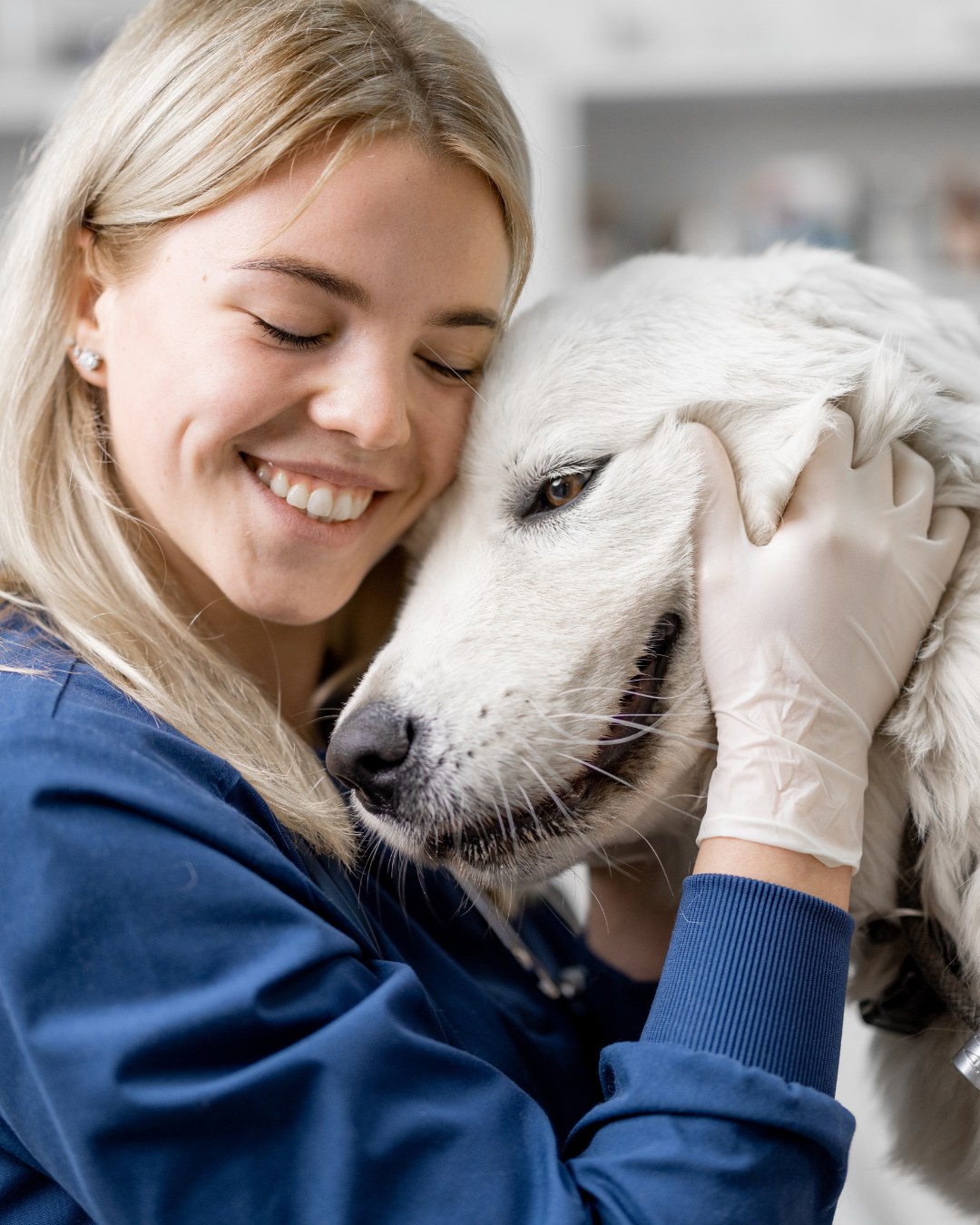 Veterinary technicians play a critical and highly respected role in clinical animal care. Working alongside veterinarians, they help support the medical side of pet wellness and treatment.
Their responsibilities often include assisting during examinations and surgeries, administering medications, monitoring anesthesia, collecting laboratory samples, taking radiographs, and helping track a patient’s recovery progress.
This career path is ideal for individuals who are drawn to medicine, science, and structured clinical environments.
Because of the medical nature of the role, this path usually requires formal education and certification. For many, this is a highly meaningful career because it allows them to directly support medical outcomes and animal health.
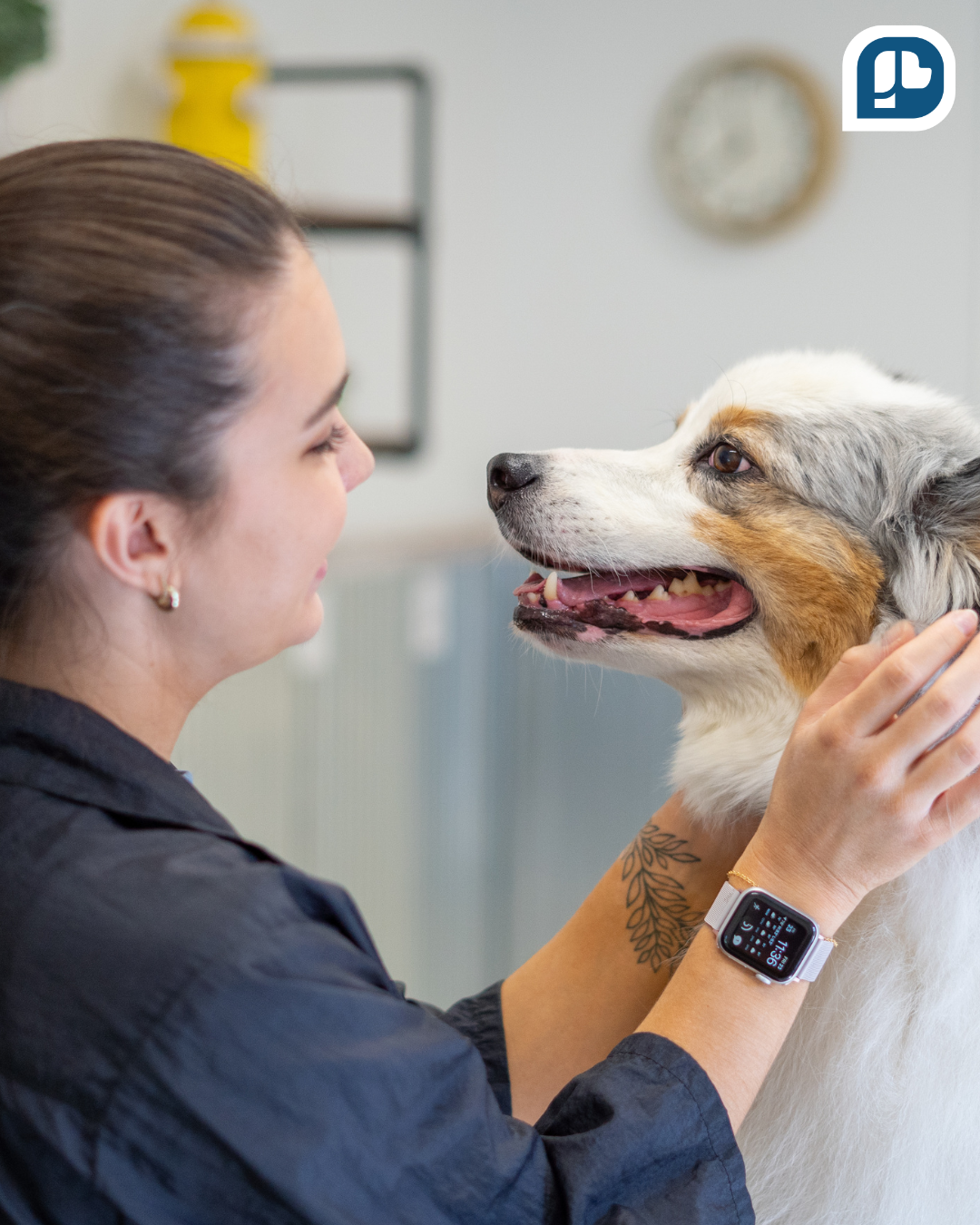 Professional pet grooming offers a different, but equally meaningful, way to work with animals. Rather than focusing on medical treatment, groomers focus on preventative wellness, hygiene, comfort, coat care, and the overall appearance and well-being of the pet.
This profession combines animal care with hands-on technical skill, creative problem-solving, and craftsmanship.
Groomers work closely with pets on a routine basis, often seeing the same dogs every four to eight weeks. This consistency allows groomers to build trust not only with the pet, but also with the pet parent. Over time, many groomers become an essential part of a dog’s overall care routine.
One of the most common misconceptions about grooming is that it is simply bathing and trimming hair.
In reality, professional grooming is a highly skilled trade that requires education, repetition, patience, and a deep understanding of both animal behavior and coat structure.
A groomer must learn:
Every dog presents a new opportunity to learn, refine technique, and build confidence in your
craft.
One of the most significant differences between veterinary technology and professional grooming lies in career flexibility and growth potential.
As your skills develop, so does your earning potential and your ability to shape the type of career you want.
For many groomers, this profession becomes far more than a job. It becomes a long-term career with room for financial growth, flexibility, and entrepreneurship.
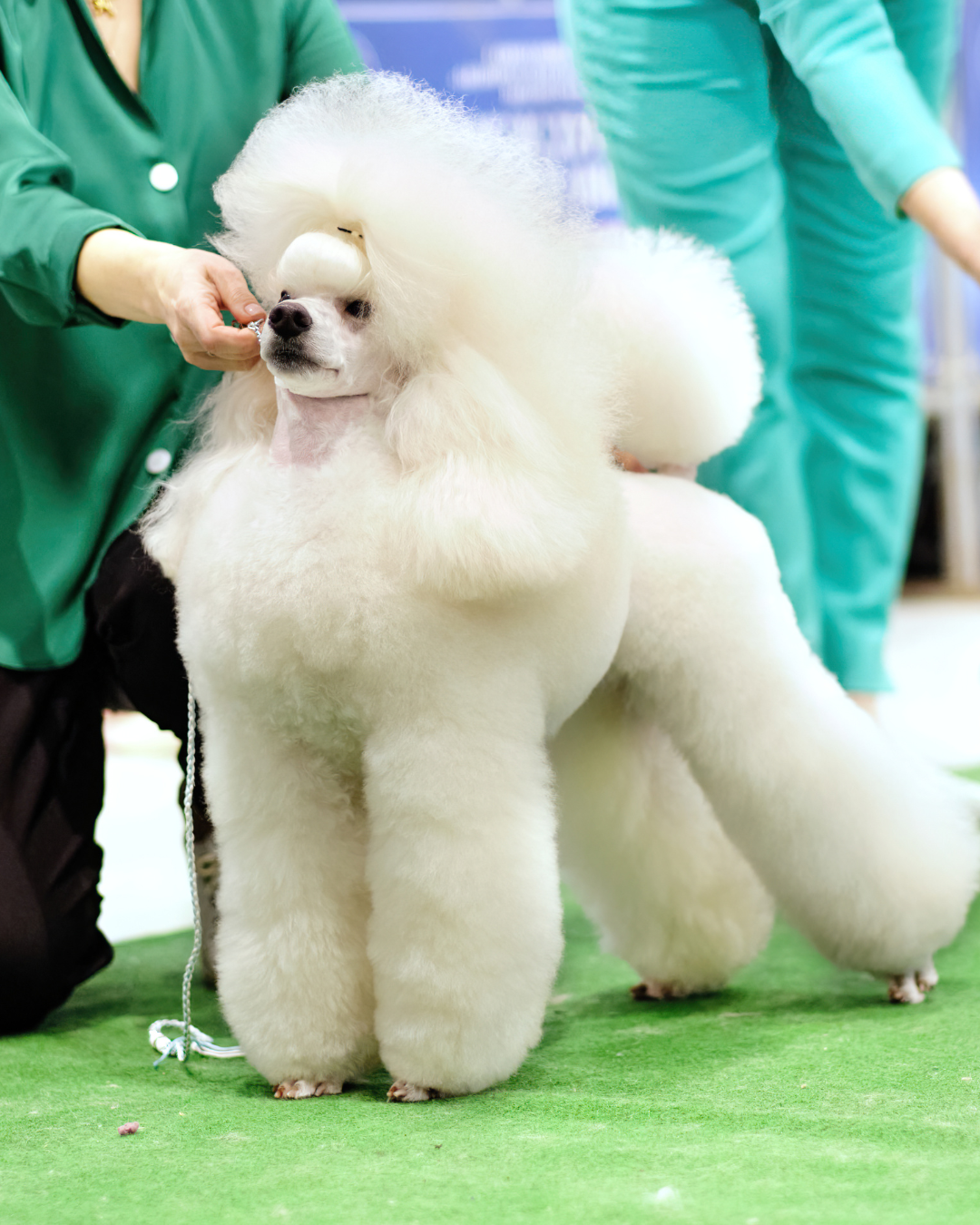 One of the most powerful aspects of professional grooming is that the career can evolve alongside your personal goals and lifestyle.
Some groomers thrive in team salon environments, while others dream of opening their own boutique business or working in mobile grooming.
As your skills grow, your ability to control your schedule, client load, and income often grows as well.
Choosing between veterinary technology and professional grooming is not about deciding which career is better. It is about understanding which environment, skill set, and future path align most closely with who you are and what kind of life you want to create.
If you are seeking a hands-on career that blends animal care, creativity, flexibility, meaningful relationships, and long-term growth potential, professional grooming offers an incredibly rewarding path forward.

Shed control is one of the most valuable, yet most misunderstood, services within the grooming industry. It is often seen as an optional add-on, a quick upgrade, or something casually included within a bath and brush. In reality, shed control is a natural process that requires a clear understanding of coat function, hair growth cycles, product interaction, and consistent scheduling in order to be performed correctly.
When we treat shed control as a complete system instead of a one-time service, the results become more consistent, the work becomes easier to manage, and business becomes stronger over time. This mindset creates a true professional coat management system.
Shed control is not only about removing hair, it is about managing a natural process in a way that supports the health of the pet, improves the client’s experience, and allows you to work efficiently and effectively.
Shedding is a completely normal and necessary process in all coated animals. It promotes new hair growth, removes old or damaged coats, and allows the coat to adapt to seasonal and environmental changes.
One of the most important concepts for both groomers and clients to understand is that shedding cannot be stopped. There is no product, tool, or technique that will eliminate shedding entirely. What can be done, however, is to manage shedding in a way that reduces accumulation, improves coat function, and maintains balance within the hair cycle.
When shed control is positioned as management rather than elimination, expectations become realistic, and results become measurable.
Every hair on a dog’s body exists within a continuous cycle made up of three distinct phases: anagen, catagen, and telogen. Understanding this cycle is essential for effective shed control.
The anagen phase is the active growth phase, during which the hair is forming and lengthening. The catagen phase is a transitional stage where growth slows and eventually stops. The telogen phase is the resting stage, where the hair is naturally released and replaced by new growth.
This cycle does not occur uniformly across the coat. Instead, it follows what is known as a mosaic pattern, meaning individual hairs are at different stages at any given time. If all hairs entered the telogen phase simultaneously, the dog would lose its entire coat at once. Instead, shedding is continuous and staggered.
For a visual representation of this process, reference the diagram below:
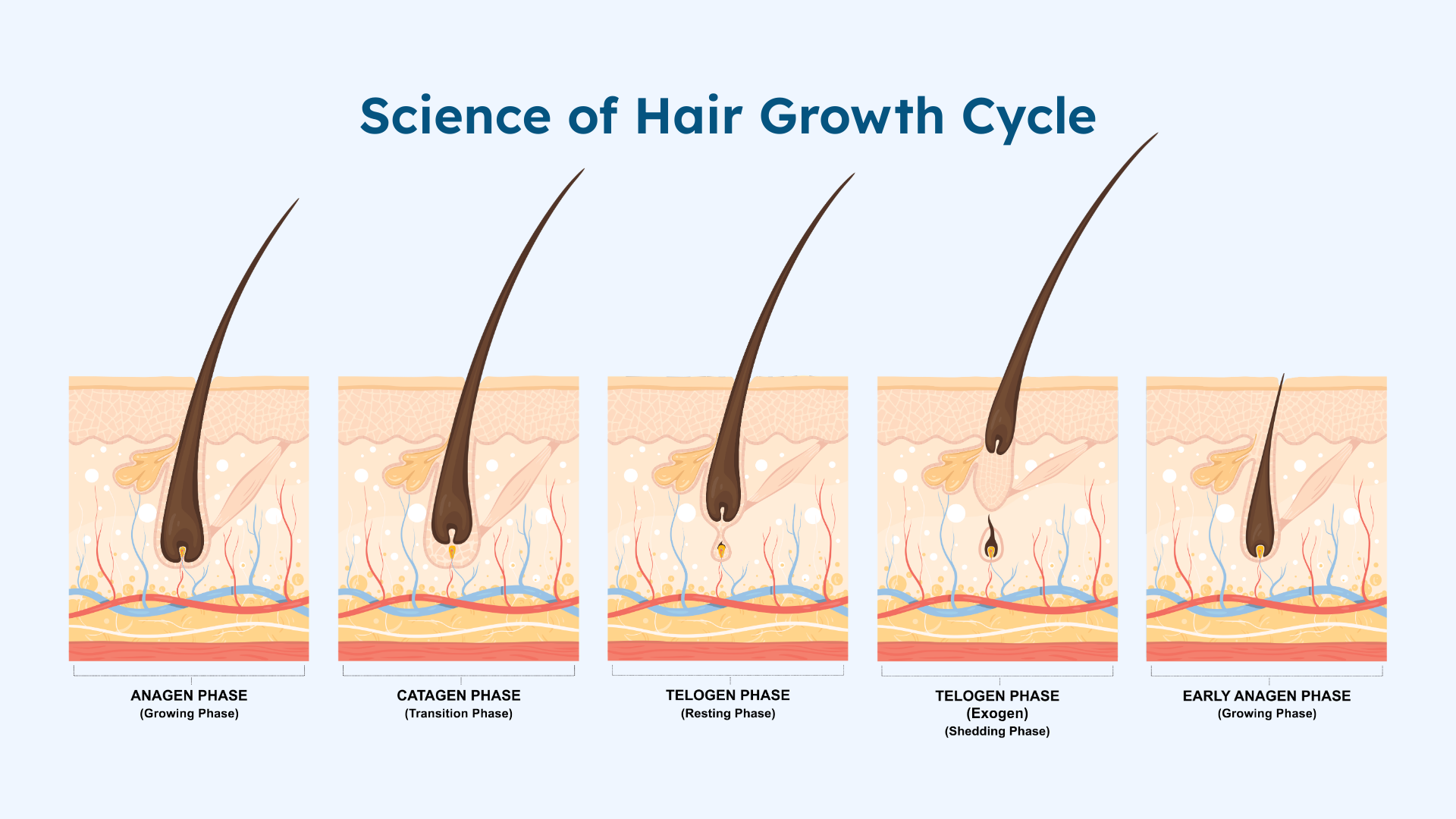
Shed control services are designed specifically to remove hair that has already entered the telogen phase. In other words, the hair is already on its way out. The groomer is simply assisting in that release.
Shedding is influenced heavily by environmental factors, particularly temperature and daylight. Most dogs experience increased shedding during the spring and fall as they transition between seasonal coats.
As temperatures rise and daylight hours increase, dogs shed their dense winter undercoat to prepare for warmer weather. Conversely, as temperatures drop and daylight decreases, the body responds by producing a thicker, more insulating coat.
Daylight exposure plays a particularly important role. Longer days signal the body to reduce coat density, while shorter days signal the need for increased insulation. This is why indoor dogs, exposed to artificial lighting and climate control, may shed more consistently throughout the year.
Additional variables such as genetics, hormones, diet, stress levels, and overall health also influence shedding patterns, which is why no two dogs present exactly the same.
To manage shedding effectively, it is necessary to understand how different coat types function. Unlike humans, who grow a single hair per follicle, dogs can produce multiple hairs from a single follicle. This creates a more complex coat system with multiple layers and functions.
Most shedding-related challenges are associated with double-coated breeds. These coats consist of:
The undercoat is responsible for the majority of shedding. It has a shorter life cycle and is designed to be replaced more frequently, particularly during seasonal transitions.
Examples of heavy shedding breeds include:
These breeds often shed continuously throughout the year, with increased intensity during seasonal coat changes.
In contrast, breeds with longer hair growth cycles, often referred to as “low shedding” or “hypoallergenic,” such as Poodles, Bichon Frise, and Yorkshire Terriers, retain hair longer but require maintenance to prevent tangling and matting.
The skin produces a natural oil known as sebum, which plays a critical role in maintaining coat health. Sebum protects the hair shaft, helps repel water, and maintains moisture balance within the coat.
However, sebum also attracts dirt, debris, pollen, amongst other debris. Over time, this combination contributes to buildup within the coat, particularly when shedding hair is not properly removed.
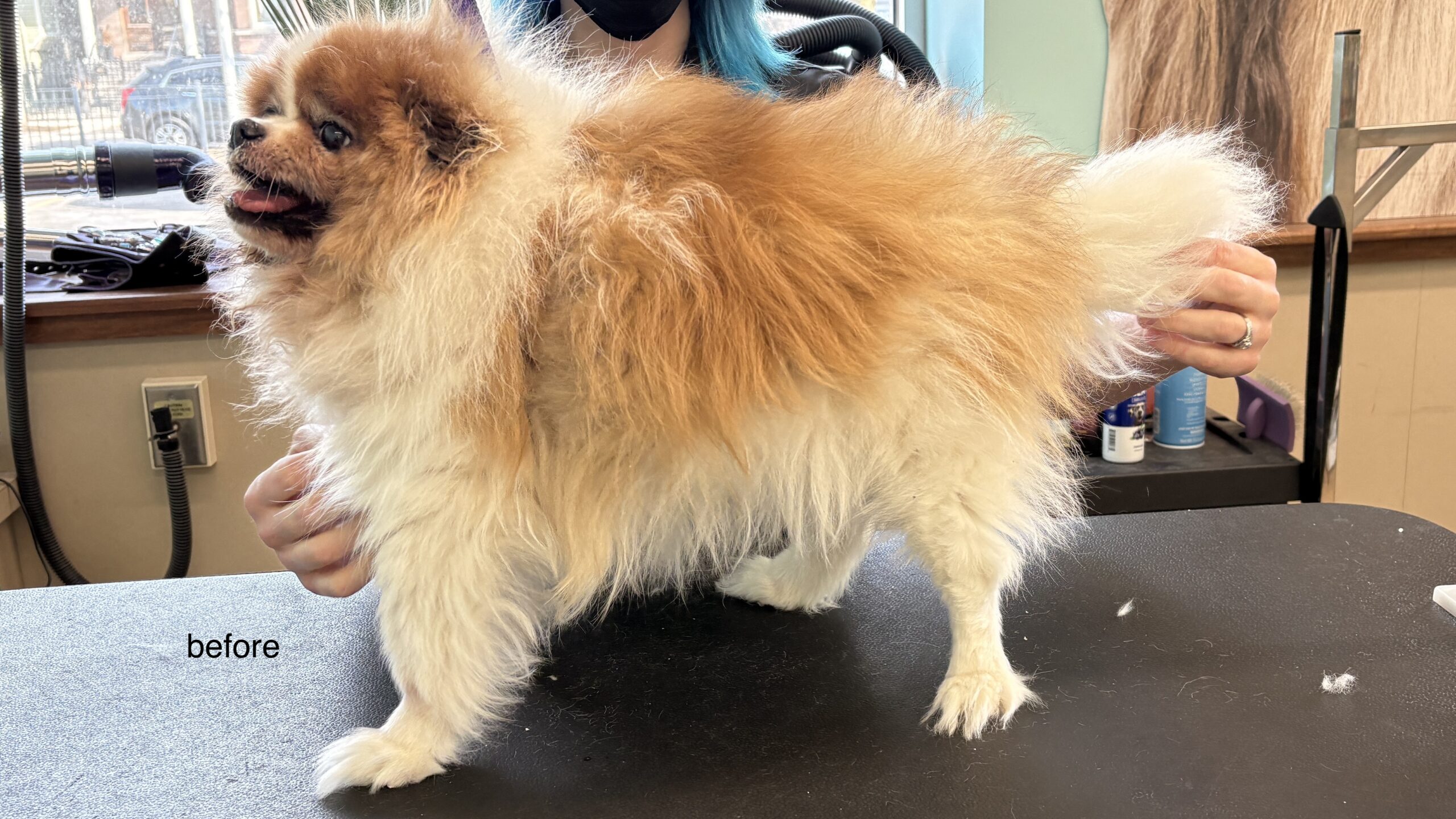 When shedding hair is not removed, it does not simply disappear. It becomes trapped within the coat, leading to compaction. This compacted coat restricts airflow to the skin, traps heat and moisture, and creates an environment where irritation and matting can develop.
Over time, this buildup increases the difficulty of grooming services, extends appointment times, and creates discomfort for the pet. What appears to be “excessive shedding” is often simply accumulated shedding that has not been properly managed.
Understanding the science behind shedding is only the first step. The true effectiveness of shed control is determined by how that knowledge is applied in the salon. Technique, sequencing, and attention to detail are what transform theory into results.
Shed control is not achieved through force or excessive brushing. It is achieved through preparation, product interaction, and proper use of tools. When the process is executed correctly, the coat releases efficiently with minimal stress on the hair and skin.
Every successful shed control service begins with a thorough bath, as this step creates the foundation for everything that follows.
The shampooing process is essential because it removes dirt, debris, excess oils, and built-up sebum that can trap loose hair close to the skin. When the coat is fully cleansed, it is better able to release shedding hair during the drying and brushing stages.
If this step is rushed or left incomplete, much of the loose coat will remain trapped, reducing the effectiveness of the rest of the service.
The goal is not simply to make the dog look clean. The true purpose is to create a healthy, clean foundation that allows the coat to function properly and release shedding hair efficiently.
Conditioning is often underestimated, yet it is one of the most critical steps in shed control. By restoring moisture and closing the cuticle, conditioners reduce friction between hair strands and allow the shedding coat to slide free more easily.
Proper conditioning also improves coat porosity, strengthens the hair shaft, and enhances manageability. This reduces the need for excessive brushing and protects the integrity of the coat.
In many cases, ineffective shed control can be traced back to insufficient conditioning.
The high velocity dryer is the most powerful tool available for shed control. When used correctly, it removes the majority of loose undercoat before brushing even begins.
The force of the air separates the coat, lifts shedding hair, and removes it efficiently. This reduces the need for excessive brushing, which can cause unnecessary stress and damage to the coat. Mastery of the high velocity dryer is essential. Airflow direction, nozzle control, and coat sectioning all play a role in achieving optimal results.
Brushing should be viewed as a refinement step within the shed control process, not a replacement for proper preparation.
For heavy-coated breeds in particular, line brushing plays an important role in working methodically through the coat to ensure loose undercoat is fully released without causing unnecessary stress to the skin or coat. By working in sections from the skin outward, groomers can maintain control, protect coat integrity, and more effectively assess remaining density.
However, brushing should not be used to compensate for incomplete bathing, drying, or de-shedding preparation. If excessive brushing is required, it is often a clear indicator that earlier steps were not performed as effectively as they should have been.
The goal at this stage is to remove any remaining loose hair, refine the finish of the coat, and ensure the pet is comfortable throughout the process, all while preserving coat health and structure.
De-shedding products and finishing sprays play a supportive role by coating the hair shaft and reducing friction. These products allow shedding hair to release more easily and improve the overall efficiency of the service.
When used correctly, they reduce effort, improve results, and enhance the finish of the coat.
Shed control is not a one-time event. It is an ongoing process that must be managed through consistent scheduling and structured services. A well-designed shed control program aligns with the natural hair cycle and prevents accumulation before it becomes a problem.
The foundation of the program begins with a full-service bath and brush appointment that includes:
This service focuses on removing as much shedding coat as possible while restoring balance within the coat.
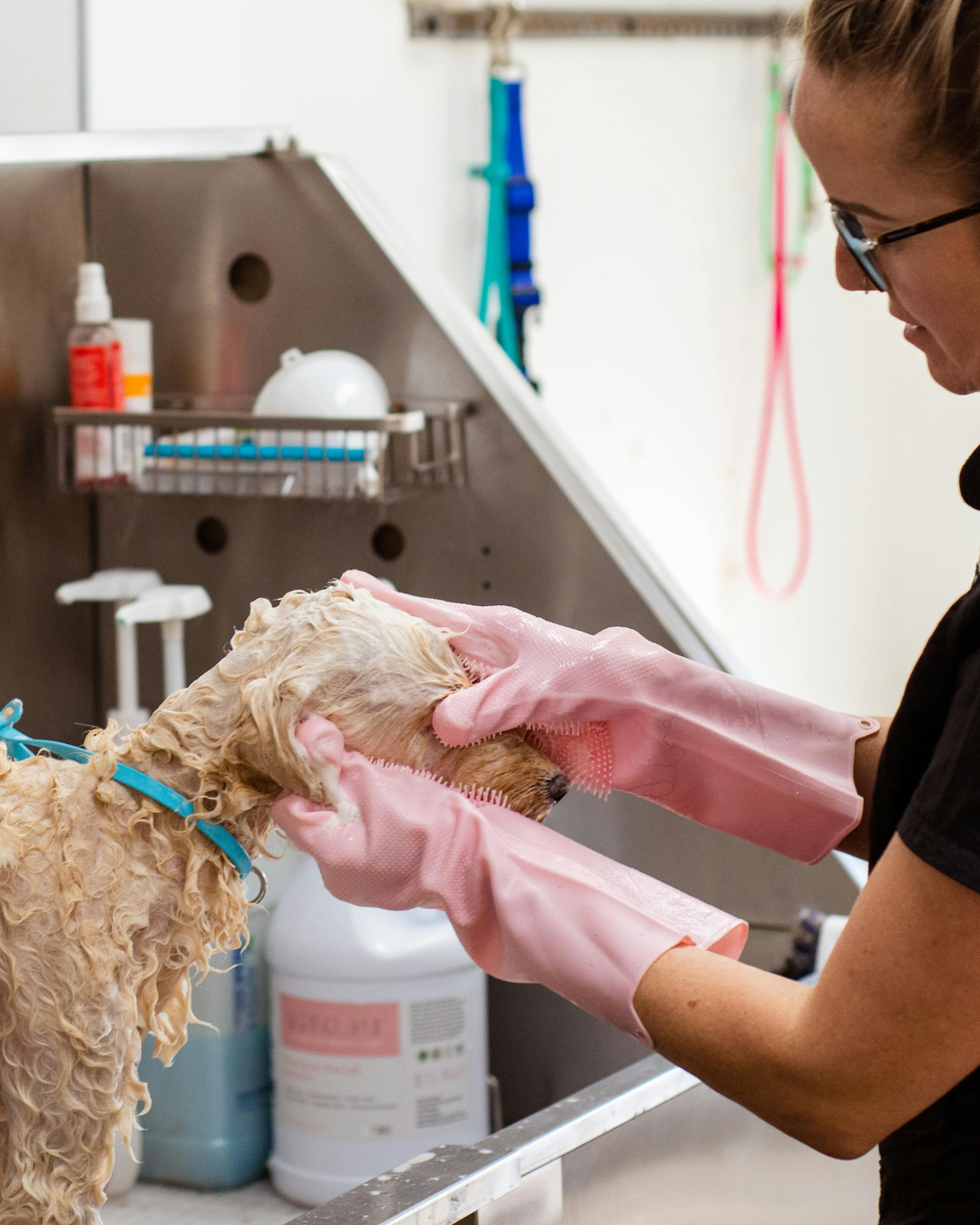 Mini Shed Control Treatment (1–2 Weeks Later)
Because shedding continues after the initial service, a follow-up appointment is necessary to remove newly released hair.
This service includes:
This appointment must occur within one to two weeks of the initial service. Beyond that timeframe, the coat begins to accumulate again, reducing the effectiveness of the process.
After the mini service, the cycle resets with another full-service appointment.
Timing is one of the most important elements of a shed control program. If appointments are spaced too far apart, the coat returns to a state of accumulation, requiring more time and effort to correct.
Consistent scheduling maintains coat balance, reduces workload, and improves overall results.
Shed control should never be performed on heavily soiled coats. Brushing dirty hair increases friction, leading to breakage and damage. Additionally, groomers must communicate that shedding will continue after the service. This is not a failure of the process, but a reflection of the ongoing hair cycle.
One of the most important aspects of shed control is educating the client. Without proper understanding, clients may expect shedding to stop completely, leading to dissatisfaction.
It is essential to communicate clearly:
Explaining the “why” to your clients behind your recommendations will build deeper trust in your expertise. Said trust will then lead to a higher retention and commitment to a schedule that produces better results.
From a business perspective, shed control programs create structure, consistency, and opportunity.
Bath and brush dogs represent a significant portion of the grooming market. When supported by a shed control program, these services become predictable, repeatable, and highly profitable. Regular scheduling increases client retention, stabilizes revenue, and reduces seasonal fluctuations in grooming time.
Shed control services can be performed by Professional Groom Techs, allowing groomers to focus on higher-skill services such as haircuts. This improves efficiency, increases appointment capacity, and maximizes revenue potential across the business.
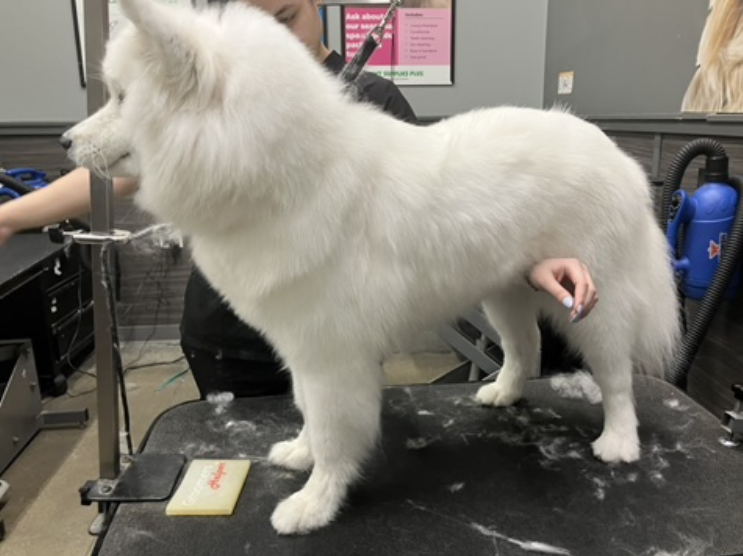 Shed control requires additional time, product usage, and technical skill. Pricing should reflect these factors.
A common and effective structure includes:
However, there is no universal pricing model. Each salon must determine pricing based on their time, overhead, and service quality. The key principle is that pricing should align with the work being performed.
Shed control is an essential part of coat care that supports the natural biology of the pet’s health while creating a better overall grooming experience.
When approached as a structured program rather than a one-time service, consistent shed control improves coat health, delivers more predictable results, strengthens client trust, and can help reduce appointment times over time, all of which support a stronger, more sustainable business.
It is not simply about removing more hair. It is about understanding how the coat naturally functions and working with its growth and shedding cycles, rather than against them.
 Establishing appropriate pricing within a six-dog-per-day model requires a clear understanding of time, capacity, and financial requirements. Groomers working at this pace are typically prioritizing quality, consistency, and sustainability over high-volume output. As a result, pricing must be structured to ensure that fewer appointments still generate sufficient revenue to cover expenses, provide income, and produce profit.
 A schedule of six dogs per day creates a defined ceiling for how much revenue can be generated through labor alone. Assuming a five-day work week and four working weeks per month, this results in approximately 120 dogs per month, or 1,440 dogs per year. This number becomes the foundation for all pricing calculations, as it represents the total number of opportunities to earn revenue within a year.
Because this capacity is limited, each appointment must carry an appropriate portion of the business’s financial responsibility. Underpricing within this model quickly leads to income gaps that cannot be recovered through volume alone.
Overhead remains constant regardless of how many dogs are groomed each day. If total monthly expenses equal $8,000, those costs must be distributed across the 120 dogs serviced each month. Dividing $8,000 by 120 results in an overhead cost of approximately $67 per groom.
This figure represents the baseline cost required to operate the business for each appointment. It includes all operational expenses such as rent, utilities, supplies, equipment maintenance, insurance, and administrative systems. Accurately calculating this number is essential, as it ensures that each service contributes to keeping the business functional.
In addition to covering overhead, each groom must contribute to the groomer’s personal income. If the desired annual income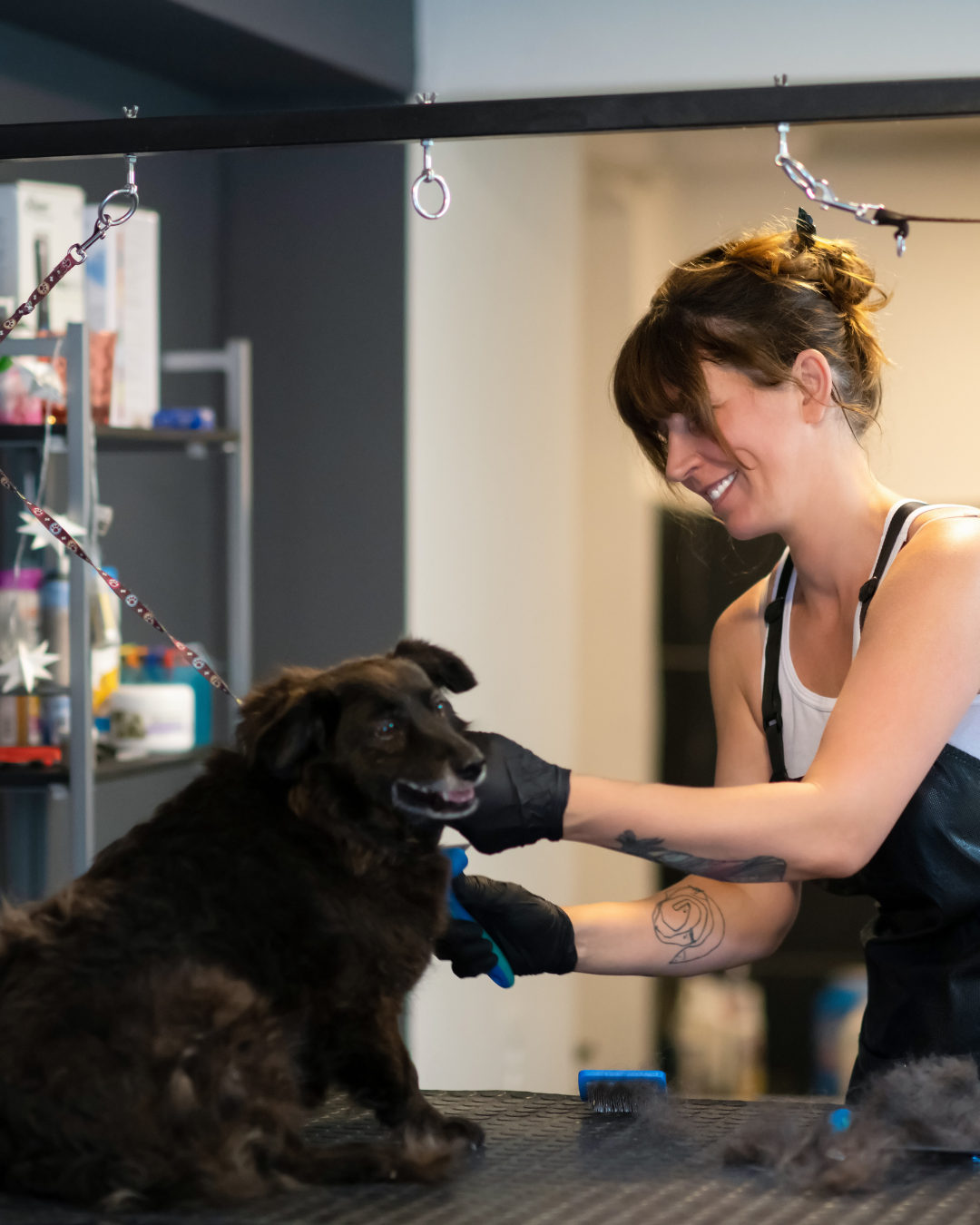 is $65,000 and the groomer completes 1,440 grooms per year, each groom must generate approximately $45 in income. This calculation ensures that compensation is evenly distributed across all services rather than treated as an afterthought.
When combined with the overhead cost of $67, the base price per groom becomes $112. This amount represents the minimum required to both operate the business and provide a consistent income.
To support long-term growth and financial stability, a profit margin must be added to the base price. Applying a 20 to 30 percent margin ensures that the business can reinvest in equipment, education, and overall improvements. Using a 25 percent margin on the $112 base price results in a target average price of approximately $140 per groom.
This target represents the average revenue needed per appointment across all services. Some grooms may fall below this number, while others must exceed it to maintain balance.
With a six-dog-per-day schedule, time management becomes a critical factor in pricing. Assuming an eight-hour workday, each groom must average approximately 1.25 to 1.5 hours, allowing for transitions, cleaning, and client communication. This structure naturally establishes an hourly rate when revenue goals are divided by total working hours.
If the target is $140 per groom and each groom averages 1.5 hours, the effective hourly rate is approximately $93 per hour. Any service that requires additional time due to coat condition, size, or behavior must be priced accordingly to maintain this hourly standard.
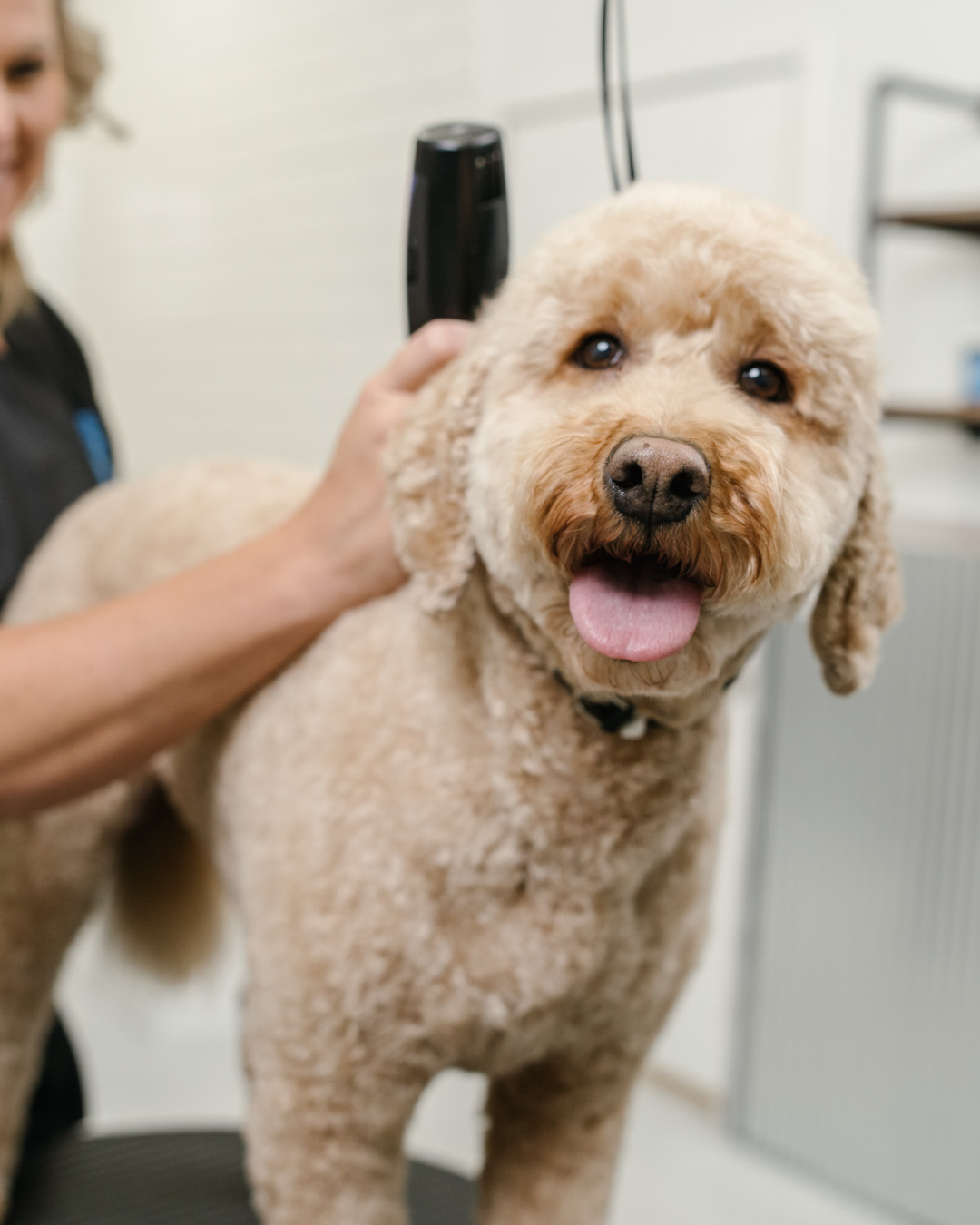 Once the target average price is established, it must be translated into a pricing structure that reflects the variability of grooming services. Smaller or low-maintenance dogs may be priced slightly below the average, while larger, high-maintenance, or time-intensive grooms must be priced above it.
This approach ensures that the overall daily revenue remains consistent, even as individual service prices vary. Groomers should avoid flat pricing models that fail to account for differences in time and labor, as these often result in undercompensation for more demanding work.
Pricing must also align with the expectations and economic conditions of the surrounding market. Groomers should evaluate local pricing trends while maintaining a focus on value rather than competition. A six-dog-per-day model often reflects a higher standard of care, allowing for more individualized attention, which can justify mid-range to premium pricing.
Clear communication with clients is essential in reinforcing this value. When clients understand the time, skill, and care invested in each appointment, they are more likely to accept pricing that accurately reflects the service provided.
Pricing should be reviewed regularly to account for changes in expenses, demand, and professional growth. As skills improve and schedules fill more consistently, rates should be adjusted to reflect increased value. Additionally, rising supply and operational costs must be incorporated into pricing updates to maintain profitability.
Gradual and consistent adjustments are generally more sustainable than infrequent, large increases. This approach allows the business to remain financially stable while maintaining strong client relationships.
Operating within a six-dog-per-day model requires precise and intentional pricing. By calculating overhead, defining income goals, and applying a structured profit margin, groomers can establish rates that fully support their business and their professional well-being.
When each appointment is priced with purpose, groomers gain control over their schedule, their income, and the quality of care they provide, creating a business that is both sustainable and professionally rewarding.
The grooming industry has evolved significantly over the past decade. Client expectations are higher, breed-specific styling is more refined, and efficiency matters more than ever inside busy salons. At the same time, the traditional path to education has not always been realistic for adult learners. Many aspiring groomers cannot afford to leave a steady paycheck to attend a full-time program, and salon owners often cannot afford to lose reliable team members for months at a time.
Online education has created a practical solution that supports skill development without disrupting employment. At Paragon School of Pet Grooming, our goal is not simply to deliver information digitally. Our mission is to produce capable, confident pet groomers who can perform in a real salon environment while they learn.
Professional grooming is a hands-on trade that requires repetition, technique refinement, and guided correction. Our online program combines theoretical instruction with practical application, along with constant support from our mentors.
Students study core concepts at the beginning such as canine anatomy, coat types, breed profiles, safety protocols, and equipment handling through organized coursework. These lessons are then applied directly to dogs through graded assessments. Immediate implementation reinforces retention and builds muscle memory more effectively than passive learning alone.

Because the curriculum is progressive, each skill builds upon the last. Students do not move forward until foundational techniques are demonstrated correctly. This ensures that speed never replaces safety and that confidence is rooted in competence.
For aspiring groomers currently working as bathers or assistants, online education offers a clear advancement path. Rather than stepping away from employment to attend school full time, they continue contributing to the salon while expanding their technical ability.
This model benefits three key groups.
A critical component of successful online grooming education is mentorship. Access to experienced instructors provides direction, accountability, and constructive feedback. Students submit photos and practical assignments for evaluation, ensuring that technique is corrected early rather than reinforced incorrectly.
This process mirrors traditional apprenticeship while adding curriculum structure. Mentors identify areas for refinement in scissoring balance, pattern placement, clipper control, and finishing work. Over time, students develop a trained eye alongside technical precision.
The result is not just a groomer who can complete a haircut, but one who understands why specific techniques are applied and how to adjust for coat type, structure, and client request.
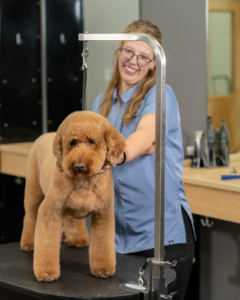
Many individuals entering grooming today are not recent high school graduates. They are parents, second-career professionals, and individuals seeking a trade that offers creativity and financial growth. Flexibility is essential.
Online learning allows coursework to be completed during evenings, weekends, or scheduled study blocks. This adaptability increases completion rates and reduces the stress associated with rigid academic timetables. Students are able to integrate education into their lives rather than restructuring their lives around education.
For salon owners, this flexibility also makes it possible to create internal career ladders. A bather can transition to groomer-in-training without leaving the team. Turnover decreases when employees see a clear path forward.
Professional grooming requires more than enthusiasm. It requires repeatable processes that produce consistent results. Structured online programs emphasize systems that improve efficiency without compromising quality.
Over time, consistent training produces measurable growth. Groomers become more confident in consultations, more efficient in time management, and more capable of handling diverse coat types. Salon owners benefit from increased service offerings and stronger brand reputation.
When education is accessible and structured, it becomes a growth strategy rather than an interruption. Groomers expand their earning potential. Aspiring professionals enter the field with clearer expectations and stronger foundations. Salon owners develop skilled teams without sacrificing operational stability.
Online learning, when executed thoughtfully in the way we have, does not dilute standards. It reinforces them by combining structured curriculum, hands-on repetition, and professional mentorship.
The future of grooming depends on accessible, high-quality training models that reflect the realities of today’s workforce. With our framework, groomers do not have to choose between earning a living and building a career.
Still unsure if this path is right for you? Take a moment to learn more about choosing a career in pet grooming.
If you’ve ever dreamed of working with animals every day, creating beautiful transformations, and building relationships with pets and their people, grooming can seem like a dream career. But like any profession, the reality is more complex than the cute photos of perfectly trimmed pups you see online. Before you take the leap, here’s what no one tells you about becoming a groomer, and why, despite the challenges, it’s worth it.
Many aspiring groomers underestimate the physical toll of the job. You’ll spend long hours standing, bending, reaching, and lifting dogs of all sizes. Over time, your muscles and joints feel it. But here’s the upside: grooming keeps you active, builds strength, and develops stamina you wouldn’t get in a desk job. And nothing beats the sense of accomplishment after a full day of work, knowing you’ve transformed dozens of pets with skill and care.
Every animal comes with its own personality. Some are 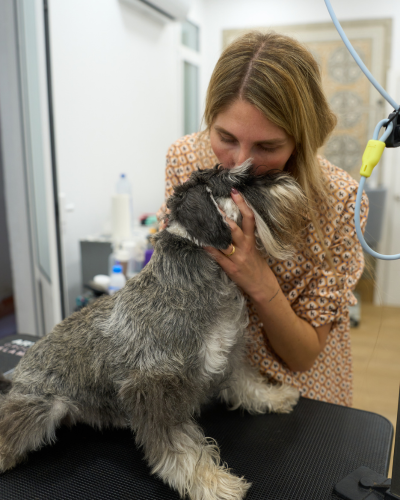 nervous, some are wiggly, and some test boundaries just to see how far they can go. Grooming is as much about psychology as it is about scissors and clippers. Learning to read body language, calm nerves, and create trust takes time but mastering patience is what sets a great groomer apart. The reward? Building bonds with animals and owners that last a lifetime.
You’ll form attachments to the pets you groom. Sometimes, pets are sick, anxious, or neglected, and handling these situations can be tough emotionally. But this emotional investment is also what makes the job so meaningful. Every wagging tail, every delighted owner, and every pet who leaves your table healthier and happier is a direct result of your care. Few jobs allow you make such a tangible difference in another life every day.
Grooming isn’t static; breeds, styles, and techniques constantly evolve. Even after formal training, there’s a lifetime of learning ahead, from mastering new tools to understanding behavior challenges. Embracing this growth keeps the work exciting and ensures you’re always improving. For those who love learning and creativity, grooming offers endless opportunities to develop your skills and express artistry in every coat you touch.
Grooming involves more than fluffy transformations. You’ll deal with fur everywhere, occasional accidents, and pets who aren’t always cooperative. But this “messiness” is part of the charm. Overcoming these challenges develops resilience, problem-solving, and adaptability. Every tough day makes the successful ones even sweeter, and every transformation, no matter how small, is a victory you can see with your own eyes.
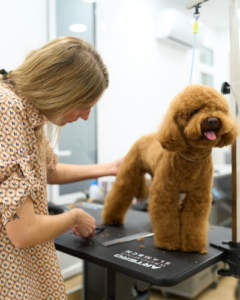 6. You Make a Real Difference
Despite the physical, emotional, and logistical challenges, grooming is profoundly rewarding. You improve pets’ lives, help owners care for their animals, and provide comfort and confidence to pets who might be nervous or neglected. The gratitude from both animals and owners is immediate and genuine, creating a sense of fulfillment few other careers can offer.
Becoming a groomer isn’t just about cutting hair, it’s about care, patience, artistry, and heart. If you’re ready to embrace both the challenges and the rewards, this profession can be one of the most fulfilling paths you’ll ever take. Every messy, exhausting, emotional, and beautiful moment is worth it when you see a pet leave your table healthier, happier, and more loved than when they arrived.