Check out our latest blog posts!
Learn how to improve your skill set or discover the latest news in the grooming industry.


Check out our latest blog posts!
Learn how to improve your skill set or discover the latest news in the grooming industry.
 If you have a reasonably busy salon and have been at this for a few years, you know the holidays mean crunch time. You’ll be grooming most of your regular clients in days instead of weeks. Do you have control of your schedule?
You may find yourself racing to juggle the demands of your business and your family. Keeping your customers happy is crucial to the health of your salon, but not at the expense of those you love. Don’t let the insanity of the holiday season put a damper on your festive mood.
I learned the hard way. Grooming super long hours up to 14 days straight before Christmas left me totally exhausted and spent. I was definitely a Scrooge throughout the entire holiday season. I knew I had to make a change when one Christmas I literally slept through the entire day.
Here are a few ideas from myself and my team of seasoned grooming pros to help you make the most of the holiday rush.
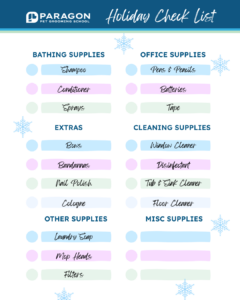
Make sure all your supplies are stocked up and organized. The last thing you want is to run out of anything! Here is a shopping list to help you.
Walk around your salon well ahead of the rush. Open doors, look in cabinets, and check drawers. You want to have everything stocked up and at your fingertips. There’s nothing better than doing a thorough walk-through and making a list of supplies you need.
Plan out your days. Just prior to a major holiday, the demands on your schedule can quickly spiral out of control. Do you want to work your normal schedule or add on a few hours here or there? Some professionals add work days to their week to accommodate clients. The choice is yours. Whatever you decide, make sure your best clients are pre-scheduled in premier slots in your appointment book. Ideally, it’s best to do this well before the holiday season hits.
Know your limitations. Know what your obligations are to your clients and family. Create a schedule that works for you – and then stick to it. It’s okay to say no.
As tempting as it may be, surviving the holiday rush on the wonderful food gifts your clients bring is not the best option! Early in my career, I learned the hard way that cookies, candies, nuts, and other holiday treats can’t help you operate at peak performance.
Eat. Real. Food. If it comes from a window at a drive-through, it does not qualify as real food, in my book. Equally important, attempt to bypass any processed foods.
Prepare. Shop the perimeter of your grocery store. Focus on fresh foods. Take a day to prepare large batches of healthy food. Then pre-package it in individual servings. Freeze anything you can.
Cook ahead of time. Never tried batch cooking before? There are plenty of ideas on Pinterest and YouTube. Or simply double or triple your favorite recipes. Personally, my attitude is if I’m going to cook, I’m going to fill the grill, load up the oven or pull out my largest pot. It doesn’t take much more time to double or triple a recipe once you get started.
Make good choices. Whatever you choose, make sure it’s fast and easy to eat. Juices and smoothies are great on-the-go items. Hard-boiled eggs are economical and easy. Sliced fruits, veggies, and lean proteins keep energy levels high. Drink plenty of water.
Know your options. If you don’t want to do the cooking yourself, stock up on menus from your favorite restaurants and choose healthier items that help you maintain a consistent energy flow throughout the day.
Some days you have time to visit with your clients. However, the holiday season is not one of them. Train them to respect your time – even if you are mobile. It’s your responsibility to make sure every pet gets your full attention and it’ll be hard to do that if you’re running behind all day.
There are ways to tactfully and politely remind them you have an extremely busy schedule. A big smile and a genuine thank you can go a long way when you need to keep moving.
The holidays are a special time. Not just for your family, friends, and your clients – but also for yourself. It’s important to reserve quality time for every part of your life.
Having grooming systems firmly in place allows you to be highly efficient. The more seasoned you are, the more likely you have mastered this technique. It comes in handy when your time is limited.
Essential oils can use helpful to energize yourself or slow yourself down. Some brands come up with blends or you can make your own. They can be diffused in the air, inhaled directly from their bottles, or added to bath water. Many oils can be applied directly to the skin.
Common oils for relaxation would be lavender, lemon, ylang-ylang, geranium, and frankincense. A few essential oils used to increase energy are peppermint, white fur, lemon, and basil. Many of the citrus based oils have the ability to uplift and de-stress.
Carve out a little special time for yourself. Maybe it’s a soothing bubble bath at the end of a long day. Some people love massages or manicures. Others enjoy sitting down for a few quiet minutes to decompress with a beverage of choice.
The holiday season can be magical – even if it is one of your busiest times. The best way to ward off being a Scrooge is to do some planning. Think about the upcoming weeks leading to the new year. Take control. Put pen to paper and plan your schedule. Know where the crunch times are and when you have a window of space.
A little bit of thought and planning can go a long way to make the holiday season both financially rewarding, personally enjoyable, and filled with blessings and gratitude.
Happy trimming!
Melissa
What do you do to get through the holidays? Jump on our Facebook page and share your best holiday survival tips with your Paragon family.
 By Melissa Verplank, CMG
It’s hard to think about “Next Year” when you’re in Holiday Rush mode. However, it’s a great time to remember what you might leaving on the proverbial table besides fur. You can take steps to boost your business during the slow times by promoting add-ons, rebooking, and incentivizing repeat business through loyalty and referral programs. Prepare now and you can beat the January business blahs!
ADD-ON Service Menu
If you went to a restaurant and the server did not hand you a menu, how would you know what to order? Pet grooming is very similar. Pet Parents know they’re coming to you to get their dog cleaned up, but they probably don’t know all the Add-On services that you offer. Add-Ons that could help them keep their pet looking and feeling great.
A well-organized Add-Ons menu makes it easy for the client to select a service. As a bonus, it also makes it very easy for you discuss optional Add-Ons such as de-shedding treatments, shampoo upgrades, skin conditioning treatments, tooth brushing, nail filing, or other add-ons.
Rebooking on the Spot
Offering to schedule an appointment at checkout is the best way to get a client to rebook and pre-book. Develop a couple different scripts and use the one that best fits the needs of that client. For best results, use the tips below.
Consider Creating a Loyalty Program
The Holiday visit is a great time to offer clients a “loyalty program” incentive for pre-booking future visits and/or referring their friends. If you haven’t developed a program, you can use the post-holiday lull to create a package for 2024 and then reach out to your customers to generate winter traffic.
Whether you contact a recent client via phone, e-mail, text message, or through groomer software automation, you can take this opportunity to check on their satisfaction at the same time as offering a loyalty program incentive.
Actively call (or email, or message) clients that have not returned to the salon in 8-12 weeks. In this case, you may wish to offer them an incentive to schedule the next few grooms.
This is a great way to market incentive details to existing clients. If you are going into a slow day or week, offer an incentive to get clients in the door for those days. The key is to stay top-of-mind early in the year and schedule out as far as you are able.
Partner with Pet Professionals
Have you created a referral network to generate new clients for your business? If you have, the year-end is a great time to offer a thoughtful thank you note or gift.
If you need to expand your network, look for ways to connect with the following professionals in your area:
Create or update a welcome package that your referral partners can hand out to potential clients. Participate in, support and cross-promote their events. They are more likely to refer and support you in return.
Put these strategies to work now for a thriving grooming operation in the New Year!
Need to add Groom Techs to your team through industry-leading guided groomer training? Start here. Want continuing education so you or your team can keep your skills sharp? Join Paragon’s Groominar Network™ and unlock a stream more than 1,200 video Groominars™ designed for every level of groomer.
 It’s hard to think about scheduling for the holidays with apples still growing bright on the trees and pumpkins still turning orange in the fields. Warm weather makes it hard to start thinking about holiday plans. What if I told you that this is the perfect time to avoid holiday stress?
The secret to avoiding holiday madness is to put your festive season pre-booking plans into gear before the chill hits the air. Are you surprised? It’s true! Here is an added perk to pre-booking holiday appointments. ‘Tis the season to guarantee the typically quiet months of January and February are lively and robust. This is the perfect time to ensure you have a holly, jolly, and profitable grooming season.
When you count it out, we are not that far out from many prime holidays. In just six short weeks it will be Halloween. In 10 weeks we celebrate Thanksgiving in the United States. In about 15 weeks we will celebrate Christmas and Hanukkah. All of these holidays revolve around friends and family.
 One of the biggest ways to eliminate being frazzled by all the holiday pressures is to get organized, now. The last thing your clients want to worry about is having their four-legged fur baby looking unkempt and bedraggled as friends and family enter their homes to celebrate the season.
Years ago we discovered that pre-booking was a great way to get control of our salon schedule. It offered a great benefit to our customers, as well. We even found a few hidden bonuses. One of those bonuses was shortening the time frame between appointments on our five and six-week clients. Our customers often opted to shave off a week or two from their regular schedule just to make sure their dog was looking fresh and festive. By doing so, the added revenue dropped directly to our bottom line. Another bonus was the generosity of tips around the holiday season. The third bonus was our ability to pre-book into the typically slower January and February appointment time frames here in Michigan. When done correctly, our January and February can be some of our more profitable months.
So how do you kick this off?
Start by going through your client list. Identify your premiere clients. You know who they are – the clients that book regular appointments every one, two, three, four, five, and six weeks. You will start pre-booking appointments based on the frequency your clients typically come into the salon.
Once you have them identified, it’s time to pick up the phone and get them scheduled. I consider it a courtesy call to our most important and regular clients.
Your weekly and bi-weekly clients should have automatic standing appointments throughout the entire year. Those clients are your most valued premier customers. Confirm all of their appointments. They should be dropped into the schedule first, getting premium appointment choices. Once all your one and two-week clients are booked, move to your three-week clients. If they do not already have pre-scheduled appointments through the holiday season, pick up the phone to get them scheduled. Continue to move down the list to the four-week clients. Finish up with your five- and six-week clients.
By the time you are done, you will have very few appointments left. Why? Because you’ve done such a good job taking care of your most valuable clients. If you do have any appointments left, you can be selective about what you take. You will have the control and confidence to know what can be done or what needs to go on to a cancellation list or when you simply need to say, “I’m sorry, but we are full.”
Once the schedule is set – stick to your guns. Sure, the holiday season can be extremely profitable for grooming establishments, but do you really need to push yourself beyond your limits?
No. Not if you value your mental and physical health.
 Once you get into the final countdown in November and December, looking forward six weeks will be January and February. Before those clients leave, they should have their January and February appointments pre-booked. If you struggle to get clients to pre-book during the colder months, think about incentives to help encourage pre-booking. Maybe it’s a discount off their next grooming. Maybe it’s a free add-on, upsell, or spa treatment. Get creative – but make sure you’re ready to offer the incentive at checkout to get those deep winter appointments booked.
Don’t forget, the holiday season is about friends and family. You have a right to enjoy them, too. How can you fully enjoy family time when you’re totally drained? Some of you may miss festivities altogether! I can’t tell you how many Christmas Eve’s and even Christmas days I totally missed because I was simply exhausted. Most successful groomers have to learn this lesson the hard way – including myself!
When you have a pre-booking priority system, you are in control. You’ll be able to recapture your holiday spirit and sanity – and so will your team!
Remember, as the holidays draw closer, the dogs get easier. Typically, these are the one- to three-week regularly scheduled pets. Simple spruce-ups are usually all that’s needed to make them look amazing for their families.
This system works best when you start pre-booking in September. Don’t wait. You’ll thank me later when you have time to enjoy loved ones and some holiday cheer.
What steps do YOU take? Jump over to the Learn2GroomDogs Facebook page and tell us about it!
Happy trimming!
~ Melissa
 Want to delve deeper for tips on surviving the Holiday Rush? Check out this roundup of links to our archive on the topic.
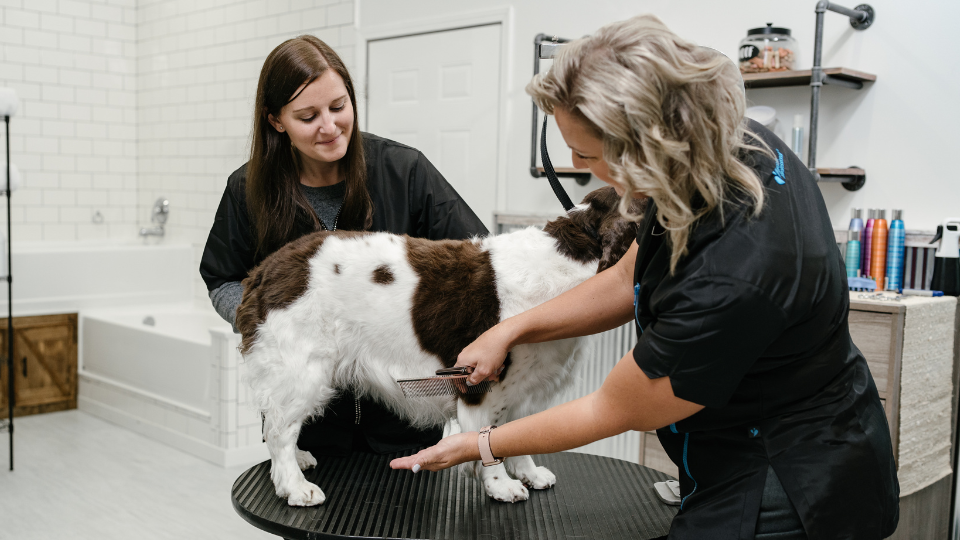 Do you enjoy learning something new? Figuring out how to do something easier. Faster. Give you a more satisfying result? Expand your knowledge base. Build your confidence.
Sure you do. We all love learning when it’s easy right? But most of the time learning takes work. Effort. And sometimes it’s difficult and confusing.
I mean – really learn. Absorb it. Get it. Can do it and achieve results you are happy with?
So, what’s the best way to learn?
There are lots of different learning methods, but most fall into two categories. Passive or active learning.
What’s the difference?
Passive learning is when communication is mostly one-way for the sole purpose of gathering information.
Active learning includes doing anything interactive with the content to enhance your understanding of the topic and/or skill.
Which is best? It depends on what you are doing and how you need to apply the information.
Not everyone learns at the same pace. Nor does one technique work the best for everyone. Learning is a personal effort. Your level of involvement combined with a variety of learning techniques will greatly influence your long-term results.
Think back to a time when you learned something.
 I’m talking about a time when you were curious about something. You wanted to know more. You researched it. Maybe you watched a few videos on the topic. Talked to people. If it was a skill, you tested it and practiced it, right?
You thought about the topic a lot. You wondered how it related to you or how you could apply it in your life. As you explored, you uncovered more and more on the topic. Connections were made. Dots were joined. You discussed the topic with friends and co-workers. You strengthened your understanding even further.
When it comes to learning retention, hands-down active learning is far more effective than passive learning. However, both have their place in your learning toolbox. Personally, I like to use more passive methods of learning first to familiarize myself with a topic. However, I almost always tuck a bit of active learning into it to ensure I can recall the information more readily.
Active learning promotes a deep, understanding of a topic. For most people, this is how we learn the best. In an active learning environment, you are engaged, empowered, and excited to learn.
Active learning occurs through collaboration, discussion, critical thinking, problem-solving, and connecting new knowledge with your own world.
Passive learning is all around us. But it’s not the best way to truly understand a topic or test your skills.
While reading, you can highlight, tab important passages, take notes, or write your own comments. When you do this, it becomes more of a two-way conversation in your head instead of passively reading the material.
After learning, take some time to think about how you can apply the information. Ask yourself questions to obtain the most out of what you just learned. Here are a few thoughts to get started with to help cement the learning in your own mind.
When you are working on a new skill, break down the steps. Think about how you could follow you progress. Track you progress by simply jotting it down, use an app or create a spreadsheet to monitor your progress.
This is a great way to improve your speed, track your progress when mastering a new skill or learning a new breed, or ensure the effectiveness of new sales techniques. You could even make a game out of the learning.
The sooner you can apply a new skill or technique, the better. Test it out while it is still fresh in your mind.
Studies show even within 20 minutes of learning something new, you will forget about 40% of the details! After 2 days, you will forget up to 70% of what you learned.
The saying, ‘Use it or lose it’ certainly applies when learning a new skill!
Coaches or mentors can help you fast track your learning.
Why?
Because they give you instant feedback helping you improve your skills immediately. A great coach will help you take years off the learning process verse trying to learn on your own.
If the learning revolves around a skill, a technique or a thing – collect images of what it looks like when done correctly. Assemble the images into a grouping you have easy access to. Actively work on building your collection. As you add images, think about HOW the results were achieved and visualize yourself achieving similar results.
To find out if you have really absorbed the knowledge, explain it to someone else.
Go step-by-step. Describe the details of the lesson. Keep it streamlined and simple so whomever you are talking with can absorb correct information.
If you struggle anywhere, go back and review where there are gaps in your own understanding. Continue to share with others your new knowledge until you can explain the topic confidently and the listener understands clearly.
To verify you have positively progressed in your learning or mastered a skill, go for validation. How? There are many ways.
You need discipline and nerve to admit what you don’t understand. What you find hard to do.
Ignoring those things is the worst mistakes a learner can make. You’ll need a strong foundation before you move on to a more advanced level.
When you’re self-learning, you’ve got to go the extra step to gauge yourself. It’s the only way you can learn improve and develop faster. Validation is how you’ll find your strong and weak points, so you know what to focus on.
Learning a subject or skill takes time and effort. You will never thoroughly understand something if you only use passive learning.
By utilizing a few of the active learning method outlined above, you will create shortcuts to your own growth. Mix and match these methods based on the skill or subject you want to learn – or come up with other ways to retain new information.
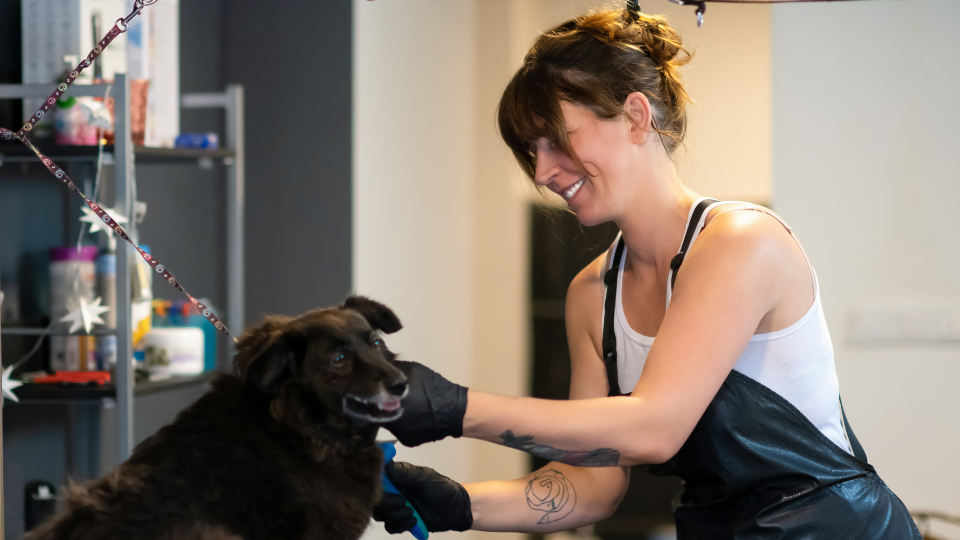 By Team Paragon
If you’re ready for a fresh start in a career that offers flexibility, creativity, and real job satisfaction, professional dog grooming could be your perfect second act. Many people are discovering that grooming provides the freedom and fulfillment they’ve been seeking — without years of retraining or costly education.
Unlike careers that require years of schooling, professional grooming skills can be learned in a matter of months through reputable training programs such as Paragon Pet School. Many second-career students start earning an income while still completing their coursework, making it a practical and efficient pivot.
Groomers can work in salons, mobile vans, pet spas, or even from home-based studios. Whether you want part-time hours to balance with other commitments or the excitement of running your own business, grooming lets you tailor your schedule to your lifestyle.
Grooming is a beautiful blend of art and science. From sculpting a perfect poodle trim to safely de-shedding a husky, every day offers a chance to create transformations you can see and feel. For those leaving desk jobs, the hands-on, active nature of grooming is a refreshing change.
The U.S. Bureau of Labor Statistics projects a 16% growth in the animal care and service industry between 2022 and 2032 — much faster than average. The surge in “designer” breeds like doodles, which require regular grooming, means a steady stream of repeat clients. In short: pets keep growing hair, and they’ll keep needing skilled groomers.
The pet industry is unique in its resilience to economic recessions and downturns. In comparison to other consumer goods and services, the pet industry has held up remarkably well during recent market declines. Despite the financial crisis of 2008, the pet industry experienced a 5.1% growth in sales. During the more recent 2020 COVID-19 recession, sales of pet products and services continued to grow at a faster rate than the overall U.S. economy, with a 16.2% growth compared to 4.3%.
Few careers allow you to directly improve a living being’s comfort and happiness. Groomers form long-term bonds with their furry clients and their owners. Many say that seeing a wagging tail or a happy pet parent is the best part of the job.
Entry-level groomers can expect to earn $30,000–$35,000 annually, with experienced groomers and salon owners earning $60,000+ depending on clientele and specialization. Adding skills like cat grooming, hand-stripping, or creative grooming can increase your rates and income.
Whether you’re looking for a fulfilling part-time role or dreaming of owning your own grooming business, the skills you gain will serve you for years. Dog grooming isn’t just a job — it’s a lifelong trade.
Ready to explore a career that’s as rewarding as it is sustainable?
Our professional training programs are designed for beginners and career changers alike. In just months, you could be building a flexible, creative, and profitable second career you’ll love. Start here!
Paragon Pet Coach Joe Zuccarello just had an incredible conversation with Candice D’Agnolo, aka @petbossnation on the Pet Boss Podcast!
Candice of Pet Boss Nation went on an incredible journey from struggling pet retail store owner to respected industry leader. Her journey shows what’s possible with the right support and strategies, and is now a sought-after speaker and consultant in the pet industry. Visit PetBossNation.com to get the full scoop! Read the rest of this entry »
 How is your summer going? Busy?? Overworked? Feeling stressed? Not being able to ENJOY your summer because you are too busy?
Having too much work can be just as frustrating and scary as not having ENOUGH work. I get it. As groomers and service providers, we want to keep people happy. That’s how you build a thriving business. However, if the business is thriving – and you are not – how can that honestly be good for your business? How can that be good for your customers and pets in the long run?
We all have the same number of days, hours and minutes each year. Everyone wants to maximize their time to make the most out their lives. How you schedule appointments, how many hours and days you work each week and how much time you allot for yourself will contribute to how you feel at the end of the day.
 In today’s dog grooming industry, salons that thrive aren’t just those with skilled individuals — they’re the ones that grow skilled teams. As a salon leader, one of the smartest investments you can make isn’t in more marketing or equipment—it’s in growing your salon’s dream team.
When you take time to train a student groomer, you’re not just helping them—you’re building a stronger, more resilient salon. Here’s why training students isn’t extra work—it’s a winning strategy for long-term success:
Leadership isn’t about doing it all yourself—it’s about helping others rise.
Being a skilled groomer is important, but real impact comes when you guide and grow those around you. When you invest in a newer groomer’s development, you’re not just shaping their future—you’re strengthening your team, building trust, and creating a lasting legacy. That’s the kind of leadership that sets you apart and fuels long-term success.
Students who are training as Certified Groom Techs and Pet Groomers can assist with bathing, prep work, drying, and cleaning—giving you more time (and energy) for complex grooms, higher-ticket services, or even a well-deserved break. A well-prepared student doesn’t slow you down—they support your salon’s flow.
Let’s face it—hiring isn’t getting easier. While Paragon handles the technical grooming training, you have the unique opportunity to shape your student into a future team member who aligns with your salon’s culture and standards.
Want a team you can count on? Start by recruiting individuals who show up with the right attitude, reliability, and professional appearance—then let us take care of the grooming skills.
Rather than scrambling when someone leaves or retires, you’ll have a pipeline of trained talent ready to step up. Every student you support is one more layer of protection against staffing shortages and turnover. You’re not just grooming dogs—you’re grooming salon stability.
Do you have hours in the day when tables sit unused? Bringing in a grooming student or entry-level team member for those specific time blocks can be a smart move. Hire someone for attitude, appearance, and availability—not just experience. If they’re available when your salon is underutilized, you have the perfect opportunity to train them while generating additional revenue. It’s a win-win: you grow a future groomer while making the most of your schedule and space. And you’re not letting a table go “cold.”
The Bottom Line?
When salon leaders support students, everyone benefits. You sharpen your leadership, reduce burnout, and build a team that’s equipped to grow with you.
 It’s been over 40 years since that first time. I still remember standing in awe, watching a talented pet groomer give a dog a haircut. She handled her clippers with ease. The long fur fell away like a hot knife through butter. The end result was smooth and gorgeous. And she was fast – super fast. She made the whole process seems so simple.
The first time I tried, I quickly discovered it was not simple. Those initial attempts were pretty pathetic. Saying my first efforts were rough and choppy would be polite. There were long tufts hanging out everywhere. I was frustrated beyond belief.
I was determined to master the skill. After all, the groomer I had been watching proved it could be done. It was simple – I just had to focus and figure it out.
Fast forward a few years of practice and a couple hundred dogs later, and I could make any dog look amazing. When I did a simple haircut on a pet, the fur fell away like a hot knife through butter. The end result was smooth and appealing. I could finish dogs in no time. I’d gotten very efficient with my clippers.
It took years of hard work. There were years of standing on my feet until they throbbed, working until my hands and shoulders ached. However, my pain can be your gain. Here are a few tips to enhance your speed when it comes to simple, low maintenance haircuts:
You’ll always get a smoother cut on a dog that is clean and the coat has been fluffed. Once you make the initial pass to remove the bulk of the long coat, it’s time to pick up the brush. Back brush the entire dog and go over it a second time. On the third pass, again gently back brush the entire area that needs final attention. Did you get that? Back brush!
When do you know you are done? You are done clipping when there is no more coat coming off the dog after it is been washed, dried, and effectively back brushed. Period.
Clipper work on a low maintenance haircut style can be extremely frustrating for new groomer. But once you master the clipper and understand how to work with the coat, it becomes second nature. It becomes simple. You become fast. And you will be able to perform the haircut safely with great precision. You can do it. It just takes focus.
Happy trimming!
~Melissa